Malta
Migra Ferħa
A wild cleft in the Dingli cliffs on Malta's south west coast, with a car graveyard, a boulder field, an archway and caves at every depth, and about 150 steps between you and your car.
Sea conditions
Excellent right now
Flat, sheltered and calm
Forecast for the site, updated 01:47 AM
- Waves
- 0.4 m
- from ESE
- Wind
- n/a
- Swell
- 0.4 m
- 5 s period
- Sea temp
- 29 °C
Next 7 days
Exposed to wind and swell from: SW (225°), W (270°), NW (315°), S (180°). This is the exposed south western face of Malta and it takes the full Mediterranean fetch. Anything from the west or south west closes it outright. Dive it in a settled north easterly or a flat calm, and abandon the shore option the moment there is swell on the platform. Best season: Late May to early October, on settled days only. Mornings are calmest..
The dive
Migra Ferħa is the closest Malta gets to an expedition dive you can drive to. A narrow cleft in the cliffs with a staircase cut into it, a tiny rock platform at the bottom, and then a coastline that plunges away into blue with no bottom worth mentioning. On a calm day it is one of the most beautiful places on the island, above and below the water. On a bad day you should not be there at all.
What makes it strange is the cars. For years vehicles were tipped off the cliff edge here, and they are still down there: some scattered on the reef top at around fifteen metres, many more piled in front of a large cave at thirty two metres and below. It is an accidental artificial reef and there is nothing quite like it in the Maltese islands, a rusting scrapyard slowly greening over while grouper watch from the shadows.
The rest of the site is proper cliff diving. On one side of the pointed reef is a boulder field running from around fifteen to twenty five metres, with gaps and swim-throughs between the blocks. Along the cliff walls there are small caves, caverns and overhangs at nearly every depth, plus an archway that photographers like. Beyond all that the ground keeps going past sixty metres, which is why this is firmly an experienced diver's site and a very good place to be disciplined about your plan.
The steps decide everything. Roughly 150 of them, steep, and you come up them in full kit after a deep dive. The standard advice is to sit and rest for twenty to thirty minutes at the bottom before climbing, and to stash some water down there to drink, because hauling yourself up a cliff immediately after a decompression-adjacent profile is a known route to trouble. Doing it by boat removes the whole problem and is how most sensible people dive it.
- An underwater car graveyard piled in front of a cave at 32 metres and deeper
- Boulder field with gaps to thread through between 15 and 25 metres
- Archway, caverns and overhangs scattered along the cliff wall
- Genuinely wild scenery above the water as well as below
- Wall diving that keeps going well past recreational depth
Typical plan
The sane version: boat drop on the cliff line, straight down the wall to the cave and car graveyard at thirty two to thirty eight metres for ten to twelve minutes, then work back up through the boulder field at twenty to twenty five metres, take in the archway and overhangs, and finish on the shallow reef top with the scattered cars at fifteen metres. Nitrox 28 to 32 in a 12 or 15 litre gives a reasonable no-stop profile; a twinset and a deco mix are standard if you intend to spend real time at the deeper cars. From the shore, make it the first dive of the day, keep the profile conservative because the exit is physical work, sit for twenty to thirty minutes on the platform before starting the steps, and leave water down there for yourself.
What the bottom looks like
- 1Car wrecks on the reef top15 m deep · 70 m out
- 2Overhangs along the cliff wall14 m deep · 100 m out
- 3Archway20 m deep · 125 m out
- 4Boulder field, 15 to 25 metres24 m deep · 150 m out
- 5Large cave32 m deep · 190 m out
- 6Main car graveyard in front of the cave34 m deep · 196 m out
- 7Wall continuing past 60 metres58 m deep · 280 m out
Boulder and bare limestone reef close in, with rubble and scattered car wreckage on the ledges and a wall dropping into deep water.
Who you might meet

Cardinalfish
Almost always · Sultan iċ-ċawl
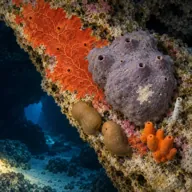
Sponges and encrusting growth
Almost always · Sponża
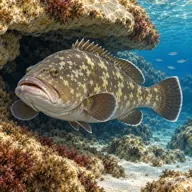
Dusky grouper
Often · Ċerna
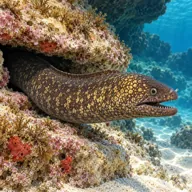
Mediterranean moray
Often · Morina

Octopus
Often · Qarnit · Autumn and winter
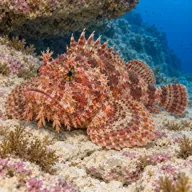
Scorpionfish
Often · Skorfna
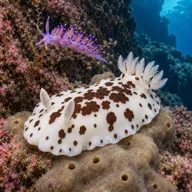
Nudibranchs
Often · Spring

Barracuda
Sometimes · Lizz · Late summer

Amberjack
Sometimes · Aċċola · Late summer
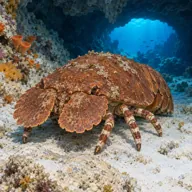
Slipper lobster
Sometimes · Ċiskatura
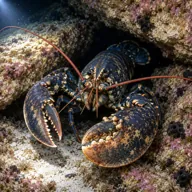
Common lobster
Lucky day · Awwista
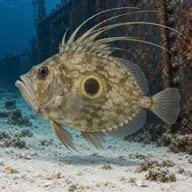
John Dory
Lucky day · Pixxi San Pietru · Winter
Getting in and staying safe
Hard, and honest about it. Drive to the Migra l-Ferħa parking area west of Rabat and Baħrija, then carry kit down roughly 150 steep steps cut into the ravine to a small rock platform at sea level. There are no facilities of any kind, no shade and no water, so bring your own and leave some at the bottom for after the dive. This is the only exit point for miles along the Dingli cliffs, so satisfy yourself that you will be able to get out before you get in. Boat access is far easier and is how most dive centres run the site, with the added bonus that you can dive the cliff line either side. Allow a long, slow climb out and rest before you start it.
- About 150 steep steps with full kit, both directions
- Real risk of exercise-related decompression illness on the climb out
- The only exit for miles, unusable if a swell arrives during your dive
- Depth that runs well past 60 metres with nothing to stop you
- Currents along the exposed cliff face
- Caves and overhangs at multiple depths, an overhead temptation
- Sharp, rusted car wreckage
- Remote location with no facilities and patchy help if something goes wrong
- Falling rock from the cliffs above
A bit of history
Migra l-Ferħa is a natural breach in the Dingli cliffs, where the hard Upper Coralline Limestone cap has broken down over the softer clays and Globigerina beneath to leave a steep ravine reaching the sea. It is the only usable access to the water for a long stretch of that coast, which is why it became both a landing place and, less happily, a dumping point. The underwater car graveyard is the result of vehicles pushed over the cliffs, and it has been quietly turning into habitat ever since. The site has no wreck story in the usual sense: its history is geology plus a distinctly Maltese approach to scrap disposal.
Divers say
Sign in to rate this site and leave a note for the next diver.
- No reviews yet. First one gets bragging rights.
Further reading: Malta Dive Sites: Migra Ferha · Calypso Sub Aqua Club: Migrah Ferha · DiveBoat.mt: Migra Ferha · Divers Guide: Migra Ferha