Malta
Ras id-Dawwara
A rarely visited boat wall at the far western end of the Dingli cliff line, where 60 m of limestone above water carries on falling below it. Clear blue, honeycombed rock, and enough depth to keep you honest.
Sea conditions
Excellent right now
Some chop (0.4 m ESE)
Forecast for the site, updated 01:47 AM
- Waves
- 0.4 m
- from ESE
- Wind
- n/a
- Swell
- 0.4 m
- 5 s period
- Sea temp
- 29 °C
Next 7 days
Exposed to wind and swell from: W (270°), SW (225°), NW (315°), S (180°). Needs a genuinely calm day. Anything from the western half of the compass turns this into a washing machine against the rock, and even old swell keeps surging in the cavities. A settled easterly or north-easterly spell is the window. Best season: June to early October, with September and October giving the best visibility once the summer plankton has gone.
The dive
Ras id-Dawwara is the point that closes the southern side of a small bay under the tail of the Dingli escarpment, and what the cliff does above the waterline it keeps doing underneath. The rock face is pitted with cavities, ledges and shallow recesses, so the dive is less about swimming a featureless slab and more about poking a torch into every shadow and seeing what looks back.
Because this stretch of coast has no road and no easy shore entry, the site only happens when a boat is going that way and the sea is flat. That rarity is half the appeal. Divers who do get out here talk about unusually rich colour on the wall and a surprising number of nudibranchs, which is what tends to happen when a reef is left alone.
Plan it as a wall dive with a firm turn depth rather than a tour. The water is typically gin clear, the rock drops away fast, and there is no bottom in sight to give you a reference, which is exactly how people end up deeper than they meant to be. Pick a level, swim the contour, and come shallow along the cavities on the way back.
- A cliff that keeps going for another 50 m below the surface
- Cavity-riddled rock that rewards a slow torch-led search
- Unusually colourful sponge and nudibranch life for a Maltese wall
- Almost no other divers, ever
Typical plan
Drop next to the rock and let the wall take you down to a planned 30 to 35 m, running the contour in one direction for roughly a third of your gas. Turn, come up a stage to around 20 m for the return leg, then finish the last ten minutes picking through the cavities at 10 to 12 m where the light and the colour are. Nitrox 28 to 30 suits it well, and a deco cylinder is sensible if you intend to go past 35 m. Carry a DSMB and shoot it from depth, because the boat needs to find you off a shadowed cliff.
What the bottom looks like
- 1Sea level caves at the foot of the cliff8 m deep · 4 m out
- 2Vertical face pocked with cavities18 m deep · 10 m out
- 3Step where the wall steepens again32 m deep · 22 m out
- 4Fallen blocks at the base52 m deep · 70 m out
Bare Coralline limestone wall with scattered fallen blocks, giving way to coarse sand and flat rock below about 50 m.
Who you might meet
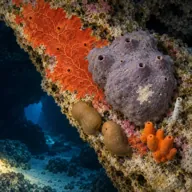
Encrusting sponges
Almost always · Sponoż

Cardinalfish
Almost always · Re tat-trilji
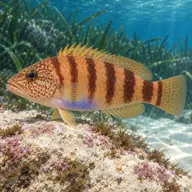
Painted comber
Almost always · Ċerna tal-lampuki
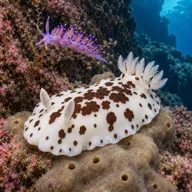
Nudibranchs
Often · Bugħarwien tal-baħar · Spring and early summer
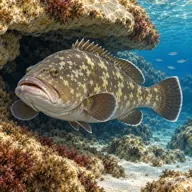
Dusky grouper
Sometimes · Ċerna
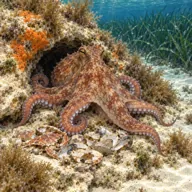
Octopus
Sometimes · Qarnit
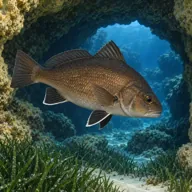
Brown meagre
Sometimes · Gurbell

Amberjack
Sometimes · Aċċola · Late summer
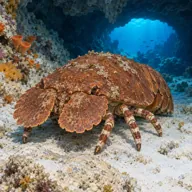
Slipper lobster
Lucky day · Ċiskorra
Getting in and staying safe
Boat only, and normally a longish run from Cirkewwa or from the south coast slipways. There is no landing, no ladder and nothing on shore at all, so the skipper live-boats or hovers off the point. Kit up on the way out, roll in close to the rock, and agree a clear pick-up signal before you go down, because the cliff throws shade and a diver in the water is easy to lose against it.
- Depth creep: clear water and a vertical face make 30 m feel like 15 m
- Exposed to swell and surge that funnels along the cliff
- Currents can run along the point and change with the tide of the day
- No shore exit anywhere on this stretch if you get separated from the boat
- Long boat ride from the nearest harbour, so a problem is a long way from help
- Falling rock and loose debris at the base of a very tall cliff
A bit of history
The headland has an odd footnote in Malta's war story. In May 1942 Carmelo Borg Pisani, a Maltese who had thrown in his lot with Fascist Italy, was put ashore in a dinghy at Ras id-Dawwara to scout the coast ahead of the planned Axis invasion of the island. He could not climb out, was spotted, and was later tried and executed for treason. The cliffs themselves are the seaward edge of Malta's Upper Coralline and Globigerina limestone plateau, which is why the face is so hard and so cavity-rich.
Divers say
Sign in to rate this site and leave a note for the next diver.
- No reviews yet. First one gets bragging rights.
Further reading: Calypso Sub-Aqua Club site notes · Wikipedia: Ras id-Dawwara · Malta Dive Sites index entry and diver reports