Malta
Stoker Cave
A big cave under the Dingli Cliffs with stalactites hanging from the ceiling and a freshwater layer in the roof that smears the view like oil on glass. Entrance at 19 m, sand at 30 m, boat only.
Sea conditions
Good right now
Some chop (0.5 m ESE)
Forecast for the site, updated 01:46 AM
- Waves
- 0.5 m
- from ESE
- Wind
- n/a
- Swell
- 0.5 m
- 5 s period
- Sea temp
- 29 °C
Next 7 days
Exposed to wind and swell from: W (270°), SW (225°), NW (315°). The Dingli coast faces the open Mediterranean fetch and takes westerly weather square on. It is only on the table in a genuine flat calm, usually with an easterly or a light northerly blowing offshore. Even then, swell left over from a previous system will surge at the cave mouth and cancel the dive. Best season: June to September, on the rare days when the west coast is glass.
The dive
Malta does not offer many caves where you swim in and find dripstone overhead, which is exactly why this one is worth the boat ride down the west coast. The entrance sits at around nineteen metres in the cliff foot, the chamber is large enough not to feel like a squeeze, and the ceiling carries stalactites and stalagmite stubs left from a time when all of this was dry land above sea level.
The quirk that everyone remembers is the fresh water. Groundwater seeps out of the limestone and collects in the upper part of the cave, and where it meets salt water the two refuse to mix cleanly. You swim up into a shimmering halocline that turns the ceiling detail into a blur until you drop back below it. Expect to spend the dive moving up and down through that boundary to get a clear look at anything.
Outside, the site is a plain wall with boulders at its base running down to sand at thirty metres, pleasant but not the reason you came. Divers who have been here are blunt about two things: take a small team, because open circuit bubbles strip the ceiling and wreck the visibility within minutes, and expect to see plastic rubbish washed into the chamber.
- Stalactites overhead, something almost no other Maltese dive offers
- A freshwater layer in the roof that shimmers and distorts everything above it
- Wall and boulders outside for the second half of the dive
- Genuinely remote, under two hundred metres of Dingli cliff
Typical plan
Drop straight to the entrance at nineteen metres, run a line or keep the exit light in view, and work into the chamber in a small team with the best diver last so nobody is swimming through someone else's bubble wash. Fifteen minutes inside is plenty, dipping under and back through the freshwater layer to read the ceiling. Exit, drop down the outside wall to the boulders at thirty, then ascend along the rock. Thirty five to forty minutes total on a single cylinder, thirds for gas, nitrox 32 if the boat has it, and a torch each plus a backup because cave light without a spare is not a plan.
What the bottom looks like
- 1Cave entrance in the cliff foot19 m deep · 20 m out
- 2Main chamber with stalactites in the ceiling21 m deep · 45 m out
- 3Freshwater layer trapped under the roof18 m deep · 55 m out
- 4Outside wall below the cliff27 m deep · 115 m out
- 5Boulder field on sand at the wall base30 m deep · 130 m out
Limestone rock and fallen boulders outside, with a sand and fine sediment floor inside the chamber at around thirty metres.
Who you might meet

Cardinalfish
Almost always · Sultan iċ-ċawl
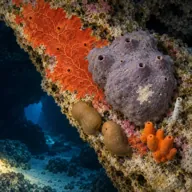
Encrusting sponges
Almost always · Sponża
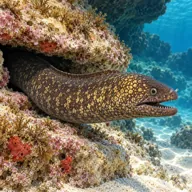
Moray eel
Often · Morina
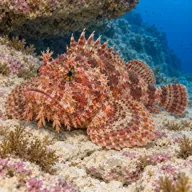
Scorpionfish
Often · Skorfna

Octopus
Often · Qarnit
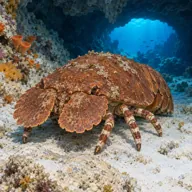
Slipper lobster
Sometimes · Ċkala

European lobster
Sometimes · Awwista
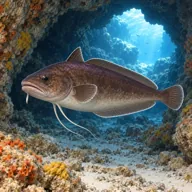
Forkbeard
Sometimes · Lipp tal-qawwi
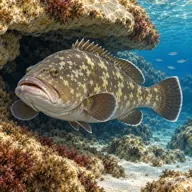
Dusky grouper
Sometimes · Ċerna
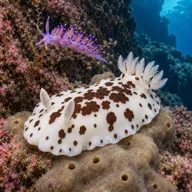
Nudibranchs
Sometimes · Spring
Getting in and staying safe
Boat only, and it is a long run. Most trips come round from the south or from the harbours on the east coast, which means an early start and a committed skipper. There is no shore route: the cliffs above are hundreds of metres of vertical rock with no path to the water. No facilities of any kind at the site, so sort gas, food and toilets before you leave.
- Overhead environment, no direct ascent to the surface once inside
- Silt and bubble wash from the ceiling, visibility collapses with more than a couple of divers
- Freshwater halocline in the roof that blurs vision and confuses buoyancy
- Depth at 19 to 30 m combined with the overhead, so gas planning must be in thirds
- Surge at the entrance if any swell is running on the west coast
- Remote site, long boat ride from help
- Plastic debris and old line inside the chamber
- Cold water pockets where the fresh water sits
A bit of history
The Dingli Cliffs are the edge of Malta's western fault block, where the harder Upper Coralline limestone caps softer Blue Clay and Globigerina and the whole coast breaks off in a two hundred metre step. The stalactites inside the cave formed when sea level was far lower and the chamber was dry, so the formations are older than the sea that now fills them. Freshwater seepage from the perched aquifer above the clay is what still trickles into the roof today.
Divers say
Sign in to rate this site and leave a note for the next diver.
- No reviews yet. First one gets bragging rights.
Further reading: Malta Dive Sites: Stoker Cave · Gozo Technical Diving: cave diving in Malta and Gozo · Atlantis Gozo: technical and cave diving in Malta and Gozo · Visit Malta: Dingli Cliffs