Għar Lapsi · Malta
Black John
The deepest and least visited of the Ghar Lapsi dives: an offshore reef that tops out in the twenties and slides on down to around 38 m, with an arch near the entry and a shimmering halocline courtesy of the desalination plant next door.
Sea conditions
Good right now
Some chop (0.5 m ESE)
Forecast for the site, updated 01:46 AM
- Waves
- 0.5 m
- from ESE
- Wind
- n/a
- Swell
- 0.5 m
- 5 s period
- Sea temp
- 29 °C
Next 7 days
Exposed to wind and swell from: S (180°), SE (135°), SW (225°). South facing coast, so northerlies make it flat and anything with south in it makes the rock entry dangerous. The exposed carry and rocky exit mean you want a properly calm day, not merely a diveable one. Visibility is usually good, occasionally muddled by the brine plume. Best season: June to September, when the south coast settles and the walk in is survivable in the heat of early morning.
The dive
Black John is the one everybody at Ghar Lapsi means to dive and mostly does not, because reaching it involves either a long stumble over broken rock with a set on your back or a four hundred metre surface swim. Both of those filter out the crowds, which is exactly why the reef still feels like your own discovery.
Close to the entry there is an arch and a cluster of sculpted rock formations worth a few minutes on the way in or out. Past that the reef falls away in steps, with big boulders sitting where the wall has calved, seagrass on the terraces and clean sand out beyond, and by the time you reach the edge of it you are in the high twenties or low thirties with the bottom running on to about thirty eight. It is a proper deep reef dive rather than a wall, so you get a long slope to play with and plenty of options for cutting the dive short.
The party trick is the halocline. The reverse osmosis plant on the headland discharges its brine into the sea here, and on the right day the boundary between brine and seawater hangs in the water like poured glass, wobbling and shearing as you swim through it. It can also blur the visibility when the mix is unsettled, so take the good days as a gift rather than a guarantee.
- The deepest dive at Ghar Lapsi and the quietest by a mile
- Shimmering halocline where the desalination brine meets the sea
- Arch and sculpted rock right by the entry point
- Big collapse boulders and grouper territory on the deep shoulder
- A genuine reward-for-effort dive that most visitors never make
Typical plan
A 15 litre or a twin set, 28 to 32 percent nitrox if you intend to sit in the twenties. Enter below the plant, drop over the arch, then run the reef outward to your chosen depth, twenty five to thirty metres for most recreational divers, turning well before your gas limits because the swim home is long. Work back up the terraces and spend the last twenty minutes in the shallows around the entry formations. Forty to fifty minutes total, with a decent reserve for the exit timing. A scooter transforms this dive if you are starting from the cove.
What the bottom looks like
- 1Small arch and overhang near the entry7 m deep · 30 m out
- 2Halocline layer from the brine outfall10 m deep · 50 m out
- 3Seagrass terrace on the reef shoulder18 m deep · 130 m out
- 4Outer edge of the reef23 m deep · 180 m out
- 5Collapse boulders below the reef30 m deep · 250 m out
- 6Sand plain at the base38 m deep · 330 m out
Stepped limestone reef giving way to large collapse boulders, seagrass patches and clean sand at around 38 m.
Who you might meet
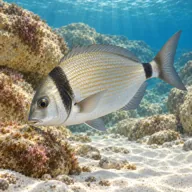
Two banded bream
Almost always · Sargu
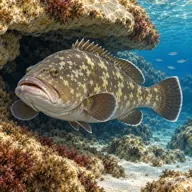
Dusky grouper
Often · Cerna
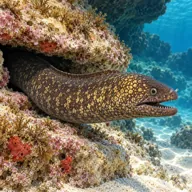
Mediterranean moray
Often · Morina
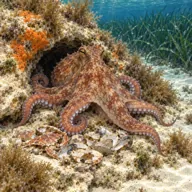
Common octopus
Often · Qarnit
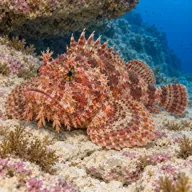
Red scorpionfish
Often · Cippullazza
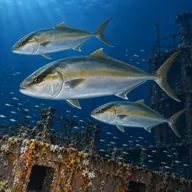
Amberjack
Sometimes · Accola · Autumn
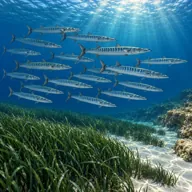
Barracuda
Sometimes · Lizz · Autumn
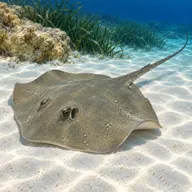
Common stingray
Sometimes · Bokkatal-bahar
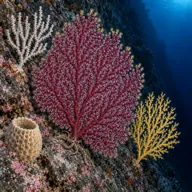
Gorgonian sea fans
Sometimes
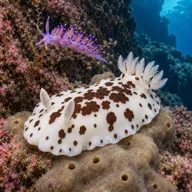
Nudibranchs
Sometimes · Spring
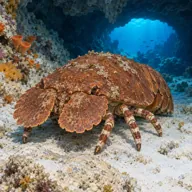
Slipper lobster
Lucky day · Cikala
Getting in and staying safe
Two ways in. The easier one is to park on the rough ground near the reverse osmosis plant and carry your kit roughly two hundred metres over uneven rock to a shoreline entry, which is awkward with a twin set and genuinely unpleasant in a drysuit in August. The alternative is to enter at the Ghar Lapsi cove, where the steps and parking are civilised, and make a four hundred metre swim west along the coast. Scooters turn that swim into a pleasure and a lot of local divers use them here. There are no facilities at the plant end, so leave nothing loose in the car and plan on changing back at the cove where the restaurant and toilets are.
- Long carry over uneven, ankle turning rock to the shore entry
- Currents across the offshore reef, sometimes strong
- Depth to 38 m with no easy shortcut back to shore
- Brine discharge can cut visibility and blur the halocline layer
- Awkward exit onto rock if any swell is running
- Remote entry point with no facilities and no easy assistance
- Long surface swim if you choose the route from the cove
A bit of history
The site sits beneath the Ghar Lapsi reverse osmosis plant, part of the network of desalination works Malta built from the 1980s onwards to free the islands from total dependence on groundwater. The reef itself is the same layered south coast limestone as the rest of Ghar Lapsi, quarried away by the sea into ledges, arches and collapse boulders.
Divers say
Sign in to rate this site and leave a note for the next diver.
- No reviews yet. First one gets bragging rights.
Further reading: Divers Guide, Ghar Lapsi Black John · Dive Shack Malta, Ghar Lapsi dive sites · Visit Malta, Black John, Ghar Lapsi · PADI dive site, Ghar Lapsi