Għar Lapsi · Malta
Għar Lapsi Cave
Forty-odd metres of wide, shallow cave running from the cove out to the open sea, lit by cracks in the ceiling that turn the passage into a light show on a sunny morning.
Sea conditions
Good right now
Some chop (0.5 m ESE)
Forecast for the site, updated 01:46 AM
- Waves
- 0.5 m
- from ESE
- Wind
- n/a
- Swell
- 0.5 m
- 5 s period
- Sea temp
- 29 °C
Next 7 days
Exposed to wind and swell from: SE (135°), S (180°), SW (225°), W (270°). Only dive it when the sea is flat. With any swell from the southern half of the compass the passage surges hard and there is nowhere to brace. Northerly and northeasterly winds give the calmest conditions. Midday sun gives the strongest light beams. Best season: Late spring to early autumn, in the middle of the day, on a settled sea. Subject to the site reopening fully after the 2026 storm works..
The dive
Most Mediterranean cave dives are exercises in darkness. This one is the opposite. The Lapsi system is broad, flat-roofed and shallow, and the limestone above it is so fractured that daylight pours in through a series of holes and cracks the whole way along. On a bright day with the sun high, beams tilt down through the water and slide across the growth on the walls, which is why photographers keep turning up here with their tripods and their patience.
The entrance sits opposite the entry point inside the cove, only a few metres down. From there the passage runs seaward with several outlets to the open water, the deepest of them around 8 m on the sea side. Navigation is genuinely straightforward in daylight because you can almost always see a way out, but the low, wide shape means sloppy buoyancy will put you into the ceiling or the floor and a cloud of your own making. Wear a full suit unless you enjoy collecting scratches. Somewhere in the system there is also a short tunnel leading up to a small air pocket, which is a novelty rather than a refuge.
Most people dive it as bookends rather than a main course: a quarter of an hour in the cave, out to Finger Reef or Middle Reef, then back through the rock at the end when the tank is light and the light is good.
- Light beams through ceiling cracks on a sunny day
- Over forty metres of passage that never goes deeper than about 8 m
- Multiple exits, so it never feels like a commitment
- Colour and texture that reward a torch and a camera
- Perfect opener or closer for a Finger Reef dive
Typical plan
Enter the cove, drop to 3 m and swim into the cave mouth. Take it slowly along the passage at 5 to 8 m, torch on to bring out the wall colour, and exit through one of the seaward holes. Continue out to the reef for the middle of the dive, then re-enter the system on the way home if you still have gas and light. Twenty minutes inside, forty outside, single cylinder, two torches, full suit, and a hard rule that you turn around if you feel the passage start to breathe.
What the bottom looks like
- 1Cave mouth inside the cove3 m deep · 10 m out
- 2Main wide passage with ceiling cracks5 m deep · 30 m out
- 3Skylight holes throwing light beams6 m deep · 50 m out
- 4Side tunnel to a small air pocket6 m deep · 65 m out
- 5Seaward outlets to open water8 m deep · 85 m out
- 6Reef outside the cave, heading for Finger Reef10 m deep · 120 m out
Bare coralline limestone floor and walls, lightly silted in the still corners, with encrusting growth wherever the light reaches.
Who you might meet
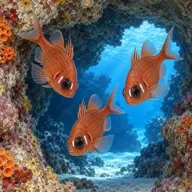
Cardinalfish
Almost always · Sultan iċ-ċawl
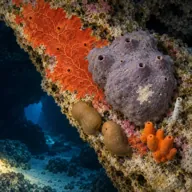
False coral and encrusting sponges
Almost always · Sponża
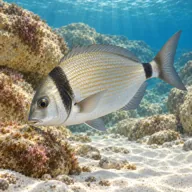
Two-banded bream
Almost always · Sargu
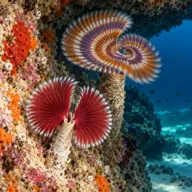
Tube worms
Almost always
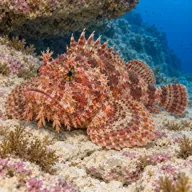
Scorpionfish
Often · Ċippullazza
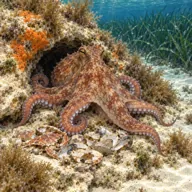
Common octopus
Often · Qarnita
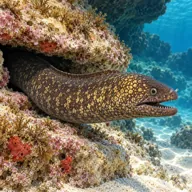
Mediterranean moray
Sometimes · Morina
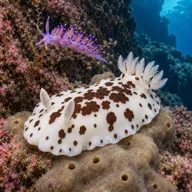
Nudibranchs
Sometimes · Spring
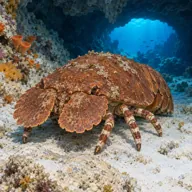
Slipper lobster
Lucky day · Ċkala
Getting in and staying safe
Through the Għar Lapsi cove: park above, carry kit down the steep hill and the steps, enter in the sheltered shallows and the cave mouth is straight across from you. Cafe, toilets and a police station traditionally sit at the top. As with the rest of the site, check the current access situation, since the shoreline structures were being rebuilt through 2026 following storm damage.
- Overhead environment: light is usually plentiful but it is still a cave
- Severe surge inside the passage when there is any swell running, which is the main reason people get hurt here
- Low wide profile that silts and scuffs with poor buoyancy
- Scratches and grazes on rough coralline rock, so cover up
- Torch failure leaving you dependent on ambient light
- Currents on this coast can be strong outside the cove
- Steep steps and slippery rock on the walk in and out
A bit of history
The cave gives the whole inlet its name, from għar for cave and Lapsi for the Ascension. It is cut into Lower Coralline Limestone, the oldest and hardest rock formation on the Maltese islands, and the pattern of wide passages and collapsed ceiling holes is classic coastal karst weathering. The cove and its approaches were badly damaged by Storm Harry in January 2026.
Divers say
Sign in to rate this site and leave a note for the next diver.
- No reviews yet. First one gets bragging rights.
Further reading: New Dimension Scuba: Ghar Lapsi cave and tunnel · Dive Shack: Ghar Lapsi · Showcaves: Għar Lapsi · Divers Guide: Ghar Lapsi Finger Reef and Crib