Malta
Il-Qaws
A little visited cave and wall dive on Malta's exposed west coast, with colourful rock faces, a pair of caverns worth a torch, and depths that run past forty metres if you follow the wall down.
Sea conditions
Excellent right now
Some chop (0.4 m ESE)
Forecast for the site, updated 01:47 AM
- Waves
- 0.4 m
- from ESE
- Wind
- n/a
- Swell
- 0.4 m
- 5 s period
- Sea temp
- 29 °C
Next 7 days
Exposed to wind and swell from: SW (225°), W (270°), NW (315°), N (0°). This is the side of Malta that the northwesterly majjistral hits first, and it is unusable in anything from the western half of the compass. It needs a settled easterly or a flat calm, which in practice means a handful of days each season. Visibility, when you do get out there, is usually excellent because nothing stirs up the bottom. Best season: June to September, on easterly or windless days.
The dive
The west coast of Malta is where the island turns its back on the resorts. High cliffs, no road access worth the name, and a coastline that faces straight into the prevailing weather. Il-Qaws sits along that stretch and, because it can only be reached by boat on a calm day, almost nobody dives it.
The layout is classic Maltese wall: rock dropping away in stepped faces, ledges and overhangs coated in sponges and cup corals, and the colour that comes from a face that never sees much direct sun. Average working depth is around twenty metres, but the wall keeps going well past forty for anyone qualified and inclined. The draw for most visitors is the pair of caverns, big enough to swim comfortably and bright enough near the entrances to be genuinely photogenic.
The honest caveat is that published information on this site is thin. A handful of reports, a Malta Sub-Aqua Club page and a short listing, and that is about it. Treat depths and cave dimensions as indicative and get a briefing from whoever is running the boat, because they will know it far better than any website.
- Two swimmable caverns on a coast almost nobody dives
- Richly coloured wall faces with cup coral and sponge cover
- Wall that keeps going past forty metres for deeper teams
- The satisfaction of a site that only opens a few days a year
Typical plan
Drop in off the boat close to the cliff, work the shallower cavern first while everyone is fresh, then follow the wall down to a maximum of around thirty metres, visit the second cavern, and spend the back half of the dive drifting the wall back up through the ledges. Nitrox 32 in a single with a good torch each. Deeper teams can run the wall to forty plus on twin sets with a staged ascent.
What the bottom looks like
- 1First cavern near the surface7 m deep · 10 m out
- 2Second, deeper cavern18 m deep · 30 m out
- 3Colourful stepped wall face21 m deep · 45 m out
- 4Wall steepens below thirty metres29 m deep · 70 m out
- 5Fallen blocks at the base of the wall38 m deep · 100 m out
- 6Sand at the foot of the drop42 m deep · 120 m out
Bare limestone wall and ledges giving way to fallen boulders and a narrow sand strip at the base.
Who you might meet

Cardinalfish in the caverns
Almost always · Sultan iċ-ċawl
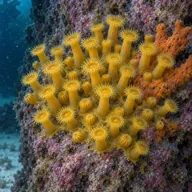
Yellow cluster anemone on the overhangs
Almost always
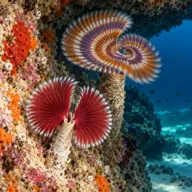
Tube worms
Almost always
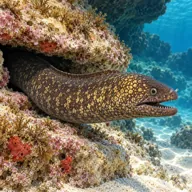
Mediterranean moray
Often · Morina
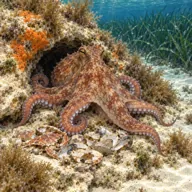
Common octopus
Often · Qarnita
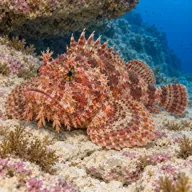
Scorpionfish
Often · Skorfna
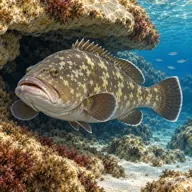
Dusky grouper
Sometimes · Cerna
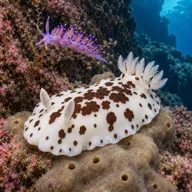
Nudibranchs
Sometimes · Spring

Barracuda
Sometimes · Lizz · Late summer
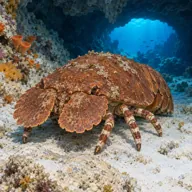
Slipper lobster
Lucky day · Ċkala
Getting in and staying safe
Boat only, and the ride is a commitment from any of the usual harbours because there is nothing on the west coast to launch from. There is no mooring, no shore exit and no shelter, so the skipper stays live on the surface. Bring everything you need for the whole trip.
- Fully exposed coast with no shelter and no shore exit
- Swell and surge inside the caverns even on a reasonable day
- Wall profile makes it easy to drift deeper than planned
- Overhead sections need a torch and a sensible turn point
- Long boat ride from the nearest harbour
- Limited published information, so brief carefully
A bit of history
No wreck or war story recorded here. The interest is geological: these are the western cliffs of Malta, where Upper Coralline limestone caps softer blue clay and Globigerina beds, and the slippage and collapse of that sequence is what carves out the caves, overhangs and stepped walls that make the diving worth the boat ride.
Divers say
Sign in to rate this site and leave a note for the next diver.
- No reviews yet. First one gets bragging rights.
Further reading: Malta Dive Sites: Il-Qaws · Malta Sub-Aqua Club: Qaws dive site