Marsaskala · Malta
St. Michael
A Canadian-built wartime Tanac tug scuttled off Żonqor Point in 1998, lying upright in 22 metres and reached on the same shore dive as Tugboat 10.
Sea conditions
Good right now
Some chop (0.5 m E)
Forecast for the site, updated 01:46 AM
- Waves
- 0.5 m
- from E
- Wind
- n/a
- Swell
- 0.5 m
- 5 s period
- Sea temp
- 28 °C
Next 7 days
Exposed to wind and swell from: NE (45°), E (90°), SE (135°), S (180°). Well sheltered from the prevailing north westerlies, which is the whole reason the site exists. Easterly and south easterly swell wraps into the entry and makes the exit awkward. Best season: Year round, with the best water from May to November and a strong winter role when the north coast is unusable..
The dive
St. Michael is the bigger and, to most people's eye, the prettier of the two Marsaskala tugs. Twenty metres of stout wartime hull, upright on flat sand with her deck at about seventeen metres and the keel line at twenty two, she sits far enough off the reef that you approach her across open bottom and get the full profile coming out of the haze. On a good day you can pick her out from the reef edge, which is a small thrill every single time.
She has been down long enough to be properly colonised. Sponges, tube worms and encrusting growth have blurred her plating, and the darker corners hold cardinalfish and the occasional moray. Winter storms have been unkind: the deckhouse that used to shelter so much of the fish life was broken up in the 2025 storms, so the silhouette today is lower and more open than older photographs show. It is a reminder that these artificial reefs are on loan from the sea.
The usual routine is to run out to Number 10 first, cross the sand eastwards to St. Michael, then turn back onto the reef for a long shallow return. If you would rather give St. Michael the attention she deserves, go straight to her, take your time around the hull and the open passageways that were cut before scuttling, and leave Number 10 for the way home.
As with everything in the bay, judge expectations on visibility rather than depth. Marsaskala water carries more particulate than the open north west coast, so pack a torch and shoot wide and close rather than hoping for a distant hull shot.
- A 1944 Canadian-built wartime tug you can dive from the beach
- Full hull profile appearing out of the blue across open sand
- Eighty years of history in twenty two metres of water
- Pairs naturally with Tugboat 10 on one tank
- Sheltered site that works when the north west is closed
Typical plan
Swim out on a compass bearing, drop over the reef edge to the sand at eighteen to twenty metres, then track east until St. Michael's hull appears. One slow lap at deck level, a look through the cut passageways without committing to a real penetration, then head west across the sand for Tugboat 10 if gas allows. Turn onto the reef at around twenty minutes and spend the rest of the dive coming home in five to twelve metres. Air in a 12 litre gives roughly forty five minutes; nitrox 32 is the sensible choice if you want both wrecks without watching the computer.
What the bottom looks like
- 1Reef base where the sand begins19 m deep · 135 m out
- 2Fifteen metre sand gap off the reef22 m deep · 190 m out
- 3Bow of St. Michael21 m deep · 205 m out
- 4Deck level and the broken deckhouse17 m deep · 220 m out
- 5Stern of St. Michael22 m deep · 235 m out
- 6Żonqor reef, return leg14 m deep · 285 m out
Flat, fine sand, deliberately chosen because it carries no Posidonia meadow.
Who you might meet
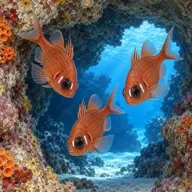
Cardinalfish
Almost always · Sultan iċ-ċawl
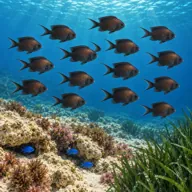
Damselfish
Almost always · Pixxi kahal · Summer
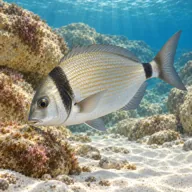
Common two-banded seabream
Almost always · Sargu
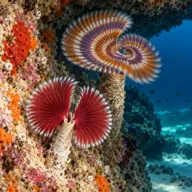
Tube worms and sponges
Almost always
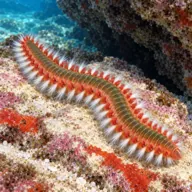
Fireworms
Almost always · Busuf · Summer
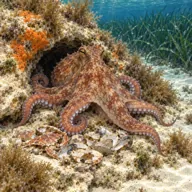
Octopus
Often · Qarnit · Autumn and winter
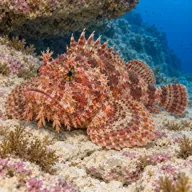
Scorpionfish
Often · Skorfna
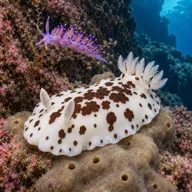
Nudibranchs
Often · Spring
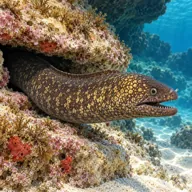
Mediterranean moray
Sometimes · Morina
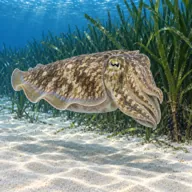
Cuttlefish
Sometimes · Siċċa · Spring
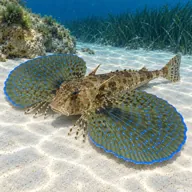
Flying gurnard
Lucky day · Bies · Summer
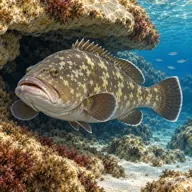
Dusky grouper
Lucky day · Ċerna
Getting in and staying safe
Same as Tugboat 10. Park at Żonqor Point in Marsaskala, kit up at the car, and walk down to the low rock entry on the southern side of the point. Toilets, kiosks, cafes and a dive centre are all close by, and there is plenty of space to rinse and change. The rocks are slick and urchin-studded, so pick your entry and exit spot carefully and agree it with the whole group before anyone gets wet.
- Reduced visibility compared with the rest of Malta
- Storm damage has left sharp edges and loose plating
- Silt inside the hull, easily stirred up
- Entanglement risk from fishing line on the superstructure
- Slippery entry rocks and sea urchins
- Boat traffic across the bay entrance
- Open sand crossing where it is easy to lose the reef and your bearings
A bit of history
St. Michael was built in 1944 at Trenton, Ontario by the Central Bridge Company for the British Ministry of War Transport, one of 265 Tanac type tugs turned out between 1943 and 1945. Around twenty metres long with a five metre beam, these little workhorses were shipped out as deck cargo to Malta, Gibraltar, Africa and the Far East and served the Royal Navy through the closing years of the war. Many were simply sold off wherever they happened to be when peace arrived, and this one stayed in Malta, towing ships around Grand Harbour for decades. She ended up laid up at Jetties Wharf in Marsa beside the old power station with Tug 10, and both quietly sat down on the bottom where the water was only a couple of metres deep. The Cassar Group bought them, then in November 1996 donated both to Malta's divers, covering the lifting, cleaning, towing and scuttling. Glass, doors and hatches were removed and passageways opened for safe exploration, and the two were sunk off Żonqor Point on 16 May 1998. Her deckhouse was destroyed by storms in 2025.
Divers say
Sign in to rate this site and leave a note for the next diver.
- No reviews yet. First one gets bragging rights.
Further reading: Malta Dive Sites: St. Michael · Wrecksite.eu entry for St. Michael · DIVE Magazine on storm damage at Żonqor