🐟 Fish · Chromis chromis
Mediterranean damselfish
Ċawlin Maltese, also Ċawla, Ċawl il-baħar
The dark confetti above every Maltese reef
Meet the Mediterranean damselfish
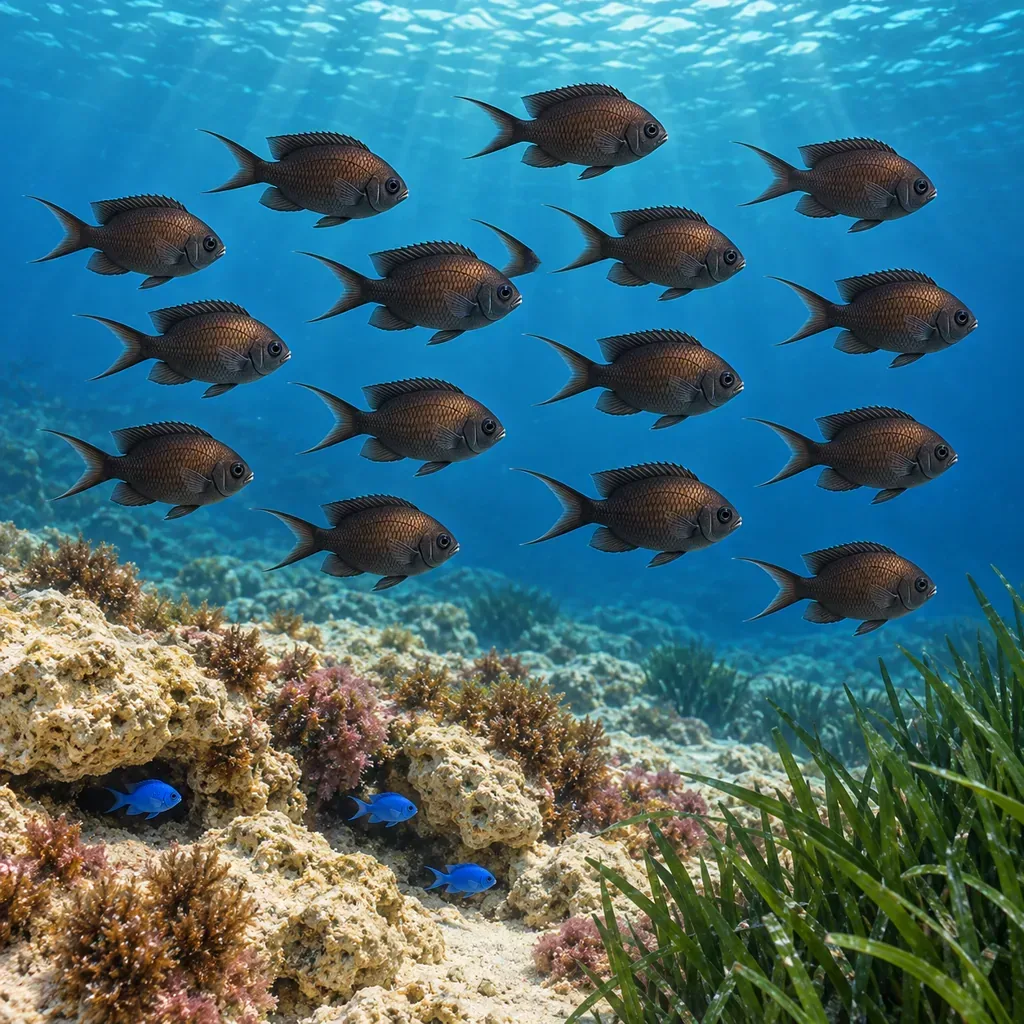
A small oval fish, no longer than a hand, sooty brown to almost black with a faint coppery sheen and a deeply forked tail. Each scale is edged a little darker, so at close range the flank looks like fine chain mail. The single dorsal fin runs most of the back, and the eye is large and dark. Juveniles are a completely different sight: brilliant electric blue, glowing almost neon under a torch, and they only darken to adult brown as they grow.
Damselfish are the commonest fish you will see in Malta, and the easiest to ignore. They hang in loose clouds a metre or two above rocky reef and the edges of Posidonia meadows, all facing into the current and picking plankton out of the water, then pour back down into the rocks when something bigger passes. Males clear a nest patch on rock in summer, fan it clean and guard it aggressively, which is when they will square up to a diver's mask.
One name to be careful with: Maltese kaħlija (also kaħli) belongs to the saddled seabream, Oblada melanura, not to this fish. Some Maltese dive and site notes apply kaħlija to the damselfish, probably because kaħal means blue and juvenile damselfish are vividly blue, but the established Maltese name for Chromis chromis is ċawl.
When to look: All year in shoals over the reef, with the blue juveniles most obvious in late summer and autumn and nest-guarding males in early summer.
Diving with them
- Hang still in mid-water and let the cloud close around you rather than swimming into it
- Look down into the rocks under the shoal for the blue juveniles, which hide low and sparkle under a torch
- Watch the shoal rather than the reef: when the whole cloud drops to the rocks at once, a barracuda, amberjack or dentex is usually about to appear
- For photographs, shoot upwards with the shoal between you and the sun, and use a fast shutter, as they never stop moving
- In early summer look for lone males over a cleaned patch of rock, darker than usual and unwilling to give ground
Can it hurt you?Harmless
Entirely harmless. A nesting male may bump or peck at a mask out of bravado, which is startling but cannot injure you.
Easily confused with
- Saddled seabream (Oblada melanura) shoals in the same water but is silver with a black-and-white saddle at the tail base
- Bogue (Boops boops) is slimmer, silver-gold with fine stripes and a much smaller eye
- Juvenile damselfish can be mistaken for tropical aquarium fish because of their electric blue, but nothing else in Malta is that colour at that size
Where to meet them: 107 sites
Further reading: Il-Miklem – Ċawl il-baħar (Chromis chromis) · Il-Miklem – Kaħli (ħut), the saddled seabream, for comparison · Pinnegar 2018 – why Chromis chromis is a key species on Mediterranean rocky littoral · FishBase – Chromis chromis