Anchor Bay · Malta
Anchor Bay Training Area
The sheltered inner corner of Anchor Bay behind the jetty, one to six metres deep over sand, rock and seagrass. This is where a lot of people in Malta take their very first breath underwater, and where everyone else finishes their dive.
Sea conditions
Excellent right now
Flat, sheltered and calm
Forecast for the site, updated 01:45 AM
- Waves
- 0.3 m
- from SE
- Wind
- n/a
- Swell
- 0.2 m
- 5 s period
- Sea temp
- 29 °C
Next 7 days
Exposed to wind and swell from: W (270°), NW (315°). The most sheltered water in the bay thanks to the jetty breakwater and the cliffs. It stays workable in conditions that would close the cave, and it is the standard fallback when a north easterly has closed the whole north coast. A strong westerly still gets in and kills visibility. Best season: April to November for teaching, though it is the most reliably diveable corner of the bay year round..
The dive
Every good dive site needs a quiet corner, and this is Anchor Bay's. The concrete jetty acts as a breakwater across the mouth, so the water behind it stays flat when the rest of the bay is moving, and the bottom shelves so gently that an instructor can stand a nervous student in waist deep water and work up to six metres over an hour. Sand, small rocks, patches of Posidonia and a scattering of low boulders give just enough to look at without anything to get lost in or tangled on.
For a first dive that is exactly right. Mask clearing goes better when the bottom is sand and the sun is on your back, and there is a real pleasure in watching somebody's first octopus happen at four metres rather than on some heroic wall. Bring a slate, bring patience, and let people take their time.
Experienced divers should not write it off either. The structure under and around the jetty makes a couple of genuinely nice little swim throughs, and the shallows are a good place to burn off the last fifty bar after the cave and the anchor. At night it is superb, because everything that hides in the day comes out onto open sand.
- Flat, sheltered water behind a purpose built breakwater
- Gentle slope from ankle deep to six metres, ideal for try dives
- Swim throughs under the jetty for divers who are past the skills stage
- Excellent easy night dive
Typical plan
Nothing to plan, which is the point. Ladders in, skills or a wander over the sand and seagrass, maximum six metres. Experienced divers usually arrive here at the end of a loop from the cave and the anchor and spend twenty minutes poking around the jetty structure before surfacing. Single cylinder, no decompression, and the limiting factor will be cold long before it is gas.
What the bottom looks like
- 1Sandy shelf for skills and kneeling drills2 m deep · 10 m out
- 2Seagrass patches on the inner bay floor3 m deep · 35 m out
- 3Low boulders and small reef outcrops5 m deep · 70 m out
- 4Short swim throughs under the jetty structure6 m deep · 95 m out
- 5Rocky edge where the training area meets the reef5 m deep · 140 m out
Mostly sand with scattered rock, low boulders and patches of seagrass.
Who you might meet

Damselfish
Almost always · Ċawl · Summer
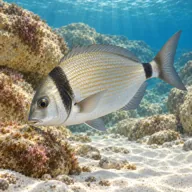
Two banded seabream
Almost always · Sargu
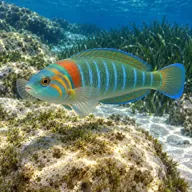
Ornate wrasse
Almost always · Tirda tal-passa
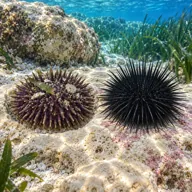
Sea urchins
Almost always · Rizzi
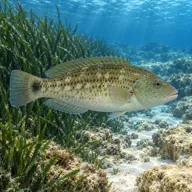
Peacock wrasse
Often · Lappun
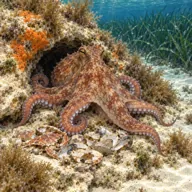
Common octopus
Sometimes · Qarnit
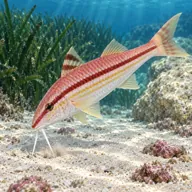
Red mullet on the sand
Sometimes · Trilja
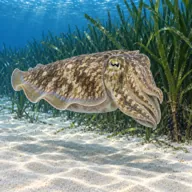
Cuttlefish
Sometimes · Siċċa · Spring
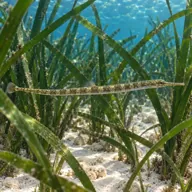
Pipefish in the seagrass
Lucky day · Gremxula tal-baħar
Getting in and staying safe
The easiest access in the bay. Park above, walk down the dirt road, and use the ladders on the inner face of the jetty. You can kit up on the concrete, and the water behind the jetty is shallow enough to stand in and sort yourself out. Toilets and a cafe are up at the Popeye Village entrance, and the surface interval view is a brightly painted cartoon village, which is not something most dive sites offer.
- Swimmers and snorkellers sharing the shallows in summer
- Slippery ladders and wet concrete on the jetty
- Sea urchins on the shallow rock
- Silt stirred to nothing by a class of new divers
- Small boats coming alongside the jetty
A bit of history
The jetty that shelters this corner was not built for divers. It went up as part of the Popeye film set project around 1979 and 1980, serving both as a landing point for materials brought in by sea and as a breakwater across the mouth of the bay to keep swell off the wooden village during filming. Forty odd years later it is one of the most useful pieces of dive infrastructure on the west coast.
Divers say
Sign in to rate this site and leave a note for the next diver.
- No reviews yet. First one gets bragging rights.
Further reading: Malta Dive Sites: Anchor Bay · Dive Shack Malta: Anchor Bay · Seashell Dive Centre: Anchor Bay · Wikipedia: Popeye Village breakwater and film set