Cominotto · Comino
Anchor Reef
A boulder wall on Cominotto's outer edge with a scatter of old anchors jammed in the gaps, holes and caverns underneath, and enough depth to make it an advanced first dive.
Sea conditions
Excellent right now
Flat, sheltered and calm
Forecast for the site, updated 01:45 AM
- Waves
- 0.3 m
- from SE
- Wind
- n/a
- Swell
- 0.2 m
- 5 s period
- Sea temp
- 29 °C
Next 7 days
Exposed to wind and swell from: N (0°), NE (45°), NW (315°), W (270°). Calypso describe it as sheltered from the south-west but prone to chop. That fits an outer reef on the north-western side of the islet: southerly weather is fine, anything with north or west in it builds swell over the drop-off. The channel also funnels wind, so a moderate breeze feels stronger here than it does inside the lagoon. Best season: June to October, with the best visibility in September and early October.
The dive
Anchor Reef is what happens when a sheltered anchorage sits next to an exposed reef for a couple of hundred years. Boats moored in the lagoon, the wind got up, the cable went tight, and the anchor stayed behind wedged in the rock. Several of them are still down there, encrusted and photogenic, which is how the reef got its name.
Structurally this is a wall built out of boulders rather than a clean cliff face. Big blocks have come away from the reef edge and stacked against each other, and the gaps underneath open into holes and low caverns. Push a torch in and you find the shade-lovers: burrowing anemones with their tentacle crowns out, peacock worms, sponges and the occasional grouper that has claimed a good address. Outside, dentex cruise past the drop-off and chromis hang in clouds over the top of the reef.
Average depth is around eighteen metres with thirty-six on the deeper edge, so it sits comfortably in advanced recreational territory but bites if you get casual about it. Small patches of Posidonia sit on the shallower shelves, a reminder that you are still only just outside the lagoon.
The watch item here is traffic and exposure rather than the reef itself. You are on the outer side of the islet, in and near the channel that ferries and day boats use constantly. Carry a delayed SMB, deploy it before you come up, and do not free-ascend into open water on a guess.
- Encrusted anchors still jammed where they were lost
- Torch work under the boulder stacks for anemones and fan worms
- Dentex and grouper along the drop-off
- Genuine wall-diving scenery only fifteen minutes from Ċirkewwa
Typical plan
Descend the reef edge to about thirty metres, work the anchors and the boulder caverns for fifteen minutes, then step up the wall in stages to eighteen and finish over the shallow shelf. Nitrox 28 or 32 makes a real difference to the no-stop time here. Reserve gas for a five-metre stop of at least three minutes, and deploy a DSMB before you leave the reef.
What the bottom looks like
- 1Posidonia patches on the shallow shelf11 m deep · 25 m out
- 2Stacked boulder wall16 m deep · 55 m out
- 3Old anchors wedged in the boulder gaps18 m deep · 90 m out
- 4Holes and low caverns under the blocks22 m deep · 130 m out
- 5Outer drop-off28 m deep · 175 m out
- 6Sand and rubble at the base36 m deep · 250 m out
Fallen coralline limestone blocks over a rubble base, with small Posidonia patches on the shallow shelves and sand at the deeper edge.
Who you might meet
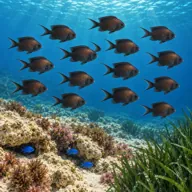
Damselfish
Almost always · Kaħlija
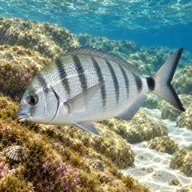
White seabream
Almost always · Sargu
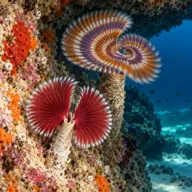
Peacock fan worm
Almost always
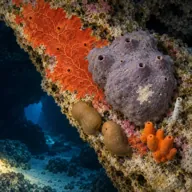
Encrusting sponges
Almost always · Sponża
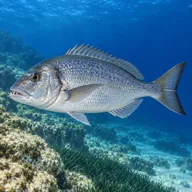
Dentex
Often · Dentiċi
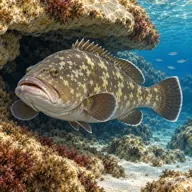
Dusky grouper
Often · Ċerna
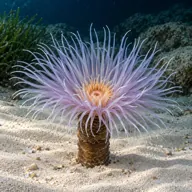
Burrowing anemone
Often
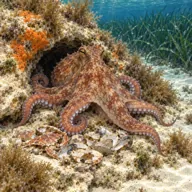
Common octopus
Often · Qarnita
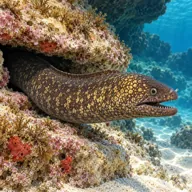
Mediterranean moray
Sometimes · Morina
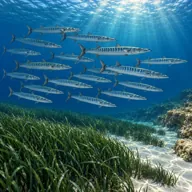
Barracuda
Sometimes · Lizz · Summer
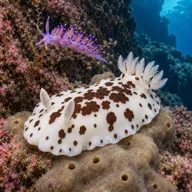
Nudibranchs
Sometimes · Spring
Getting in and staying safe
Boat only, from Ċirkewwa (roughly fifteen minutes), Marfa, or on a longer run from Sliema or Buġibba. Divers go in off the side and come back to a ladder. There is no shore, no landing and no facilities. Surface interval is normally spent moored back inside the Blue Lagoon.
- Ferry and day-boat traffic on the outer side and in the channel
- Depth: easy to creep past thirty metres while following the boulder line down
- Exposure, choppy surface and swell wrapping around the islet
- Snagged fishing line and old rope on the anchors
- Low overhead spaces under the boulder stacks
- Cold thermocline below about twenty-five metres outside high summer
- Surface positioning: deploy a DSMB before ascending
A bit of history
The name comes from the anchors snagged in the reef over generations of small-boat use in the Blue Lagoon anchorage. The alias Lautier's Reef commemorates Tony Lautier, who ran the Comino diving centre, and is more properly attached to a deeper mark in the channel between Comino and Gozo where five large anchors sit at around twenty-five to forty-five metres.
Divers say
Sign in to rate this site and leave a note for the next diver.
- No reviews yet. First one gets bragging rights.
Further reading: Calypso SAC, Cominotto Anchor Reef · Calypso SAC, Lautier's Reef · Seashell Dive Centre, Outer Cominotto Reef · Dive Shack Malta, Cominotto Reef