The gentle side of Cominotto: a shallow algae-and-seagrass shelf pocked with little caves, big enough that you need two dives to see both ends of it.
 Reef
Sea conditions
Stay dry right now
Sea is up (3.6 m WNW) · Fresh WNW wind (38 km/h) · Gusts to 63 km/h
Done for today. Tomorrow: not looking good. Best it gets is 22 at 16:00: Sea is up (1.4 m WNW)
Forecast for the site, updated 19:45 · Models disagree
Measured at Mġarr, Gozo (2.7 km away, 20:29): 36 km/h from WNW, gusts 41. The next hours lean on it.
- Waves
- 3.6 m
- from WNW, biggest 5.5
- Wind
- 38 km/h
- WNW, gusts 63
- Swell
- 0.4 m
- 7 s period
- Sea temp
- 22 °C
- air 18 °C
Hour by hour
Next 7 days
 0 3.6 m
45 W
 0 3.5 m
43 WNW
54 0.9 m14 W
 92 0.3 m
13 ESE
 90 0.3 m
12 E
90 0.3 m18 NNW
92 0.3 m16 SSW
Sunrise 06:26, sunset 17:06
Waves: Copernicus Med-Waves 4 km + MFWAM 8 km + EWAM 5 km + ECMWF WAM 9 km. Wind: ICON-2I 2 km + ECMWF IFS 9 km + ICON-EU 7 km + UKMO 10 km + ARPEGE 11 km. Read a few km out on the side the site is open to, then blended.
Exposed to wind and swell from: S (180°), SW (225°), SE (135°), W (270°). Calypso rate it sheltered from the north-east, which matches the geography: the islet takes the northerly weather on its far side. A southerly or south-westerly sends swell straight along the shore and produces surge in the caves. Best in a light northerly or in a flat calm. Best season: May to October, with September often giving the clearest water.
The dive
Inner Cominotto is the dive you do when the outer points are being unreasonable. It runs along the southern shore of the islet, on the side that faces Comino and the lagoon, and it never gets deep enough to be stressful: nine metres for most of the route, twenty-two if you push out onto the sand at the far end.
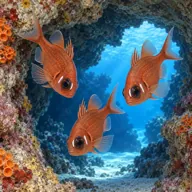
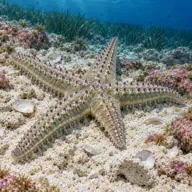
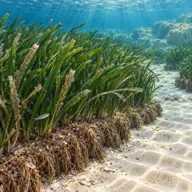
The rock here is capped with algae and Posidonia, so from above it reads as a soft green shelf rather than bare limestone. What makes it worth the trip is the base of that shelf, which is undercut in a dozen places into small caves barely bigger than a wardrobe. Put a torch into one and you get the standard Maltese cave cast: cardinalfish hanging in the dark with their oversized eyes, spiny starfish plastered on the ceiling, and whatever crustacean has decided to move in this season.
The practical quirk of the site is that you can swim in either direction from a mooring and the two halves are different enough that most guides will tell you it takes two dives to cover properly. Pick one, do it slowly, and come back for the other rather than sprinting the whole shore.
Despite being the sheltered flank, this is not always a flat-calm site. The surface can chop up in a north-easterly and a swell running through the channel will produce a rolling surge against the rock that makes the little caves feel busier than they look.
- A string of small caves you can peer into without ever going overhead
- Cardinalfish hanging motionless in the dark pockets
- Long, shallow, gas-limited diving rather than deco-limited
- Two genuinely different routes from the same mooring
Typical plan
Drop off the mooring, pick a direction and hold the base of the shelf at eight to ten metres, torching the undercuts as you go. Turn on thirds or at thirty minutes, whichever comes first, and drift back a couple of metres shallower over the Posidonia. Maximum twenty-two metres only if you make the deliberate excursion onto the sand. Sixty to seventy minutes on a single twelve-litre cylinder of air is realistic, and nitrox is a comfort rather than a necessity.
What the bottom looks like
- 1Algae-capped limestone shelf5 m deep · under the boat
- 2Small undercut caves at the base of the rock9 m deep · 50 m from the boat
- 3Posidonia patches on the shelf top12 m deep · 90 m from the boat
- 4Fallen boulders below the shelf17 m deep · 135 m from the boat
- 5Sand at the outer limit of the route22 m deep · 210 m from the boat


Limestone shelf topped with algae turf and Posidonia, undercut at the base, running out to sand and rubble at the deeper edge.
Who you might meet
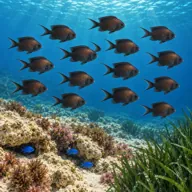
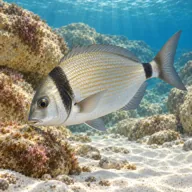
Almost always
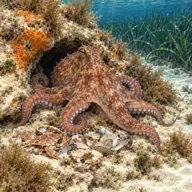
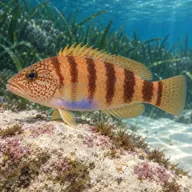
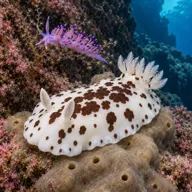
Lucky day
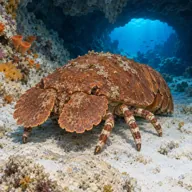
Marked ones can hurt you. What they do and what to do about it is under Getting in and staying safe.
Getting in and staying safe
Boat only, typically off a mooring in the Blue Lagoon or a live drop along the southern shore of the islet. Boats run from Ċirkewwa in around fifteen minutes. No shore exit, no landing on Cominotto, and no facilities of any kind on the islet. Exits are back onto the boat via ladder.
- Surge against the rock face and inside the small caves
- Choppy surface even when the site itself is sheltered
- Heavy boat and day-tripper traffic in the lagoon above
- Overhead environments: small, silty and easy to stir up
- Urchins on the shallow rock
- Fishing line snagged on the shelf edge
Marine life to respect
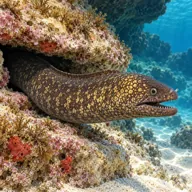
Mediterranean moray · Morina Can hurt you
Bites hard if a hand goes into its hole. Keep hands out of cracks and never feed one.
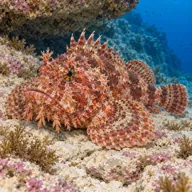
Red scorpionfish · Ċippullazza Can hurt you
Venomous spines, and it sits still on the rock. Look before you kneel or hold on; hot water if stung.
Divers say
Sign in to rate this site and leave a note for the next diver.
- No reviews yet. First one gets bragging rights.
Further reading: Calypso SAC, Inner Cominotto · Seashell Dive Centre, Cominotto reef conditions · Paradise Diving, Comino dive sites