Malta
Bristol Beaufighter
A twin engine RAF heavy fighter lying upside down on clean sand at 38 m, a short boat hop off St Julian's. Small, tidy and strangely moving, and over in one no stop bounce.
Sea conditions
Excellent right now
Flat, sheltered and calm
Forecast for the site, updated 02:18 AM
- Waves
- n/a
- Wind
- 3 km/h
- SSW, gusts 6
- Swell
- n/a
- Sea temp
- n/a
- air 25 °C
Next 7 days
Sunrise 06:46, sunset 19:04
Exposed to wind and swell from: N (0°), NE (45°), E (90°), SE (135°). Sheltered from the prevailing northwesterly by the bulk of the island, which is why this coast keeps working when the north and west are blown out. A northeasterly or easterly, on the other hand, builds swell straight onto the site and makes both the boat ride and the shot line miserable. Best season: May to November, with the warmest water and best visibility from late July into October. Winter trips happen on flat days but are weather dependent..
The dive
Everything about this dive is quick. The boat ride from Sliema or St Julian's takes minutes, the descent through open blue takes a couple more, and then a pale shape resolves out of the sand and you are hanging over an aeroplane that has been there since the war. The Beaufighter sits inverted, so what you meet first is the underside of the wings and two chunky radial engines, with the undercarriage legs and their perished tyres poking up like the last thing a beetle does before it gives up.
Much of the fuselage has been swallowed by sand over the decades, which actually helps: the parts still proud of the seabed are the parts worth looking at. One propeller remains bolted to its engine, blades bent where they bit the water. Circle the whole thing wide first, get your bearings and your photographs, then come in close for the details. The sand is fine and unforgiving, so keep your fins high and your buoyancy honest or the next pair down will get nothing.
There is no reef here, no wall, nothing to drift onto if you overshoot. The wreck is the dive and it is not large, so the plan is short and disciplined. Most centres treat it as a single deep dive with a decent safety stop and often pair it with something shallower afterwards on the way back in. Visibility on this stretch of coast is usually generous, which is just as well at 38 m with no line to follow home.
- A genuine WWII aircraft with both crew accounted for and alive
- Propeller still on its engine, blades curled by the ditching
- Undercarriage and tyres standing proud of the sand
- Short boat ride from Sliema and St Julian's
- Clean blue water and a wreck with no reef to distract you
Typical plan
Descend the shot or drop straight down to the sand at 38 m, orbit the airframe once at a respectful distance to see the shape, then a second tighter lap for the engines, propeller and undercarriage. Bottom time on a single 12 litre of air is realistically twelve to fifteen minutes, so nitrox 28 to 32 is worth every cent for the extra margin. Leave with plenty in the tank, deploy a surface marker, and take a slow ascent with a long stop at 5 m before the boat picks you up.
What the bottom looks like
- 1Beaufighter fuselage, inverted38 m deep · 30 m out
- 2Port radial engine with propeller still attached38 m deep · 36 m out
- 3Undercarriage legs and shredded tyres38 m deep · 44 m out
- 4Wing sections part buried in sand38 m deep · 52 m out
- 5Open sand plain around the airframe38 m deep · 70 m out
Flat, pale, fine sand with almost no relief, so the aircraft stands out as the only structure for a long way in any direction.
Who you might meet
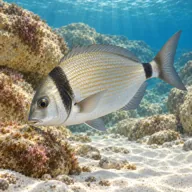
Common two banded seabream
Almost always · Sargu

Damselfish
Almost always · Kaħlija
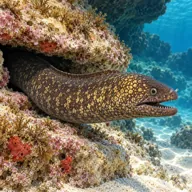
Mediterranean moray
Often · Morina

Common octopus
Often · Qarnit

Red starfish
Often · Stilla tal-baħar
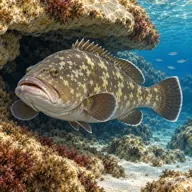
Dusky grouper
Sometimes · Ċerna

Common stingray
Sometimes · Raja
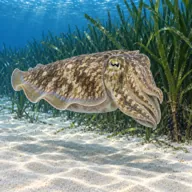
Common cuttlefish
Sometimes · Siċċ · spring

Barracuda
Sometimes · Lqiq · late summer
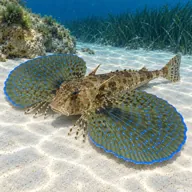
Flying gurnard
Lucky day · Bies
Getting in and staying safe
Boat only. Nearly every centre in Sliema, St Julian's and Bugibba runs it, and the crossing is short enough that you kit up on the way. Expect a shot line or a free descent onto the wreck depending on the skipper, and a live boat pick up at the end. Bring a delayed surface marker buoy and know how to deploy it, because this is a busy stretch of water for pleasure craft and ferries.
- 38 m on air means real narcosis and fast gas consumption
- No decompression limits arrive quickly, so the bottom time is genuinely short
- Fine sand silts out instantly if you drop a fin on it
- Heavy boat and jet ski traffic off St Julian's, so ascend on a line or a deployed buoy
- No shore to swim to if you surface away from the boat
- Sharp, thin corroded alloy and exposed edges on the airframe
- Snagged monofilament and light fishing gear on the structure
A bit of history
Built by the Bristol Aeroplane Company, the Beaufighter was a big twin engine, two seat machine that turned out to be a superb night fighter and an even better ship killer, and the squadron flying them from Malta went on to become No. 272 Squadron RAF. This particular aircraft got into trouble on 17 March 1943 shortly after take off, when engine failure left the crew no option but to put her down in the sea. Pilot and observer both got out and were picked up by a local water taxi, which is a rare happy ending for a Maltese aircraft wreck. The airframe measured about 12.6 m long with a 17.6 m wingspan and carried four 20 mm cannon plus six wing mounted machine guns.
Divers say
Sign in to rate this site and leave a note for the next diver.
- No reviews yet. First one gets bragging rights.
Further reading: Underwater Malta virtual museum: Beaufighter · Malta Dive Sites: Bristol Beaufighter · DiveWise Malta site guide · Wrecksite.eu entry