Marsaskala · Malta
P33
A former Cold War patrol boat sunk between the Marsaskala tugs in 2021, now broken into pieces by winter storms and dived as a scattered wreckage field at around 20 metres.
Sea conditions
Good right now
Some chop (0.5 m E)
Forecast for the site, updated 01:46 AM
- Waves
- 0.5 m
- from E
- Wind
- n/a
- Swell
- 0.5 m
- 5 s period
- Sea temp
- 28 °C
Next 7 days
Exposed to wind and swell from: NE (45°), E (90°), SE (135°), S (180°). Sheltered from the north westerly, exposed to easterly swell, which is exactly what took the wreck apart. After a hard easterly blow, expect the layout to have changed again. Best season: May to November for the best water, though the site is diveable year round when the wind is in the north west..
The dive
P33 was supposed to be Malta's newest easy wreck: twenty three metres of East German patrol boat, dropped neatly between St. Michael and Number 10 at recreational depth so that one shore dive could take in three hulls. For a season or two it worked beautifully. Then the winter weather got hold of her.
She was a light, thin-skinned vessel with a lot of superstructure, sitting in a spot that takes a real beating when the swell comes from the east. Storms tore panels and sections away, and the wreck has continued to come apart since. What you dive today is a debris field rather than a ship: recognisable chunks of hull, plating, and fittings spread over the sand, with the odd section still holding enough shape to shelter fish.
That is not a reason to skip it. Broken wrecks are often better for life than intact ones, because there are more edges, more shade and more hiding places per square metre. Cardinalfish and small bream gather in the overhangs, octopus move into the recesses, and the whole field is slowly greening over. It also makes a genuinely interesting stop between the two tugs, and a useful lesson in how quickly the Mediterranean reclaims what you give it.
Check locally before you go. Sections have been discussed for removal on safety grounds, and the layout on the bottom has changed more than once, so what your guidebook shows may not be what you find.
- A Cold War patrol boat added to the Żonqor wreck trio in 2021
- Three wrecks on one shore dive if gas and depth allow
- A clear demonstration of how fast the sea dismantles a scuttling
- Shaded wreckage that is filling up with fish
- Recreational depth throughout, no decompression needed
Typical plan
Follow the standard Żonqor bearing out to the reef base at eighteen metres, then work east along the sand. Take in Tugboat 10, cross to the P33 debris at around twenty metres, stay outside the wreckage rather than inside it, and carry on to St. Michael if you have the gas. Turn back onto the reef by twenty five minutes and ascend gradually on the return leg, finishing shallow. Nitrox 32 in a 12 litre makes the three-wreck version comfortable at about fifty minutes; on air, pick two of the three.
What the bottom looks like
- 1Foot of the Żonqor reef19 m deep · 140 m out
- 2Tugboat 10, western neighbour18 m deep · 165 m out
- 3Main P33 wreckage field20 m deep · 195 m out
- 4Scattered plating on sand21 m deep · 215 m out
- 5St. Michael, eastern neighbour22 m deep · 240 m out
Flat sand, now littered with steel and aluminium sections from the broken hull.
Who you might meet

Cardinalfish
Almost always · Sultan iċ-ċawl

Damselfish
Almost always · Pixxi kahal · Summer
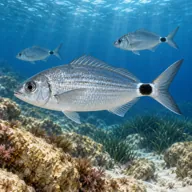
Saddled seabream
Almost always · Kaħlija
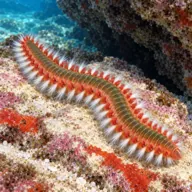
Fireworms
Almost always · Busuf · Summer
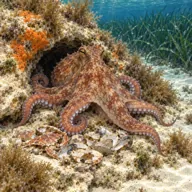
Octopus
Often · Qarnit · Autumn and winter

Encrusting sponges and early coral growth
Often · Qroll tad-dell
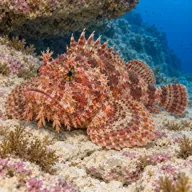
Scorpionfish
Sometimes · Skorfna
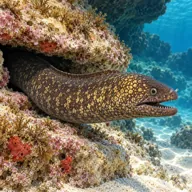
Mediterranean moray
Sometimes · Morina
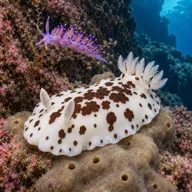
Nudibranchs
Sometimes · Spring
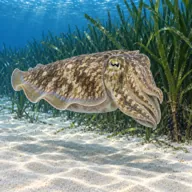
Cuttlefish
Sometimes · Siċċa · Spring
Getting in and staying safe
Identical to the tug wrecks. Park at Żonqor Point in Marsaskala, kit up beside the car, and enter over the low rocks on the southern side of the point. Cafes, kiosks, toilets and a dive centre are all within walking distance. Because the wreckage has shifted, ask a local dive centre for a current bearing rather than relying on an old one.
- Broken wreckage with sharp torn metal and unstable sections
- Do not attempt penetration, the structure is compromised
- Snagged line and loose cable in the debris field
- Reduced visibility typical of Marsaskala Bay
- Silt that lifts easily off the sand between the pieces
- Slippery entry rocks and urchins
- Boat traffic at the bay entrance
A bit of history
P33 was a Bremse class patrol vessel built in East Germany in 1971 and 1972, roughly twenty three metres long with a five metre beam and a mast reaching about seven metres above the deck. She came to Malta in 1992 in a job lot with her sister P32 and the two larger Kondor class boats P30 and P31, and served the Maritime Squadron of the Armed Forces of Malta until she was decommissioned in 2005. Scuttling her was talked about for years, with proposals for both Marsaskala and the north coast of Gozo, and an environmental planning statement was prepared in 2016. She was finally sunk at Żonqor Point on 31 July 2021 in a project run by the Malta Tourism Authority with the professional diving school association, at a reported cost of around a quarter of a million euro. Within a single winter the storms had ripped substantial parts off her, and she has continued to break down since.
Divers say
Sign in to rate this site and leave a note for the next diver.
- No reviews yet. First one gets bragging rights.
Further reading: Malta Dive Sites: P33 · DIVE Magazine: P33 wreck smashed by storms · Divernet: Malta sinks another patrol boat (2021) · Times of Malta: Patrol boat to be scuttled