Marsaskala · Malta
Mini Blue Hole
A collapsed sea cave on the Marsaskala coast joined to the open sea by a short swim-through, easy enough for new divers and irresistible for anyone with a camera.
Sea conditions
Good right now
Some chop (0.5 m E)
Forecast for the site, updated 01:46 AM
- Waves
- 0.5 m
- from E
- Wind
- n/a
- Swell
- 0.5 m
- 5 s period
- Sea temp
- 29 °C
Next 7 days
Exposed to wind and swell from: N (0°), NE (45°), E (90°), SE (135°). This coast faces north east, so it is comfortable in a north westerly and unpleasant in anything with east in it. The tunnel is the tell: if there is surge at the entry, do not swim the swim-through. Best season: May to October, with the clearest water and calmest tunnel in early autumn..
The dive
Calling it a blue hole sets expectations far too high, and then the site quietly exceeds them anyway. The sea has spent a very long time working at this stretch of limestone, and what is left is a small rock basin open to the sky with a bottom at about three metres, connected to the open water by a tunnel roughly ten metres long. The tunnel mouth sits at around seven metres, only a short fin from where you get in, so the whole feature is reachable within a minute of leaving the surface.
Swimming through it is the fun part. The passage is short, wide and never dark, and the light coming down into the basin at the far end does the sort of thing that sells dive holidays. Photographers position a buddy in the tunnel and shoot back towards the glow. Everyone else just goes back and forth a few times because it is that kind of place.
The rest of the dive is honest, unfussy Maltese coastline. Out from the hole the bottom is rock and boulder in both directions, cut by small sand-floored gullies with low reef walls on either side. Those gullies are where the life is: octopus wedged under ledges, moray heads poking out of cracks, damselfish clouds over the higher rocks. Fifteen metres is about as deep as it gets before the bottom levels off into sand.
Because it is shallow and sheltered from the prevailing wind, it doubles nicely as a training site, a second dive after the tugs, or a snorkel for whoever came along but does not dive.
- A short, bright swim-through that new divers can actually enjoy
- Sunlight pouring into the collapsed basin, a photographer's set piece
- Gullies stacked with octopus and moray
- Shallow enough for very long dives
- Works as a snorkel and freedive spot too
Typical plan
Drop in at the single entry point, descend to seven metres and find the tunnel mouth within a few fin kicks. Swim through into the basin, sit in the light for a few minutes, then come back out the same way. From there turn along the coast in either direction and follow the gullies out to twelve or fifteen metres, working back shallower as you go. Forty five to sixty minutes on a single 12 litre of air is easy given the depth, and there is no need for nitrox. Take a torch for the cracks and a DSMB if you plan to end away from the entry.
What the bottom looks like
- 1Seaward mouth of the swim-through7 m deep · 12 m out
- 2Ten metre passage, average depth about 5 m5 m deep · 22 m out
- 3Basin of the Mini Blue Hole3 m deep · 32 m out
- 4Boulder ground along the shore10 m deep · 70 m out
- 5Sand-floored gullies between low reef walls13 m deep · 140 m out
- 6Open sand where the bottom flattens16 m deep · 320 m out
Rock and boulder near the shore, broken by small sandy gullies, flattening to plain sand further out.
Who you might meet
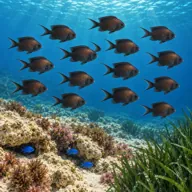
Damselfish
Almost always · Pixxi kahal · Summer
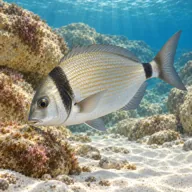
Common two-banded seabream
Almost always · Sargu
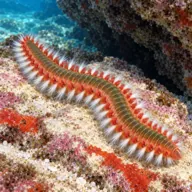
Fireworms
Almost always · Busuf · Summer
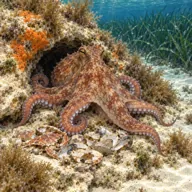
Octopus
Often · Qarnit · Autumn and winter
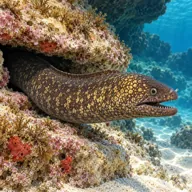
Mediterranean moray
Often · Morina
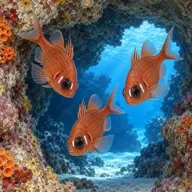
Cardinalfish
Often · Sultan iċ-ċawl
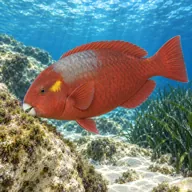
Mediterranean parrotfish
Often · Marnott · Summer
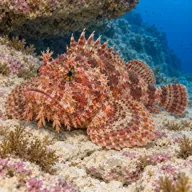
Scorpionfish
Sometimes · Skorfna
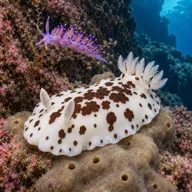
Nudibranchs
Sometimes · Spring
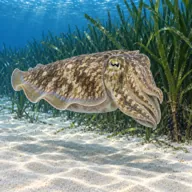
Cuttlefish
Sometimes · Siċċa · Spring
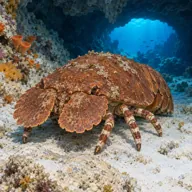
Slipper lobster
Lucky day · Ċkala
Getting in and staying safe
Reached from the rough coastal track that links Marsaskala with Xgħajra. Most cars can manage the track itself, but informal parking is about 700 metres in from the Marsaskala end, and from there it is a walk of more than seventy metres down a rough path over uneven, sharp rock to the water. There are no facilities at all, so kit up carefully and carry everything in one trip if you can. There is a single entry and exit point, over gently sloping rock and a shallow shelf softened by marine growth, which makes it kinder underfoot than it looks. Cafes, toilets and parking are back in Marsaskala.
- Surge inside the tunnel on any swell, the passage is short but pushy
- Overhead environment, brief but still overhead
- Silt in the basin that a fin kick will cloud instantly
- Rough, sharp walk in and out with kit
- Only one entry and exit point, so check it before you commit
- Sea urchins and slippery growth on the entry shelf
- No facilities, shade or phone-friendly assistance nearby
- Jellyfish in late summer
A bit of history
The hole is a piece of ordinary Maltese coastal geology doing something photogenic. Wave action has hollowed out the soft limestone along this shore over many thousands of years, undercutting the rock until the roof of a sea cave gave way and left a basin open to the sky with the original passage to the sea still intact underneath. The same process has shaped caves, arches and collapsed sinkholes all around the Maltese islands, the Azure Window's fall at Dwejra in 2017 being the most famous recent example of the end of that story.
Divers say
Sign in to rate this site and leave a note for the next diver.
- No reviews yet. First one gets bragging rights.
Further reading: Malta Dive Sites: Mini Blue Hole · Malta Tourism Authority Dive Site Report 4: Mini Blue Hole · PADI dive site listing: Mini Blue Hole