Malta
Le Polynesien
A hundred and fifty metres of French ocean liner lying on her port side east of Marsaskala, torpedoed in the last summer of the First World War. Deck structures start at forty five metres and the sand is at sixty five.
Sea conditions
Good right now
Some chop (0.5 m E)
Forecast for the site, updated 01:46 AM
- Waves
- 0.5 m
- from E
- Wind
- n/a
- Swell
- 0.5 m
- 5 s period
- Sea temp
- 28 °C
Next 7 days
Exposed to wind and swell from: N (0°), NE (45°), E (90°), SE (135°), S (180°). An open offshore site with nothing to hide behind from the north round to the south. Boats go on settled days with light winds from the west or north west, and even then the current can be running. Ask the skipper to check the surface drift before anyone kits up. Best season: May to October, with the calmest sea and best visibility usually in late spring and early autumn. Winter trips are rare and weather dependent..
The dive
The Poly is the wreck Maltese technical divers measure other wrecks against. She is enormous, she is largely coherent, and she is tilted at about forty five degrees onto her port side, which gives you an odd, slanted world where deck fittings hang sideways and you are never quite sure which way is up until you check your gauge. Even in good visibility you will not see the whole ship, and nobody does it in one dive.
The bow end is the crowd pleaser. The forward deck gun is still trained out over the rail, the anchors are in place, and the forward cargo space holds a scattering of motorcycle tyres and lengths of pipe that have been sitting there since 1918. Move aft and the story changes: the midships section where the torpedo struck is a collapsed tangle of plate and machinery, the engine room spilling out of it. Past the damage the stern pulls itself back together, with the after gun in remarkable condition and a propeller at the deepest part of the dive.
Underneath the stern deck, if you have the training and the gas to go looking, are the passenger spaces. Light fittings, bed frames and cast iron bathtubs are still recognisable, which is a strange thing to meet at sixty metres. The nickname Tal-Platti, the plate ship, comes from the china and bottles that once littered the sand around her. A great deal of it has been carried away over the decades by divers who should have known better, and removing anything from a wreck in Maltese waters has been illegal for a long time.
- Two intact deck guns, bow and stern, still on their mountings
- Passenger cabins with bathtubs and bed frames at sixty metres
- Torpedo damage you can read like a diagram amidships
- Propeller sitting on the sand at the deepest point
- A genuine First World War liner, protected as a war grave
Typical plan
Trimix dive with a strict plan. Descend the shot to the uppermost structures at forty five metres, pick one end of the ship, and spend twenty to twenty five minutes between forty five and sixty metres covering it before returning to the line. Bottom mix in the region of 18/45 with 50 percent and oxygen for decompression, and anticipate forty five to seventy minutes of stops depending on how deep you go and how long you stay. Two dives on separate days is the usual way to see bow and stern properly. Stage the line, mark it, and do not plan to swim against the current.
What the bottom looks like
- 1Uppermost starboard structures where the shot line lands45 m deep · 16 m out
- 2Forward deck gun and anchors47 m deep · 35 m out
- 3Forward hold with motorcycle tyres and pipes50 m deep · 65 m out
- 4Torpedo damage and the collapsed engine room53 m deep · 95 m out
- 5Stern deck gun57 m deep · 155 m out
- 6Passenger spaces with bed frames and bathtubs59 m deep · 180 m out
- 7Propeller63 m deep · 205 m out
- 8Seabed alongside the port side65 m deep · 220 m out
Flat, featureless sand and mud at sixty five metres, with the hull bedded into it along the port side.
Who you might meet

Cardinalfish
Almost always · Sultan iċ-ċawl
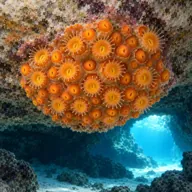
Golden cup coral
Almost always · Qroll tad-dell
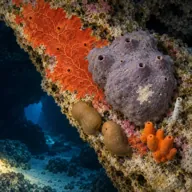
Encrusting sponges
Almost always · Sponża
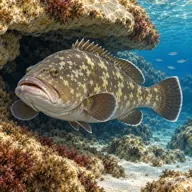
Dusky grouper
Often · Ċerna
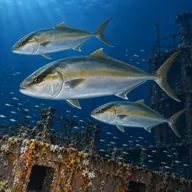
Amberjack
Often · Aċċola · autumn
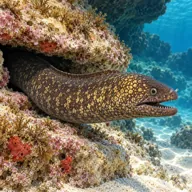
Mediterranean moray
Often · Morina
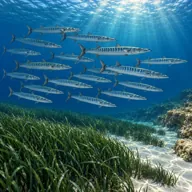
Barracuda
Sometimes · Lizz · late summer
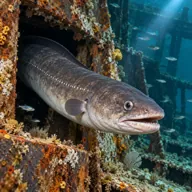
Conger eel
Sometimes · Gringu
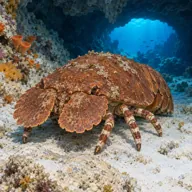
Slipper lobster
Sometimes · Ċikala
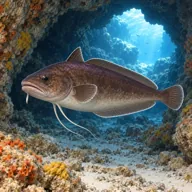
Forkbeard
Sometimes · Lipp tal-qawwi
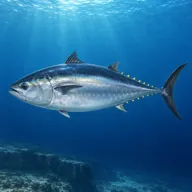
Bluefin tuna
Lucky day · Tonn · summer
Getting in and staying safe
Boat only, roughly three kilometres out from Marsaskala on Malta's south eastern coast. Operators run from Marsaskala, Marsaxlokk and St Thomas Bay, typically twenty to thirty minutes. A shot line is put in amidships and you descend and ascend on it, because losing the line here means a long free ascent in current. Book through a centre registered with Heritage Malta, because you are not diving this one independently. Surface support, oxygen and a proper deco station are standard, not optional.
- Strong and unpredictable current, sometimes around a knot at the surface
- Depth of forty five to sixty five metres, well beyond recreational limits
- Long mandatory decompression and full trimix planning
- Exposed offshore position with no shelter if the sea builds
- Entanglement and collapse risk inside the damaged midships section
- Overhead environment in the passenger spaces, penetration training required
- Fishing line and net snagged on the upper structures
- Protected war grave: touching or lifting anything is a criminal matter
A bit of history
Polynésien was built in 1890 at La Ciotat for Messageries Maritimes, a 152 metre, 6,659 ton steamer of about 17 knots, three-masted and driven by a triple expansion engine on twelve Belleville boilers. She spent her working life on the mail and passenger routes through Suez towards Australia and the Far East. Requisitioned and armed during the First World War, she was carrying Serbian troops and around 500 officer cadets from Bizerte in Tunisia towards Salonika when the German submarine UC-22 under Eberhard Weichold torpedoed her on 10 August 1918. She was hit on the port side near the engine room and went down inside half an hour. Most aboard were saved and brought to Malta, where they were treated at Cottonera Hospital, but seventeen people died. Among the survivors was Milunka Savić, the most decorated woman of the war. Since 1 May 2019 the site has been managed by Heritage Malta's Underwater Cultural Heritage Unit as an archaeological zone and a war grave, and diving it is done through registered dive centres and clubs under permit.
Divers say
Sign in to rate this site and leave a note for the next diver.
- No reviews yet. First one gets bragging rights.
Further reading: Heritage Malta, SS Polynesien · Wikipedia, SS Polynesien · Wrecked in my rEvo, dive report on Le Polynesien · Wrecksite, SS Polynesien · X-Ray Magazine, Malta's deep wrecks