Malta
HMS Southwold
A Hunt-class destroyer broken cleanly into two off Marsaskala, the bow on her starboard side around sixty eight to seventy two metres and the stern sitting upright at seventy three. Two very different dives on one ship, and probably the most dived of Malta's permitted deep wrecks.
Sea conditions
Good right now
Some chop (0.5 m E)
Forecast for the site, updated 01:46 AM
- Waves
- 0.5 m
- from E
- Wind
- n/a
- Swell
- 0.5 m
- 5 s period
- Sea temp
- 28 °C
Next 7 days
Exposed to wind and swell from: N (0°), NE (45°), E (90°), SE (135°), S (180°). Open water off the southeast coast with no shelter. The gregale and any easterly component make it undiveable and also build swell quickly. Pick a light southwesterly and a settled forecast. Current is the real variable here: it can run hard enough to make the swim back along the hull genuinely tiring, so brief a drift plan and carry a good marker. Best season: May to October, with the calmest and clearest conditions typically from late summer into early autumn..
The dive
Southwold is the deep wreck that Maltese technical divers keep going back to, and with reason. She broke into two sizeable pieces on the way down, which means you get a forty metre bow section lying over on its starboard side and a twenty eight metre stern section sitting bolt upright, three hundred metres apart on clean sand. Two dives, two moods, one ship.
The bow is the bigger and more dramatic half, running back to the engine room, and it has the recognisable destroyer shapes: the stem, the forward deck, the mounting positions. The stern half is smaller but arguably more photogenic, because upright wrecks always are, and its clean lines rise off the sand with the screws and rudder gear still in place. Both are well grown over now and both are full of fish, especially the swallowtail sea perch that seem to come with every deep Maltese wreck.
She has also been surveyed in detail and there is a published three dimensional model of the bow section, which is a genuinely useful thing to study before you go. Do that. It turns fifteen minutes of confused metal into a dive you can actually navigate.
- Two substantial wreck sections from one destroyer, three hundred metres apart
- Upright stern half, which photographs beautifully
- A Second Battle of Sirte veteran lost two days after the action
- Published three dimensional survey of the bow section to study beforehand
- Reliably heavy fish life on both halves
Typical plan
Normoxic trimix is usually sufficient. Pick one section. On the bow, drop the shot forward, work aft along the starboard-lying hull to the break, then return to the line, around twenty to twenty five minutes on the bottom. On the stern, a slow circuit of an upright twenty eight metre piece fits comfortably in twenty minutes. Around an hour of decompression on fifty percent nitrox and oxygen, and plan a drift deco if the current is running.
What the bottom looks like
- 1Bow section on its starboard side, about forty metres long66 m deep · 18 m out
- 2Forward deck and gun mounting area68 m deep · 35 m out
- 3Torn break aft of the engine room70 m deep · 58 m out
- 4Open sand between the two sections72 m deep · 180 m out
- 5Stern section sitting upright, about twenty eight metres long73 m deep · 300 m out
Flat, clean offshore sand, pale enough that the two dark sections stand out against it from several metres away.
Who you might meet
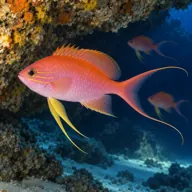
Swallowtail sea perch
Almost always · Pixxiroża
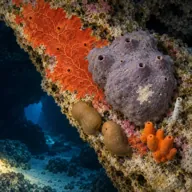
Encrusting sponges
Almost always · Sponża
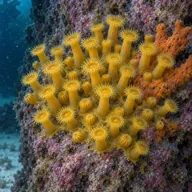
Yellow cluster anemone
Almost always
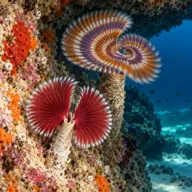
Tube worms
Almost always
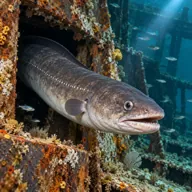
Conger eel
Often · Gringu
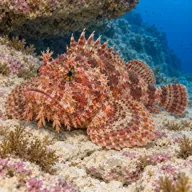
Red scorpionfish
Often · Ċipullazza
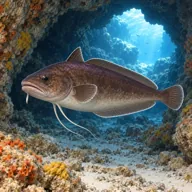
Greater forkbeard
Often · Lipp tal-qawwi
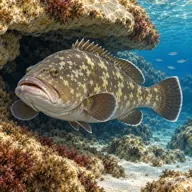
Dusky grouper
Sometimes · Ċerna

Greater amberjack
Sometimes · Aċċola · Late summer
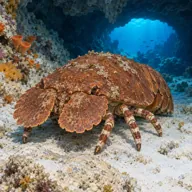
Slipper lobster
Sometimes · Ċikala

Common stingray
Sometimes · Boll
Getting in and staying safe
Boat only, through a Heritage Malta registered centre or club on a licensed boat, booked through the Underwater Cultural Heritage Unit. Boats generally run out of Marsaskala or Sliema depending on sea state. The bow and stern need separate shots, so decide which half you are diving before you leave the quay. Standard conditions apply: no penetration, no touching, war grave, no collecting. Marsaskala has parking, cafes and toilets at the quay, which makes the surface interval civilised.
- Seventy metres plus on trimix with a substantial decompression obligation
- Strong currents are regularly reported over this site
- War grave with unexploded ordnance on and around the wreck
- Torn structure at the break, with sharp edges and entanglement points
- Snagged fishing line, this ground is worked by local boats
- Three hundred metres of open sand between the two halves, do not try to swim it on a deco schedule
- Exposed offshore position with a long open water ascent
A bit of history
Southwold was a Type II Hunt-class escort destroyer, roughly eighty five metres long with a nine and a half metre beam, completed in October 1941 and sent to the Mediterranean Fleet. She fought at the Second Battle of Sirte on 22 March 1942, escorting the convoy ship Breconshire towards Malta. Two days later, on 24 March, while working to assist the disabled Breconshire off the southeast coast, she struck a mine. The explosion killed one officer and four ratings and flooded her engine room. She was abandoned, sagged badly and went down in two pieces around two and a half kilometres off Marsaskala. Her sister ship HMS Oakley, later transferred to Poland as ORP Kujawiak, is another deep Maltese wreck lost the same year. Southwold came under Heritage Malta management on 1 May 2019 and diving her now requires a permit.
Divers say
Sign in to rate this site and leave a note for the next diver.
- No reviews yet. First one gets bragging rights.
Further reading: Heritage Malta: HMS Southwold · Calypso Sub Aqua Club dive notes and coordinates for HMS Southwold · Wikipedia: HMS Southwold (L10) · Three dimensional model of the bow section