Malta
Martin Maryland
A wartime reconnaissance bomber lying inverted on sand at seventy metres off Marsaskala, located by sonar in 2020 and firmly in the realm of permitted technical diving.
Sea conditions
Good right now
Some chop (0.5 m E)
Forecast for the site, updated 01:46 AM
- Waves
- 0.5 m
- from E
- Wind
- n/a
- Swell
- 0.5 m
- 5 s period
- Sea temp
- 28 °C
Next 7 days
Exposed to wind and swell from: N (0°), NE (45°), E (90°), SE (135°), S (180°). Fully offshore and open to the eastern half of the compass. A deep decompression dive here needs a flat, settled sea for the ascent and the recovery, so the weather window matters more than the site itself. Best season: June to October, when the sea settles and the water is warm enough to make long decompression stops bearable..
The dive
This one is a trophy rather than a dive you book on a whim. The aircraft sits upside down at seventy metres on a gravelly sand bottom off the Marsaskala coast, well past any recreational limit and deep enough that a visit means trimix, decompression and a properly run team. It was found in spring 2020 during a side-scan sonar survey run by the University of Malta, which is why it is one of the newest names on Malta's deep wreck list.
What is down there is a broken but readable airframe. The wings have survived well, the nose section is smashed, the fuselage is scattered debris, and the tail assembly and the port engine are identifiable. The starboard engine lies roughly sixty metres away with its three-bladed propeller still attached, most likely thrown clear when the aircraft hit the water. Inside the wreckage a cockpit seat survives, which is the detail every account of the site comes back to, and the bomb bay shows the extra fuel tank fitted to give these machines the range for long reconnaissance runs.
At seventy metres the colour is gone and the light is thin, so this is a torch-and-shadows dive. Bottom times are short, the plan is rigid, and most of the dive is spent hanging in blue water on the way back up. If you want to see it without the gas bill, Underwater Malta's virtual museum has photogrammetry of the site that is genuinely worth an evening.
The legal side matters. Anything older than fifty years in Maltese waters is protected heritage, and visiting the historic wrecks means going through one of the small number of dive centres licensed by Heritage Malta. Turning up with your own boat and a set of twins is not an option.
- A Second World War reconnaissance bomber, inverted and intact enough to read
- Starboard engine and propeller thrown clear and lying alone on the sand
- A surviving cockpit seat, the detail nobody forgets
- Only found in 2020, so still a rarely visited site
- Viewable as photogrammetry through Underwater Malta's virtual museum
Typical plan
A permitted technical dive. Descend a shot to the debris field at seventy metres on trimix, spend fifteen to twenty minutes covering the wings, cockpit area and tail, and decide in advance whether the detached starboard engine sixty metres away is in or out of the plan, because it costs real bottom time. Ascend the line on a staged plan with decompression gases, typically an intermediate nitrox and oxygen from six metres, for something in the region of forty five to sixty minutes of stops. Surface support with spare gas and oxygen is mandatory practice. Nothing about this dive is casual, and it goes through a Heritage Malta approved centre or it does not happen.
What the bottom looks like
- 1Inverted main wing section70 m deep · 55 m out
- 2Broken nose and cockpit area with surviving seat70 m deep · 65 m out
- 3Bomb bay with long-range fuel tank70 m deep · 78 m out
- 4Tail assembly70 m deep · 92 m out
- 5Port engine70 m deep · 100 m out
- 6Gravelly sand with scattered debris70 m deep · 120 m out
- 7Starboard engine and propeller, about 60 m away70 m deep · 150 m out
Flat gravelly sand at seventy metres, with aircraft debris spread across it.
Who you might meet
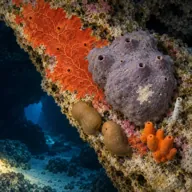
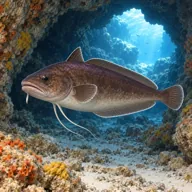

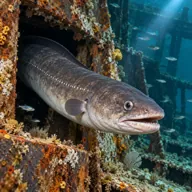
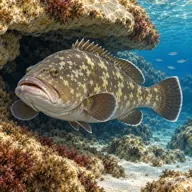

Getting in and staying safe
Boat only, and not a boat you organise yourself. Malta's historic wreck sites are protected under the Cultural Heritage Act, and dives on them must be arranged through one of the handful of dive centres holding Heritage Malta permission, with a licensed boat. Expect a briefing on what you may and may not touch, a strict no-souvenir rule, and a run out from Marsaskala or the Grand Harbour area. Surface support with oxygen and a deco station is standard practice for this depth.
- Seventy metres: trimix, decompression and full technical training required
- Serious oxygen toxicity and narcosis exposure at depth
- Very short bottom time for a long, committing ascent
- Low light and no colour, torches essential
- Fragile debris field that damages easily and should not be entered
- Offshore with no shelter and a long surface interval on the boat
- Protected heritage site, unauthorised diving is an offence
- Possible current at depth over open sand
A bit of history
The Martin Model 167 was designed by the Glenn L. Martin Company for a 1938 United States Army Air Corps light bomber requirement. The Americans passed on it, but France ordered it in quantity and Britain inherited and expanded those orders, naming it the Maryland. Marylands reached Malta in September 1940 with No. 431 Flight, flying the long-range photographic reconnaissance sorties that made the island so valuable to the Mediterranean campaign. It was a Maryland from Malta that brought back the photographs of the damage done to the Italian fleet at Taranto in November 1940 after Operation Judgement. This particular aircraft carried a crew of three and went into the sea off Marsaskala; it lay undisturbed and unknown until a University of Malta side-scan sonar survey picked it up in the spring of 2020.
Divers say
Sign in to rate this site and leave a note for the next diver.
- No reviews yet. First one gets bragging rights.
Further reading: Underwater Malta: Martin Maryland · Underwater Malta: shipwrecks and the law · Heritage Malta: Underwater Cultural Heritage Unit