Cargo Ship Camadan
A modern Turkish freighter that foundered in a storm in 2002 and now lies on her side in around 90 m of water east of Delimara. Strictly trimix, strictly for teams who plan properly.
 Wreck
Divers rarely, if ever, come here.
We found no record of anyone diving this site. It is charted so the picture of what lies under the water is complete, not because it is a place to go: there is no set route, no local briefing to lean on, and nothing on this page has been proven in the water.
Sea conditions
Reading the sea…
Exposed to wind and swell from: N (0°), NE (45°), E (90°), SE (135°), S (180°). Offshore and unprotected on every side that matters. You need a genuinely flat, settled day, ideally with a light northwesterly, both to find the shot and to spend an hour hanging on decompression afterwards. Best season: High summer, roughly late June to September, when settled spells are long enough to plan an expedition around..
The dive
Camadan is not a tourist wreck and never will be. She sits out in open water east of Delimara at a depth that turns a visit into a serious expedition: mixed gas, a support boat, planned decompression and a weather window you can trust. The reward is a big, recent, largely coherent cargo ship of around 80 m with a 14 m beam, the sort of thing that still looks like a ship rather than a pile of plate.
At these depths the light goes flat and blue and everything needs a torch to have any colour at all. Holds, masts, the accommodation block and the stern gear are all there to be examined, but a single dive gives you time for one section and no more. Most teams pick a target before splashing, run a line, and stick to it.
Information on her current condition is thin because so few people go. Reports differ even on the depth, which tells you something about how little traffic she gets. Go with a tech operation that has been there recently, believe their numbers over anything written on the internet, and build your plan around a long ascent rather than a long bottom time.
- A large, modern cargo ship still recognisably a ship
- Almost untouched by divers, so the marine growth is undisturbed
- A rare recent sinking among Malta's mostly wartime deep wrecks
- Serious trimix objective for teams building depth experience
Typical plan
A staged trimix dive with a planned bottom time of around twenty minutes at 85 to 90 m and a decompression schedule running well over an hour. Descend the shot, pick one section, work it, and be back on the line at the agreed runtime. Twin sets or a rebreather, at least two decompression gases, redundant torches, a delayed surface marker and a boat crew who know exactly when to expect you.
What the bottom looks like
- 1Upper hull and superstructure, shallowest part of the wreck80 m deep · under the boat
- 2Cargo holds and hatch coamings86 m deep · 15 m from the boat
- 3Stern section and rudder90 m deep · 40 m from the boat
- 4Bow90 m deep · 70 m from the boat
- 5Open seabed beyond the hull90 m deep · 95 m from the boat

Deep offshore sand and mud, soft enough that the hull has settled into it and quick to cloud if disturbed.
Who you might meet
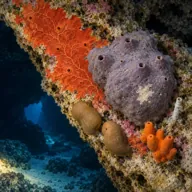
Almost always
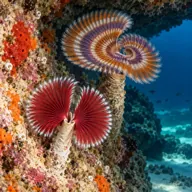
Often
Sometimes
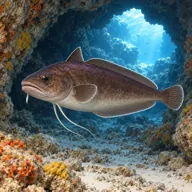
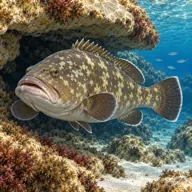
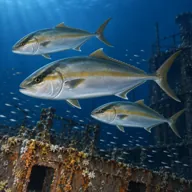
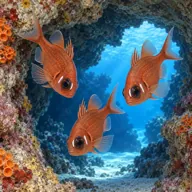
Lucky day
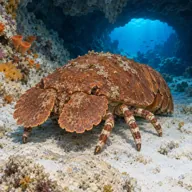
Marked ones can hurt you. What they do and what to do about it is under Getting in and staying safe.
Getting in and staying safe
Only for serious professionals who know exactly what they are doing. With no record of anyone diving here there is no one to ask and no set route, so treat every line below as the start of your own planning, not a briefing. Plan it as an expedition, not a dive.
Boat only, and only from operators equipped for deep technical work, usually running out of Marsaxlokk or the southeast. Expect a shot line, staged decompression gas, a surface marshal and a hard cut off if the forecast wobbles. This is not a dive you turn up for on the day.
- Around 90 m depth, which mandates trimix and full technical training
- Long mandatory decompression with no bail out to the surface
- Open sea with no shelter and a long boat ride to help
- Currents at depth that can differ from what you see on the surface
- Low ambient light and total dependence on torches
- Silt and collapsing plate inside the holds
- Snagged fishing gear and nets on an unvisited wreck
- Position and depth are poorly documented, so navigation errors are costly
Marine life to respect
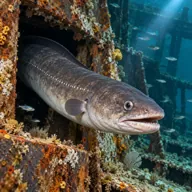
Conger eel · Gringu Can hurt you
Crushing bite if a hand goes into its hole. Look in from a distance and keep fingers out.
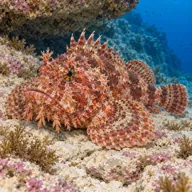
Red scorpionfish · Ċippullazza Can hurt you
Venomous spines, and it sits still on the rock. Look before you kneel or hold on; hot water if stung.
A bit of history
MV Camadan was a Turkish flagged general cargo ship of around 80 m, built in the early 1980s. In March 2002 she was caught in heavy weather off Malta and began taking water, with her cargo of phosphate fertiliser doing nothing to help. She sent an SOS on 11 March, the twelve crew were lifted off safely, and she went down the following day. There was no wartime drama and no deliberate scuttling here, just a working ship that lost an argument with a Mediterranean storm.
Divers say
Sign in to rate this site and leave a note for the next diver.
- No reviews yet. First one gets bragging rights.
Further reading: Malta Dive Sites: Cargo Ship Camadan · DiveBoat.mt wreck listing · Wrecksite.eu entry