Valletta · Malta
Fort St. Elmo
A boulder-and-gully reef tucked under the seaward ramparts of Valletta's oldest fort, quietly ignored by everyone queueing for the Maori. Go early, before the walls throw the whole reef into shadow.
Sea conditions
Excellent right now
Flat, sheltered and calm
Forecast for the site, updated 02:18 AM
- Waves
- n/a
- Wind
- 3 km/h
- SSW, gusts 6
- Swell
- n/a
- Sea temp
- n/a
- air 25 °C
Next 7 days
Sunrise 06:46, sunset 19:04
Exposed to wind and swell from: N (0°), NE (45°), E (90°). Only worth doing in genuinely calm water. A gregale out of the northeast makes the entries unusable and the exit a rescue waiting to happen. Visibility is the weak point: sitting between two harbours, it rarely matches the clarity of Malta's open coast and it changes with the current. Best season: May to October for reliable calm, with early morning strongly preferred year round. Water sits around 15 to 16 C in late winter and reaches 26 C by late summer..
The dive
Most divers who park at the tip of Valletta are here for one thing, and it is a half-buried destroyer sitting in sand at 16 metres. That leaves the reef on the open side of Fort St. Elmo pleasantly empty. It begins at about 13 metres, runs off towards the east-north-east, and sags gently to 17 metres before the edge gives way and drops to roughly 35 metres on sand.
What makes it worth the trip is the texture. The reef top is a jumble of limestone blocks with sand-floored gullies between them, so you spend the dive winding through corridors rather than following a featureless slope. Morays lurk in the cracks, octopus rearrange their doorstep pebbles, and shoals of salema drift over the top like smoke. Scattered bits of metal debris lie on the sand near the base, the usual harbour-mouth litter of a city that has been throwing things in the sea for five hundred years.
Timing matters more than usual. The fort walls are enormous and they block the afternoon sun completely, turning a colourful reef into a grey one. Book it for the first dive of the day and the gullies light up.
The other thing to respect is where you are. This is the gap between two working harbours, so ferries, tugs, cruise tenders and tourist boats are constantly crossing overhead. A deployed DSMB is not optional here, it is the only thing between you and a propeller.
- Boulder gullies you can wander through rather than a plain slope
- A drop-off from 17 m to 35 m for a proper deep leg
- Almost always empty while the Maori next door is busy
- Fort ramparts towering over the entry, hard to beat for atmosphere
- Can be combined with HMS Maori from the same entry point
Typical plan
In from the rock-cut pool, surface swim or shallow transit out past the rocks, then drop and follow the reef top east-north-east at 13 to 17 metres. Run out to the lip, drop over onto the face for a short look at the sand and the debris around 30 to 35 metres, then back up onto the reef top and work the gullies home on your remaining gas. Around 40 minutes on a single 12 litre with nitrox 28 to 32 if you want the deep leg without eating your no-stop time. Deploy a DSMB before you leave the reef, and surface right at the entry rather than out in the channel.
What the bottom looks like
- 1Top of St. Elmo reef13 m deep · 60 m out
- 2Boulder field with sand-floored gullies14 m deep · 130 m out
- 3Lip of the drop-off17 m deep · 220 m out
- 4Steep face down to the sand32 m deep · 285 m out
- 5Scattered metal debris on the sand34 m deep · 315 m out
- 6Sand floor at the reef base35 m deep · 330 m out
Blocky Coralline limestone boulders and gullies on the reef top, giving way to open sand with scattered debris at the foot of the drop-off.
Who you might meet
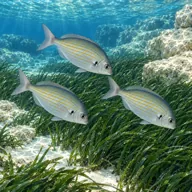
Salema
Almost always · Sallura

Mediterranean damselfish
Almost always · Kaħlija
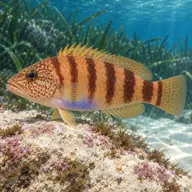
Painted comber
Almost always · Serrana
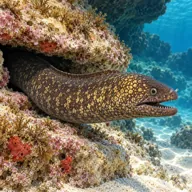
Mediterranean moray
Often · Morina
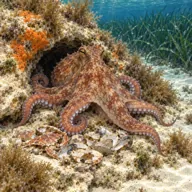
Common octopus
Often · Qarnit

Cardinalfish
Often · Re tat-trilji
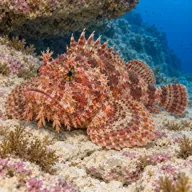
Scorpionfish
Often · Skorfna
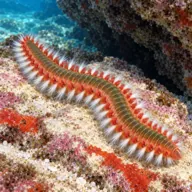
Bearded fireworm
Often · Busuf · summer
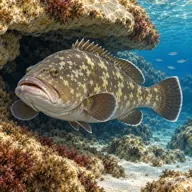
Dusky grouper
Sometimes · Ċerna
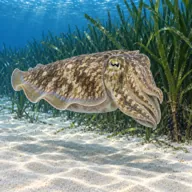
Common cuttlefish
Sometimes · Siċċa · autumn and winter
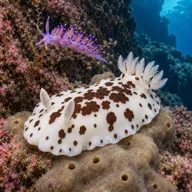
Nudibranchs
Sometimes · spring
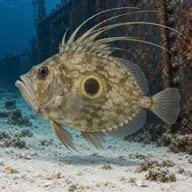
John Dory
Lucky day · Pixxi San Pietru · winter
Getting in and staying safe
Drive down Triq il-Lanca along the seaward side of the fort and park on the road; space is tight in summer. Four ways in. The first is at the corner of the fort where concrete steps drop to the rocks, then either rock-cut steps straight into the sea or a steel ladder into a small rock-cut pool that connects to open water through a gap; this one also serves the Maori. A second set of steeper rock-cut steps sits nearby, easy enough to get in, genuinely awkward to get out. A third rock-cut pool lies roughly in line with the middle of the seaward wall. The fourth is furthest along, close to the breakwater, over uneven but gently sloping rock. The tarmac ends near the first two points and continues as a rough track. Ladders come out for the winter, so check before you kit up. Cafe and toilets are a short walk away, and the National War Museum makes a good surface interval.
- Heavy harbour traffic: ferries, tugs and tourist boats crossing overhead, DSMB essential
- Rock-cut steps get very slippery with algae
- Exit becomes difficult and then dangerous in any swell
- Ladder removed over winter
- Drop-off bottom at 35 m puts the deeper part into decompression territory quickly
- Visibility swings widely with current and harbour outflow
- Anglers fishing from the rocks, expect lost line and hooks
- Mauve stinger jellyfish in spring and autumn
A bit of history
Fort St. Elmo was completed by the Knights of St John in 1552 to guard the entrances to both Grand Harbour and Marsamxett. In 1565 it became the anvil of the Great Siege, holding out against the Ottoman army for roughly a month before falling with almost no survivors, a delay that arguably saved the rest of Malta. The fort was rebuilt and enlarged repeatedly, served as a Second World War anti-aircraft position, and now houses the National War Museum. The breakwater running south from the point was built by the British in the first decade of the twentieth century. The reef itself is Lower Coralline limestone, the hard grey rock that forms the base of the Maltese sequence and breaks into the blocky boulders you swim between.
Divers say
Sign in to rate this site and leave a note for the next diver.
- No reviews yet. First one gets bragging rights.
Further reading: Malta Dive Sites: Fort St. Elmo, Valletta · Divers Guide: Fort St Elmo site information · Malta Tourism Authority, Dive Site Report 2: Fort St Elmo (PDF) · VisitMalta: HMS Maori, St Elmo Bay