Malta
Xrobb l-Għaġin
A low-key boulder and seagrass dive off the Xrobb l-Għaġin headland near Marsaxlokk, better known as the shore access for the deep Blenheim bomber than as a dive in its own right. Clear water, quiet ledges, not a lot of drama.
Sea conditions
Good right now
Some chop (0.5 m E)
Forecast for the site, updated 01:46 AM
- Waves
- 0.5 m
- from E
- Wind
- n/a
- Swell
- 0.5 m
- 5 s period
- Sea temp
- 29 °C
Next 7 days
Exposed to wind and swell from: N (0°), NE (45°), E (90°), SE (135°). This corner of the southeast coast looks out at open water from the north round to the southeast, so a gregale or any easterly makes the ledges dangerous and the visibility poor. It comes into its own in the prevailing northwesterly, when the cliffs block the wind and the water goes glassy. Because it is on the opposite side of the island to most dive centres, it is a good call on days when the northwest coast is blown out. Best season: June to October for warm, clear water and settled conditions. Spring is fine on a calm northwesterly day. Winter easterlies rule it out completely..
The dive
Let us be straight about this one. Xrobb l-Għaġin is a lovely place to spend a morning and a fairly ordinary place to spend a dive. The rocky bathing ledges below the nature park are secluded, shaded by the cliffs for part of the day, and the water is often some of the clearest on the island. Underwater you get tumbled limestone boulders in the first twenty or thirty metres, then a slow slope of Posidonia meadow and sandy patches out to about fifteen metres.
The boulders are the good part. They are big, deeply undercut, and full of the small residents that make a shallow Maltese dive worth doing: octopus wedged in cracks, scorpionfish doing their impression of a rock, wrasse following you around hoping you will turn something over. Work them slowly with a torch and the dive is genuinely pleasant. Fin straight out to the sand and you will find, as one diver put it bluntly online, not very much.
The seagrass is worth a second look rather than a swim across. Posidonia meadows here hide pipefish, small cuttlefish and the occasional flash of something in the sand, and the sandy clearings are where rays park themselves.
Many people are here for a different reason. The Bristol Blenheim bomber that ditched offshore in 1941 lies out at around forty two metres, and this entry is the usual way in for the technical divers who visit it. That is a planned, qualified, staged dive. If you are diving the shallow site, enjoy the boulders and stay well inside your limits, because the bottom here keeps going and the water is clear enough to make forty two metres look deceptively close.
- Big undercut boulders full of octopus, scorpionfish and wrasse
- Some of the clearest water on the island on a settled day
- Secluded, cliff-shaded ledges with almost nobody else around
- Healthy Posidonia meadow worth working slowly for pipefish and cuttlefish
- The shore gateway to the deep Blenheim bomber for qualified technical divers
Typical plan
Single tank, air, nothing clever. Enter off the ledges, drop straight down onto the boulders at three to five metres and give them the first twenty minutes with a torch, looking into every crack and undercut. Then ease out along the slope to twelve or fifteen metres over the seagrass, quarter across the sandy clearings looking for rays and cuttlefish, and turn on thirds or on time. Return shallow over the boulders, which gives you a natural safety stop at five metres and usually the best light of the dive. Fifty to sixty minutes is comfortable. Set a hard maximum depth before you get in, because the bottom keeps sloping away and the visibility here makes deep look shallow.
What the bottom looks like
- 1First boulder field right off the ledges3 m deep · 20 m out
- 2Larger undercut boulders with cracks and overhangs6 m deep · 55 m out
- 3Posidonia meadow taking over from rock9 m deep · 100 m out
- 4Sandy clearings between the seagrass12 m deep · 150 m out
- 5Open sand at the outer limit of the shallow dive15 m deep · 210 m out
- 6Continuation offshore towards the deep Blenheim bomber, technical dive only15 m deep · 220 m out
Tumbled limestone boulders close to shore, then Posidonia meadow broken by sandy clearings out to fifteen metres.
Who you might meet

Damselfish
Almost always · Kaħlija
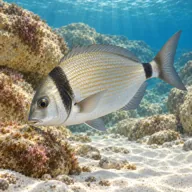
Two-banded bream
Almost always · Sargu
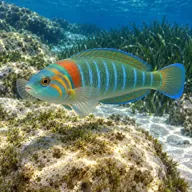
Ornate wrasse
Almost always · Ġurbell
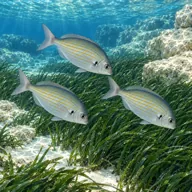
Salema
Almost always · Xilpa · Shoals in summer
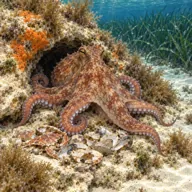
Common octopus
Often · Qarnit
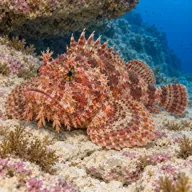
Scorpionfish
Often · Ċippullazza
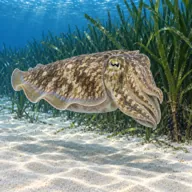
Common cuttlefish
Sometimes · Siċċ · Spring
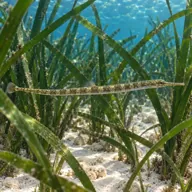
Pipefish in the Posidonia
Sometimes · Gremxula tal-baħar

Common stingray
Sometimes · Bokkatura
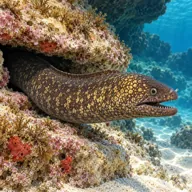
Mediterranean moray
Sometimes · Morina
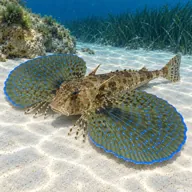
Flying gurnard
Lucky day · Ħuta tat-tajra · Late summer
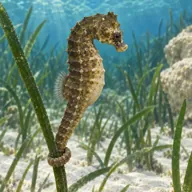
Short-snouted seahorse
Lucky day · Żiemel tal-baħar
Getting in and staying safe
Drive out of Marsaxlokk towards Delimara and follow the road and then the track to Xrobb l-Għaġin Nature Park. Park by the centre and walk the last stretch on foot, which is easy but exposed with no shade on the way. Stone steps run down to the rocky bathing ledges at the water. Take them slowly in kit, because the lower rocks are algae covered and extremely slippery, and consider handing tanks down rather than walking them. Entry is a giant stride or a slide from the ledge, exit at the same spot. There are no toilets, no cafes and no fresh water at the shore, so sort all that out in Marsaxlokk, which is five minutes away and full of both.
- Very slippery rock ledges and steps at the water, the single most likely way to get hurt here
- Awkward exit in any swell, with nothing to hold except wet rock
- Long walk in full kit from the parking area with no shade
- Deep water close inshore, and a famous 42 metre aircraft wreck that tempts divers beyond their training
- Boat traffic from Marsaxlokk and Delimara, including fishing boats
- No facilities, no phone-friendly infrastructure and a slow emergency response
- Sun exposure and heat on the surface interval in summer
- Jellyfish drift through in late spring and summer
- Occasional current running around the point
A bit of history
The headland carries far more history above water than below. A Neolithic temple built from around 4000 BC sits on the cliff edge here, identified by Temi Zammit and Thomas Ashby in 1913 and excavated over the following two years, with a paved court and inner passage opening towards the southeast. Much of it has fallen into the sea as the cliff erodes, and survey work in 2015 confirmed that substantial remains still cling on. The peninsula also holds the ruins of a De Redin era watchtower, and the large modern building on the site began life as a Deutsche Welle radio relay station before being converted into the Xrobb l-Għaġin Nature Park and Sustainable Development Centre. Offshore, a Bristol Blenheim bomber was shot down in 1941 and ditched here, and it now lies in deep water as one of Malta's best preserved aircraft wrecks, engines and wings intact and the forward fuselage broken up.
Divers say
Sign in to rate this site and leave a note for the next diver.
- No reviews yet. First one gets bragging rights.
Further reading: Malta Dive Sites: Xrobb Il-Ghagin · Wikipedia: Xrobb l-Għaġin peninsula and nature park · Wikipedia: Xrobb l-Għaġin Temple · Visit Malta: Xrobb l-Ghagin Nature Park · Wikivoyage: Diving in Malta, Blenheim bomber and access notes · Calypso Sub-Aqua Club: Xrobb l-Ghagin