Wied iż-Żurrieq · Malta
Valley
The narrow rock-bottomed inlet everyone swims through on the way to somewhere better, and a genuinely good shallow dive in its own right. Best night dive on the south coast, and the corner that stays diveable when everything else is closed.
Sea conditions
Excellent right now
Flat, sheltered and calm
Forecast for the site, updated 01:45 AM
- Waves
- 0.5 m
- from ESE
- Wind
- n/a
- Swell
- 0.5 m
- 5 s period
- Sea temp
- 29 °C
Next 7 days
Exposed to wind and swell from: S (180°), SW (225°). By far the most sheltered water in the area. The inlet opens roughly south-south-west, so only a direct southerly or south-westerly pushes swell right up to the quay, and even then the slipway usually stays workable. This is the fallback site when the reefs and the wreck are out. Best season: All year. Winter is quiet and often beautifully clear, and the shallow depth keeps the cold manageable. Night diving is best from May to October when the water is warm and the quay is calm after dark..
The dive
Wied iż-Żurrieq is a slot in the cliff barely wide enough for the luzzu boats, and the bit of sea inside it is the launch pad for every dive here. It shelves gently from the quay to about 14 or 15 metres at the mouth, with a rock bottom, low overhangs and enough loose blocks to keep a slow diver busy for an hour.
That makes it unfairly useful. Instructors run skills here because the depth is forgiving and the walls block the swell. Technical divers use it to shake down kit and hover through drills. And anyone with a torch and a bit of patience finds that the overhangs are packed: octopus in every third crevice, morays out hunting after dark, scorpionfish doing an unconvincing impression of a rock, and cuttlefish drifting past at eye level in autumn.
The night dive is the one to book. The inlet is walled, shallow and easy to navigate, the boat traffic has gone home, and the residents come out. It is about as low-stress as night diving gets while still delivering the good stuff.
And on days when the sea is up, when the reefs are unusable and the wreck is a fantasy, the valley plus the slipway exit will often still give you a dive.
- Outstanding and low-stress night dive
- Shallow, sheltered and forgiving, ideal for training and skills
- Marine life stacked under the overhangs at very shallow depth
- The one corner that still gives you a dive when the sea is up
- Gateway to East Reef, West Reef and the Um El Faroud
Typical plan
Straightforward. In at a ladder or off the slipway, drop to the rock bottom and work slowly down one side of the inlet to the mouth at around 14 metres, then cross and come back along the other side in the shallows. Torch in hand the whole way, because everything interesting is tucked into a hole. Fifty to sixty minutes is easy on a single 12 litre given the depth, and air is perfectly adequate. For a night dive, agree a turn point at the inlet mouth and do not go past it.
What the bottom looks like
- 1Loose blocks under the quay wall4 m deep · 40 m out
- 2Low overhangs along the inlet sides7 m deep · 90 m out
- 3Rock bottom stepping down the inlet11 m deep · 150 m out
- 4Seagrass patches near the mouth14 m deep · 210 m out
- 5Mouth of the inlet, reefs begin15 m deep · 250 m out
Rock and rubble throughout, with loose blocks and undercut ledges and a few patches of seagrass near the mouth.
Who you might meet
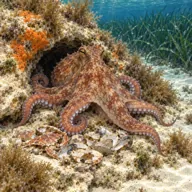
Common octopus
Almost always · Qarnit
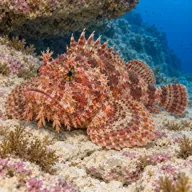
Scorpionfish
Almost always · Skorfna

Mediterranean damselfish
Almost always · Kaħlija
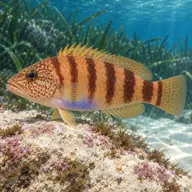
Painted comber
Almost always · Serrana
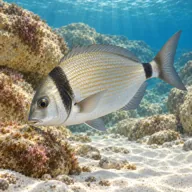
Two-banded bream
Almost always · Sargu
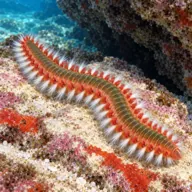
Bearded fireworm
Almost always · Busuf · summer
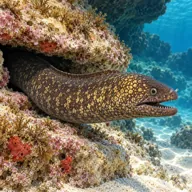
Mediterranean moray
Often · Morina · best at night
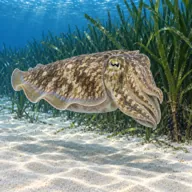
Common cuttlefish
Often · Siċċa · autumn and winter
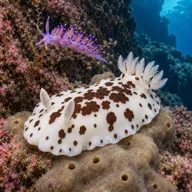
Nudibranchs
Often · spring
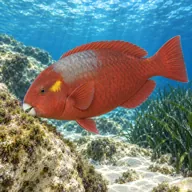
Mediterranean parrotfish
Sometimes · Marlozz aħmar · summer
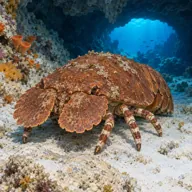
Slipper lobster
Lucky day · Ċiċċra · at night
Getting in and staying safe
The most convenient shore diving access in southern Malta. Informal diver parking at the bottom of the hill where the road ends, near the steps down to the quay, or by the top of the ramp; street parking too, and two official car parks 150 to 200 metres away. Summer weekends are genuinely crowded. Down to the quay by stairs or ramp depending where you park. Four ladders along the quay: one below the stairs, two about 20 metres either side, and one inside the bay by the tourist boat embarkation point, plus a slipway extending the ramp. Giant stride works anywhere along the concrete. The whole quay is concreted and gets slippery with algal growth, worst on the slipway. Check ladders are in place before kitting up; they get removed or torn away over winter. The slipway is sheltered from the open sea and is often the only usable exit when it is rough. Restaurants, cafes, shops and public toilets nearby, open late in summer, shorter hours in winter.
- Busy tourist boat traffic in and out of the inlet, especially midday in summer
- Slippery concrete quay and slipway
- Ladders can be missing in winter
- Anglers on the shore, enter away from their lines
- Currents can run through the mouth of the inlet even on calm days
- Very busy with swimmers and snorkellers in peak summer
- Disorientation at night if you leave the walls, stay inside the inlet
A bit of history
Wied iż-Żurrieq has been a working landing for small fishing boats for a very long time, and the brightly painted luzzus moored here still carry the eye of Osiris on the bow, a Phoenician inheritance that Maltese fishermen never quite gave up. The inlet is a collapsed and eroded slot in Upper Coralline limestone, the same rock that forms the Blue Grotto a kilometre to the east. The valley's diving history is mostly recent: it became the standard access point for the south coast reefs, and then, from September 1998, for the Um El Faroud.
Divers say
Sign in to rate this site and leave a note for the next diver.
- No reviews yet. First one gets bragging rights.
Further reading: Malta Dive Sites: Wied iz-Zurrieq · Dive Systems Malta: Zurrieq Reef and Caves · Divers Guide: Zurrieq reef access and facilities · Malta Tourism Authority, Dive Site Report 8 (PDF)