Reqqa Point · Gozo
The Point
The tip of the Reqqa headland itself: a sheer limestone face where the reef ends and the deep water begins, with the biggest fish on this coast patrolling the corner.
Sea conditions
Good right now
Some chop (0.4 m ESE)
Forecast for the site, updated 01:33 AM
- Waves
- 0.4 m
- from ESE
- Wind
- 7 km/h
- SSW, gusts 14
- Swell
- 0.3 m
- 5 s period
- Sea temp
- 28 °C
- air 27 °C
Next 7 days
Sunrise 06:47, sunset 19:06
Exposed to wind and swell from: NW (315°), N (0°), NE (45°), E (90°), W (270°). The point sticks out into open sea, so it is the first part of the Reqqa area to become undiveable. Needs a genuinely calm day with the wind off the land. Current is strongest around the corner and often reverses with westerly swell. Best season: July to September for the warmest water and the best pelagic action, with June and October usually just as good and quieter..
The dive
Everything about The Point is about the edge. The reef runs out from shore at a civilised 15 to 17 metres, then stops. Beyond it the rock turns vertical and keeps going, past 30, past 40, past anything a sport diver has business visiting. Hanging on that edge with the wall on one side and nothing at all on the other is the single best thing about diving northern Gozo.
Current is part of the deal. Water pushing around the headland brings food, and the food brings everything else. Dentex cruise past in loose groups, barracuda hang in the mid water looking bored, and in late summer amberjack and the occasional tuna come through fast enough that you only really register them afterwards. Down in the boulder field at 25 to 30 metres live the grouper this site is famous for, and some of them are genuinely over a metre.
The corner is also where the site gets serious. Current here can run at a knot or two and occasionally more, and it does not always run the way you expect. Sensible teams look at the water from the rocks before kitting up, plan the dive into the current first, and carry an SMB in case the exit is not an option. When it is calm, though, this is a two tank day: the point in the morning, the chimney and boulders in the afternoon, and a very smug drive back to Marsalforn.
- Hanging on a vertical wall with open blue behind you
- Metre plus grouper under the boulders at 25 to 30 m
- Dentex and barracuda patrolling the corner
- Visibility that can top 40 m on a settled summer day
Typical plan
Assess the current from the rocks first. Enter, descend to the reef at 15 to 17 metres, and swim towards the point into the current keeping the wall on your shoulder. Drop to 28 or 30 metres along the boulder field for the deep third of the dive, turn on a third of your gas, then drift back and climb the wall to the shallows. Finish over the 6 metre shelf with a long stop and a good look at the exit before you commit to it. Forty minutes on a 12 litre, nitrox 32 as standard, SMB and a torch for peering into the fissures.
What the bottom looks like
- 1Shallow shelf at the top of the wall6 m deep · 30 m out
- 2Boulder field where the grouper live20 m deep · 100 m out
- 3Vertical face at the corner of the point30 m deep · 140 m out
- 4Drop past recreational limits40 m deep · 175 m out
- 5The Reqqa bottle, technical shaft 58 m to 35 m58 m deep · 215 m out
Sheer coralline limestone cut by fissures, with large fallen boulders stacked at the base of the shallower reef.
Who you might meet
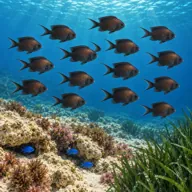
Damselfish
Almost always · Cawlija
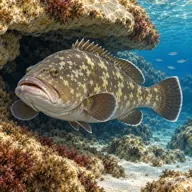
Dusky grouper
Often · Ċerna
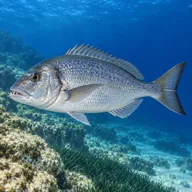
Common dentex
Often · Dentiċi

Mediterranean barracuda
Often · Lizz · Summer and autumn
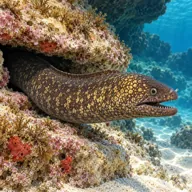
Mediterranean moray
Often · Morina
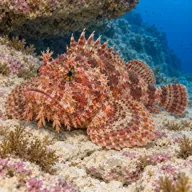
Scorpionfish
Often · Ċippullazza

Common octopus
Often · Qarnit
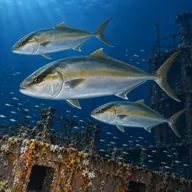
Greater amberjack
Sometimes · Aċċola · Late summer
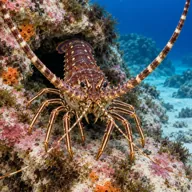
Spiny lobster
Sometimes · Awwista
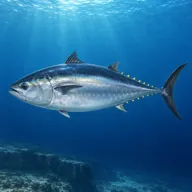
Atlantic bluefin tuna
Lucky day · Tonn · Summer
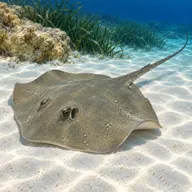
Common stingray
Lucky day · Raja
Getting in and staying safe
Park on the limestone shelf at Reqqa Point, reached by driving through Marsalforn to Qbajjar and Xwejni and continuing past the salt pans. Short rocky walk to the water, then a giant stride from a low platform or, in summer, a ladder rigged near the point. Look at the ladder and the swell before you kit up, not after. No facilities at all on site, and the rock is sharp, so wear boots. If the current takes you past the exit, the safe answer is to surface, deploy an SMB and swim back in open water rather than fight it along the rock.
- Current around the point, sometimes over two knots and direction can reverse
- The wall drops past sport limits with no shelf to catch you
- Exposed exit that deteriorates quickly in north or north west swell
- Narcosis in the 30 m boulder zone
- Fishing line and lost tackle on the shallow rock
- Sharp limestone on the walk and the climb out
- Long shore swim back if you overshoot the exit
A bit of history
The headland is carved from Lower Coralline Limestone, the hard basal unit of the Maltese rock sequence, which is why the face stays vertical instead of collapsing into a scree slope. The same rock produces the caves and shafts along this coast, including the Reqqa bottle, a natural chimney entered around 58 metres and exiting near 35, which is firmly technical territory.
Divers say
Sign in to rate this site and leave a note for the next diver.
- No reviews yet. First one gets bragging rights.
Further reading: Dive Shack Malta, Reqqa Point drift dive · Watercolours Malta dive guide, Reqqa Point · Atlantis Gozo Diving, Reqqa Point · Calypso Sub Aqua Club, Reqqa Point