Reqqa Point · Gozo
Reqqa Point
The northernmost knuckle of Gozo, where a limestone headland drops vertically into deep, clear, fish filled water. One area, half a dozen very different dives, and a wind forecast you must respect.
Sea conditions
Excellent right now
Flat, sheltered and calm
Diveable for the rest of the day.
Forecast for the site, updated 12:44 PM · Models differ a little
Measured at Mġarr, Gozo (10.7 km away, 01:50 PM): 4 km/h from SSE, gusts 5. The next hours lean on it.
- Waves
- 0.3 m
- from SW, biggest 0.4
- Wind
- 8 km/h
- NNW, gusts 17
- Swell
- 0.3 m
- 4 s period
- Sea temp
- 28 °C
- air 25 °C
Hour by hour
Next 7 days
Sunrise 06:48, sunset 19:04
Waves: Copernicus Med-Waves 4 km + MFWAM 8 km + EWAM 5 km + ECMWF WAM 9 km. Wind: ICON-2I 2 km + ECMWF IFS 9 km + ICON-EU 7 km + UKMO 10 km + ARPEGE 11 km. Read a few km out on the side the site is open to, then blended.
Exposed to wind and swell from: NW (315°), N (0°), NE (45°), W (270°). This is a calm day site. Any north in the wind, and especially the prevailing north westerly, closes it. Guides check the exit before committing, and the alternative plan is usually Ras il-Hobz or another south coast site. Best season: June to October, with July to September the peak. Water 24 to 28 degrees in late summer, visibility often 25 to 40 m..
Dives at Reqqa Point
The Point
Reqqa Point, Gozo
Shrimp's Cave
Reqqa Point, Gozo
Billinghurst Cave
Reqqa Point, Gozo
Anchor Reef
Reqqa Point, Gozo
Bottleneck Cave
Reqqa Point, Gozo
The dive
Reqqa Point is the spur of rock that sticks out into the sea just west of the Xwejni salt pans, and it is arguably the best single stretch of coast in the Maltese islands. The wall falls away from about 5 metres straight down past sport diving limits. Nutrient rich water sweeps around the headland. The result is the sort of fish life that makes visiting divers stop kicking and just hover.
From one car park you can pick your dive. Go east for the chimney, a natural vertical shaft running down through the reef from around 6 metres to 17. Go round the point itself for the wall, the boulder gardens and the metre long grouper that live under them. Go west for Shrimp's Cave and, further along, the enormous entrance of Billinghurst. Technical teams have the Reqqa bottle, a deep shaft entered near 58 metres that exits around 35.
All of which is wonderful and none of which matters if the wind is wrong. This headland faces due north into the full run of the majjistral, and it goes from glassy to unmanageable faster than almost anywhere else on the island. Exit is over rock, occasionally via a ladder rigged for the summer, and a swell that looked harmless when you got in can make that ladder a very bad idea an hour later.
Visibility is the compensation. On a good summer day you can see 30 to 40 metres here, and the blue has a depth of colour that the sheltered south coast never quite manages.
- A vertical wall starting at 5 m and running past 60
- Natural chimney you can swim down from 6 m to 17 m
- Some of the biggest grouper you will see from a Maltese shore dive
- Three caves and a technical shaft from one car park
- Visibility that regularly beats 30 m
Typical plan
Stride in, drop to the reef at around 15 to 17 metres and follow the wall towards the point with the rock on your shoulder. Work the boulders and ledges at 25 to 30 metres for the first third of the dive, turn on gas, then climb the wall on the way back and finish with the chimney on the eastern side, entering at 16 or 17 metres and popping out at 6. Long safety stop in the shallows while you check the exit is still friendly. Forty five minutes on a 12 litre, nitrox 32 strongly recommended, SMB mandatory if there is any chance you drift past the exit.
What the bottom looks like
- 1Top of the Reqqa chimney on the eastern side6 m deep · 30 m out
- 2Chimney exit at around 17 m17 m deep · 45 m out
- 3Boulder garden sheltering grouper and scorpionfish20 m deep · 90 m out
- 4Sandy floor east of the point25 m deep · 130 m out
- 5Vertical face off the point30 m deep · 160 m out
- 6Drop continuing past sport limits45 m deep · 200 m out
- 7The Reqqa bottle, technical shaft from 58 m to 35 m58 m deep · 230 m out
Vertical and stepped coralline limestone with big fallen boulders, and pockets of clean sand at the foot of the shallower sections.
Who you might meet
Almost always
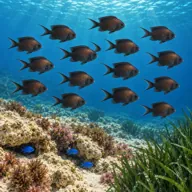
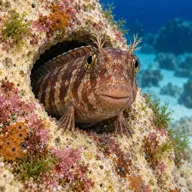
Often
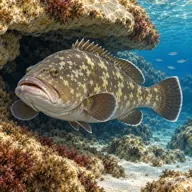

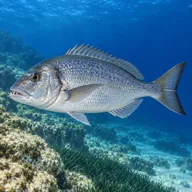
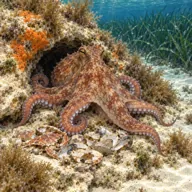
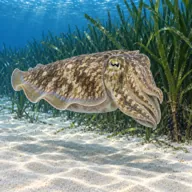
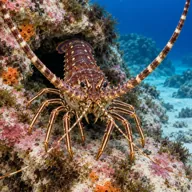
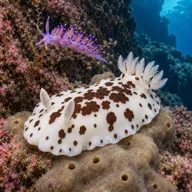
Lucky day
Marked ones can hurt you. What they do and what to do about it is under Getting in and staying safe.
Getting in and staying safe
Drive through Marsalforn towards Qbajjar and Xwejni, past the salt pans, and keep going along the coast road until you reach the point. Vehicles park on the open limestone shelf, which is level enough for a dive van but exposed to sun and wind. From there it is a short, rough walk over rock to the water. Entry is a giant stride or a controlled slide from a low platform; in the main season a ladder is usually rigged near the point, and it is the difference between a graceful exit and an undignified one. No toilets and no shade; cafes and shops are back in Marsalforn, ten minutes away.
- Full exposure to north and north west wind, conditions change fast
- Rock exit that becomes dangerous in swell, check it before you swim off
- Current around the point, occasionally over two knots
- The wall goes deep with no natural shelf to stop you
- Sharp limestone underfoot, hard soled boots needed
- Popular with local fishermen, expect line and hooks on the shallow rock
- Overhead environments if you enter any of the caves
Marine life to respect
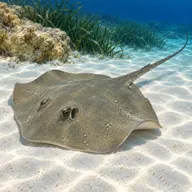
Common stingray · Boll Can hurt you
Whips a barbed tail if stepped on or cornered. Stay off the sand and give it room.
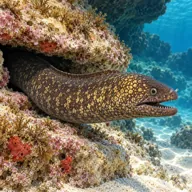
Mediterranean moray · Morina Can hurt you
Bites hard if a hand goes into its hole. Keep hands out of cracks and never feed one.
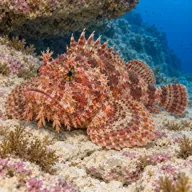
Red scorpionfish · Ċippullazza Can hurt you
Venomous spines, and it sits still on the rock. Look before you kneel or hold on; hot water if stung.
A bit of history
The headland is Lower Coralline Limestone, the oldest rock in the Maltese sequence, which is why it holds a vertical face instead of crumbling into a slope. The caves along this coast were cut by the sea working at joints and bedding planes in that same hard rock. Billinghurst, the largest of them, carries a name given in the late 1980s by the Billinghurst branch of the British Sub Aqua Club; Gozitans knew it long before that as Ghar ix-Xih, the old man's cave, and as the booming cave for the noise winter swell makes inside it.
Divers say
Sign in to rate this site and leave a note for the next diver.
- No reviews yet. First one gets bragging rights.
Further reading: Atlantis Gozo Diving, Reqqa Point · Watercolours Malta dive guide, Reqqa Point · Dive Shack Malta, Reqqa Point drift dive · Calypso Sub Aqua Club, Reqqa Point · Divers Guide, Reqqa Point