Xatt l-Ahmar · Gozo
MV Xlendi
Gozo's first artificial reef, and the one that went wrong: an eighty-metre ferry that rolled during the scuttle and settled upside down at forty-two metres. Big, dark, strictly a look-but-do-not-enter wreck.
Sea conditions
Excellent right now
Flat, sheltered and calm
Forecast for the site, updated 01:45 AM
- Waves
- 0.3 m
- from SE
- Wind
- n/a
- Swell
- 0.2 m
- 5 s period
- Sea temp
- 29 °C
Next 7 days
Exposed to wind and swell from: E (90°), SE (135°), S (180°), SW (225°). Xatt l-Ahmar sits on the south-east coast and is beautifully sheltered from the prevailing north-westerly, which is exactly why it is the go-to when everywhere else is blown out. It turns nasty with anything from east through south, when swell wraps into the bay and the ladder exit becomes the problem rather than the dive. Currents on the wrecks are usually light. Best season: April to November, with the warmest water and best visibility from July to October; diveable year round when the wind is northerly.
The dive
The Xlendi is the cautionary tale of the Xatt l-Ahmar trio. She went down in 1999 with the deck houses cleaned out and exits cut for divers, and then she turned over on the way to the bottom and crushed everything above deck flat. What you get now is a long inverted hull lying on a sand slope, deepest on the seaward side at around forty-four metres and a little shallower, about forty-two, on the shore side.
Because she is upside down the orientation takes a minute. The first things you meet coming down the slope are usually the propellers, one at each end because she was a double-ended ferry, and they sit at roughly thirty-two metres, the shallowest structure on the site. From there you can run the length of the keel or drop to the sand and swim the flanks, which is where the shape actually makes sense.
Do not go inside. The interior collapsed in on itself when she inverted, the passages are blocked in places, the silt is deep and fine, and the structure has had twenty-odd years of corrosion since. Every dive centre on the island says the same thing and they are right. Outside, though, the fish do not care: the hull has become a proper reef and holds bream, damsels, the occasional grouper and a lot of small stuff living in the shadow line.
One extra: there is a car wreck on the sand on the shore side of her, which makes a neat photo stop on the way back up the slope. And if you still have gas and the plan allows, the Karwela is only a short swim east.
- Eighty metres of ferry lying keel-up, which is a genuinely odd thing to swim along
- Twin propellers at about thirty-two metres, one at each end of a double-ended hull
- A small car wreck on the sand beside her
- The only Gozo wreck whose scuttle actually failed, and you can see why
- Close enough to the Karwela to link the two on a well-planned dive
Typical plan
In off the ladders, submerge early and run south-west over the plateau to the drop-off, then follow the sand slope down until the propeller appears around thirty-two metres. Work the keel line and one flank at forty-two, turn on gas, and come back up the slope via the car wreck. Realistically this is a twenty to twenty-five minute bottom time on a forty-two metre average with staged decompression, so plan it as a nitrox or trimix dive with a stage, or accept a very short look on a single twelve. Finish the deco shallow over the reef, where there is more to watch than blue water.
What the bottom looks like
- 1Posidonia and rock plateau off the ladders7 m deep · 60 m out
- 2Reef drop-off before the sand slope22 m deep · 175 m out
- 3Shore-end propeller, shallowest point of the wreck32 m deep · 235 m out
- 4Inverted hull and keel line42 m deep · 275 m out
- 5Car wreck on the sand, shore side41 m deep · 290 m out
- 6Seaward flank on open sand44 m deep · 340 m out
Rock and Posidonia inshore, then a clean sand slope that the hull sits on and settles into.
Who you might meet
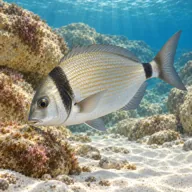
Two-banded seabream
Almost always · Sargu
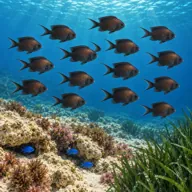
Damselfish
Almost always · Chromis chromis
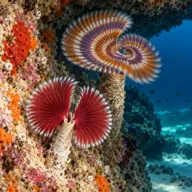
Tube worms and encrusting sponges on the hull
Almost always
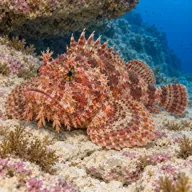
Scorpionfish
Often · Ċippullazza
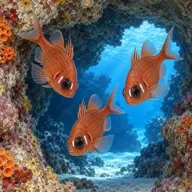
Cardinalfish
Often · Apogon imberbis · In shaded recesses
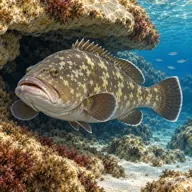
Dusky grouper
Sometimes · Ċerna
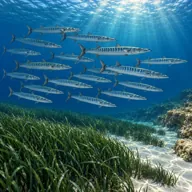
Barracuda
Sometimes · Sphyraena viridensis · Summer and autumn
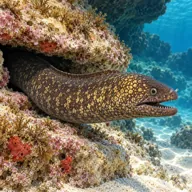
Moray eel
Sometimes · Morina
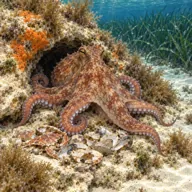
Octopus
Sometimes · Qarnita
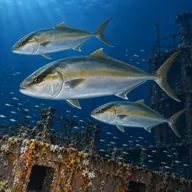
Amberjack
Sometimes · Aċċola · Summer
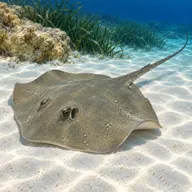
Common stingray on the surrounding sand
Lucky day · Dasyatis pastinaca
Getting in and staying safe
Shore dive from Xatt l-Ahmar, reached by a narrow and rough lane down from Ghajnsielem, near Mgarr. There is a parking and kitting area at the end of the track and then a short walk down to the rocky shore, where steel ladders are set in for the summer season and taken out for winter. From the ladders it is a surface swim out over the shallow plateau before you drop down the slope, so many divers submerge early and use a compass. Plenty of teams do this as a boat dive instead, which saves the swim and the walk with twin sets. No cafe, no toilets and no shade at the site, so bring water, and be honest about whether you fancy the walk back up with a full kit and a fifty-minute deco dive behind you.
- Depth of forty-two to forty-four metres, well into decompression territory on most plans
- Penetration is unsafe: the wreck is inverted, partly collapsed and full of fine silt
- Long surface or shallow swim out and back, tiring in heavy kit
- Narcosis and gas management on a big, dark, disorienting structure
- Snagged fishing line on the hull and propellers
- Small boat traffic overhead; deploy a DSMB before ascent
- Rough access track and a slippery rock shore at the ladders
A bit of history
She was launched in 1955 at Helsingør in Denmark as the train ferry Helsingør, at 1,123 gross tons, seventy-seven metres long and twelve across the beam. Names came and went: Royal Sheeba in 1987, Borgshorn in 1988, and finally Xlendi when Gozo Channel bought her in 1990 to run the Malta to Gozo crossing. She worked that route until 1997 and was then handed to the Gozo Tourism Association, cleaned out, fitted with cut exits and scuttled on 12 November 1999 as Gozo's first purpose-sunk dive wreck. The roll during the sinking that left her inverted is exactly why the Karwela and Cominoland were later sent down with buoyancy tanks strapped on.
Divers say
Sign in to rate this site and leave a note for the next diver.
- No reviews yet. First one gets bragging rights.
Further reading: Malta Dives: MV Xlendi wreck · Wrecksite.eu: M/S Xlendi · Blue Waters Dive Cove: MV Xlendi · Calypso Sub Aqua Club: MV Xlendi