Dwejra · Gozo
Inland Sea & Tunnel
You kit up in a puddle and come out on a wall. An eighty metre tunnel through the headland links a shallow lagoon to the open Mediterranean, and swimming through it is one of the great theatrical moments in Maltese diving.
Sea conditions
Excellent right now
Flat, sheltered and calm
Forecast for the site, updated 01:33 AM
- Waves
- 0.3 m
- from SE
- Wind
- 8 km/h
- SSW, gusts 14
- Swell
- 0.2 m
- 5 s period
- Sea temp
- 28 °C
- air 27 °C
Next 7 days
Sunrise 06:47, sunset 19:06
Exposed to wind and swell from: W (270°), NW (315°), SW (225°). The lagoon stays calm in almost anything, which is why this site is often the last one standing on a windy day, but strong westerly or northwesterly weather sends swell surging through the tunnel and it comes off the list. If the boatmen are not running trips, take the hint. Best season: April to November, and a reliable fallback dive in shoulder season when the exposed entries are closed.
The dive
The lagoon itself is a flooded sinkhole about sixty metres across, waist deep at the beach, ringed by faded fishermen's boathouses and about as intimidating as a garden pond. There is essentially nothing to look at in it, which is precisely the point: the dive is the corridor at the far side.
Inside the tunnel the walls go vertical and the floor slopes away under you, from around three metres at the lagoon end to roughly twenty six at the seaward mouth. The rock closes overhead, the light behind you turns green, and then a blue disc appears ahead and grows until you swim out of the wall into open water with big boulders tumbled around the exit and the seabed dropping off towards fifty metres.
From there you pick a direction. South along the reef leads eventually towards the Azure Reef and a Blue Hole exit if the group is up for it. North gives you a run of cracks and caverns, including Whale Cave, and further still the long cave at Tal-Barba. Most people simply work the wall for twenty minutes and come back through the tunnel, which looks completely different in the other direction.
One thing to know before you go in: small tourist boats use the same tunnel all day. You can surface in it, but do it against the side, not in the middle.
- Eighty metres of tunnel opening onto blue water at twenty six metres
- Trivially easy kit up and entry in a flat, shallow lagoon
- Boulder garden and reef wall waiting at the far end
- Cracks and caverns north and south of the exit, including Whale Cave
- The best bad weather option on the Dwejra coast
Typical plan
Swim the lagoon on the surface, drop at the tunnel mouth and cruise through on the right hand side, arriving at the exit around twenty six metres. Turn south or north along the wall, take your deepest point in the low thirties, then work shallower as you come back to the tunnel and swim it in reverse with plenty of gas in hand. Forty five to fifty five minutes is normal, and nitrox 32 buys useful margin against the repeated trips to the high twenties.
What the bottom looks like
- 1Shingle beach and boathouses0 m deep · 0 m out
- 2Landward mouth of the Tunnel4 m deep · 60 m out
- 3Seaward mouth of the Tunnel26 m deep · 140 m out
- 4Boulder pile outside the exit28 m deep · 160 m out
- 5Old Man Cave, north side18 m deep · 175 m out
- 6Reef wall running north and south36 m deep · 195 m out
- 7Outer drop towards fifty metres50 m deep · 290 m out
Pebbles and cobbles along the tunnel floor, then big fallen blocks at the exit and bare limestone reef outside.
Who you might meet

Cardinalfish
Almost always · Apogon imberbis
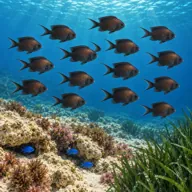
Damselfish
Almost always · Chromis chromis
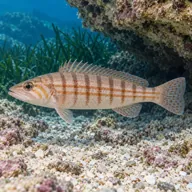
Comber
Almost always · Serranus cabrilla
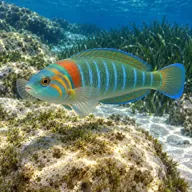
Ornate wrasse
Almost always · Thalassoma pavo · Summer
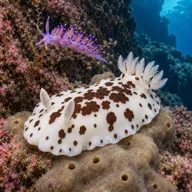
Regal doris nudibranch
Often · Felimare picta · Spring
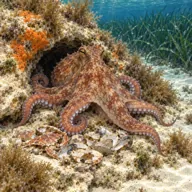
Octopus
Often · Qarnit
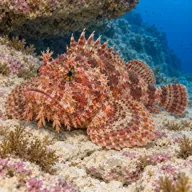
Scorpionfish
Often · Scorpaena species
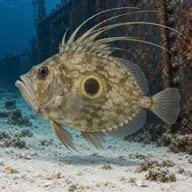
John Dory
Sometimes · Zeus faber · Winter and spring
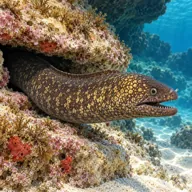
Moray eel
Sometimes · Morina
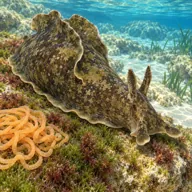
Sea hare
Sometimes · Aplysia species · Spring
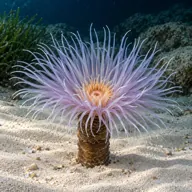
Tube anemone
Sometimes · Cerianthus membranaceus
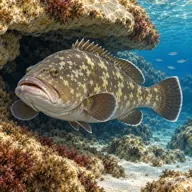
Dusky grouper
Sometimes · Ċerna
Getting in and staying safe
As easy as shore diving in Malta gets. Drive right down to the Inland Sea car park, kit up beside the boathouses, and walk a few metres over shingle into flat, shallow water. No ladders, no cliff, no scramble. The swim across the lagoon to the tunnel mouth takes a couple of minutes on the surface. Cafes, kiosks, toilets and showers sit right there by the car park, which makes this the standard second dive when the group is tired. Parking fills early in summer.
- Tourist boats running through the tunnel all day, stay close to the walls if you surface
- Surge funnelling through the tunnel when there is any westerly swell
- The seaward end is at twenty six metres and the wall outside keeps going, easy to drift deep
- Silt and fine sediment stirred by fins in the tunnel
- Gas planning, the tunnel swim back has to be paid for in advance
- Discarded fishing line and hooks around the lagoon and the exit
- Boat propellers on ascent outside the tunnel mouth
A bit of history
The Inland Sea is a collapse feature, a sinkhole in the coralline limestone that flooded when the sea broke in along a natural line of weakness in the rock, and the tunnel is that line of weakness widened by several thousand years of wave action. The boathouses around the shore are still in working use by local fishermen, and the boat trips out through the tunnel to see the cliffs and caves have been a Gozitan cottage industry for generations, long outliving the Azure Window that used to be their main attraction.
Divers say
Sign in to rate this site and leave a note for the next diver.
- No reviews yet. First one gets bragging rights.
Further reading: Atlantis Gozo, Inland Sea · PADI dive site, Inland Sea Dwejra · Watercolours Malta, diving the Inland Sea · Wikipedia, Dwejra Bay