Malta
HMS Nasturtium
A First World War sloop that went minesweeping and found a mine the hard way off Valletta in April 1916. She lies at around sixty seven metres, big, coherent and one of the friendlier of Malta's permitted historic wrecks.
Sea conditions
Good right now
Some chop (0.5 m E)
Forecast for the site, updated 01:47 AM
- Waves
- 0.5 m
- from E
- Wind
- n/a
- Swell
- 0.5 m
- 5 s period
- Sea temp
- 28 °C
Next 7 days
Exposed to wind and swell from: N (0°), NE (45°), E (90°), SE (135°), S (180°). Well offshore to the east, so there is no shelter to speak of. Northeast and east winds kill it. Look for a settled high pressure window with a light southwesterly, which flattens the east coast nicely. Visibility on the wreck is regularly thirty metres or better, and there is enough ambient light at sixty seven metres to see the shape of her without a torch, though you want one for the detail. Best season: May to October, with the best water clarity and the warmest deep temperatures from August into early October..
The dive
Nasturtium is the one on this list that a competent technical diver can realistically fit into a normal week's diving. Sixty seven metres is deep, but it is the sort of deep that a trimix diver handles with a sensible plan rather than a full expedition, and there is enough wreck down there to make the bottom time count. She is roughly eighty metres of Arabis-class sloop, purpose built as a fleet minesweeper with a hull shaped to survive exactly the thing that eventually killed her.
What you get is classic deep Mediterranean wreck diving. The structure rises off flat sand, the metalwork is furred with sponge and hydroid growth, the light is a cool deep blue and the visibility is normally superb because nothing shallow enough to stir sediment ever reaches this depth. Swallowtail sea perch hang over the high points in clouds and conger eels have moved into the openings.
She is a war grave and a protected site, so penetration is off the table and the rules are simple: look, do not touch, do not take, do not go inside. That is no great loss, because the exterior run from bow to stern with a slow drift over the midships machinery spaces is more than a single bottom time can properly absorb.
- A coherent eighty metre First World War sloop, rare in recreational reach of any kind
- Part of the U-73 minefield story along with Russell and Aegusa, all lost within days
- Beautifully grown over metalwork with sponge, anemone and hydroid cover
- Realistic first permitted historic wreck for a newly qualified trimix diver
- Excellent visibility and a genuine deep blue atmosphere
Typical plan
Trimix, normoxic is usually enough at this depth. Around twenty to twenty five minutes on the bottom, down the shot onto the upper structure, forward to the bow, then a slow run aft along the hull over the machinery spaces before returning to the line. Roughly fifty to seventy minutes of decompression on fifty percent nitrox and oxygen. No penetration, camera in hand, shoot a bag if you come off the line.
What the bottom looks like
- 1Shot line landing on the upper structure61 m deep · 16 m out
- 2Bow section and forward deck63 m deep · 28 m out
- 3Midships machinery spaces and boiler area65 m deep · 50 m out
- 4Stern and rudder67 m deep · 78 m out
- 5Flat sand off the wreck68 m deep · 100 m out
Flat, pale offshore sand with a silty top layer, the hull sitting proud of it and casting long shadows.
Who you might meet
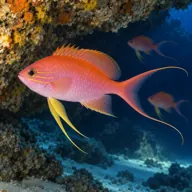
Swallowtail sea perch
Almost always · Pixxiroża
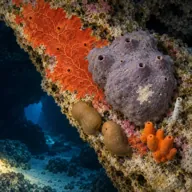
Encrusting sponges
Almost always · Sponża
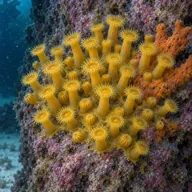
Yellow cluster anemone
Almost always
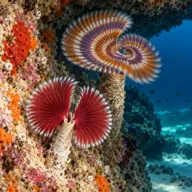
Tube worms
Almost always
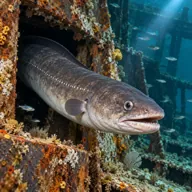
Conger eel
Often · Gringu
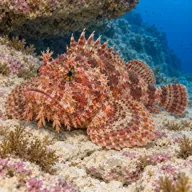
Red scorpionfish
Often · Ċipullazza
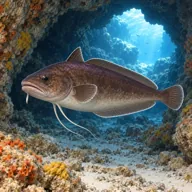
Greater forkbeard
Often · Lipp tal-qawwi
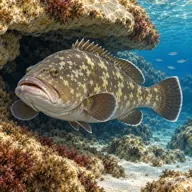
Dusky grouper
Sometimes · Ċerna
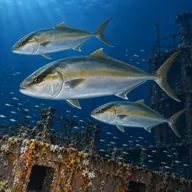
Greater amberjack
Sometimes · Aċċola · Late summer
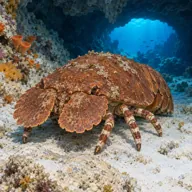
Slipper lobster
Sometimes · Ċikala
Getting in and staying safe
Boat only, and only through a dive centre or club registered with Heritage Malta's Underwater Cultural Heritage Unit, which operates the booking system for the permitted wrecks. Both centre and boat need to be licensed for it, and you sign up to the conditions before you splash: no penetration, no touching, respect the war grave, respect the marine life. Local club divers can join the Heritage Malta Shipwreck Club for a modest annual fee and get access through registered clubs. Expect a shot line, a live boat and no shore option whatsoever.
- Sixty seven metres on trimix with a real decompression obligation
- War grave with historic unexploded ordnance on and around the wreck
- Torn and collapsing plate with sharp edges and entanglement points
- Fishing line and netting draped on the high structure
- Current can run across the wreck and make the swim back to the shot hard work
- Long open water decompression in an exposed offshore position
- Cold at depth, with a noticeable thermocline even in high summer
A bit of history
Nasturtium was an Arabis-class sloop laid down by A. McMillan and Sons at Dumbarton in July 1915 and launched that December, displacing around twelve hundred tons on a hull of roughly seventy eight metres between perpendiculars with a ten metre beam. She was based at Malta on patrol and minesweeping duties. On 25 April 1916 the German submarine U-73 laid a minefield across the approaches to Grand Harbour. It caught the battleship HMS Russell early on 27 April, and that evening Nasturtium, working the same water, struck a mine that detonated about two metres below the waterline on her starboard side. Seven of her crew were killed. HMS Sheldrake, HMS Wallflower and the armed yacht HMY Aegusa tried to save her, but she went down at around a quarter to three in the morning on 28 April. Aegusa herself was mined in the same field within the hour. Nasturtium was opened to divers on 1 May 2019 as one of eight historic wrecks placed under Heritage Malta management.
Divers say
Sign in to rate this site and leave a note for the next diver.
- No reviews yet. First one gets bragging rights.
Further reading: Heritage Malta: HMS Nasturtium · Wikipedia: HMS Nasturtium (1915) · Wrecksite entry for HMS Nasturtium · Heritage Malta Underwater Cultural Heritage Unit, permit and booking rules