Malta
ORP Kujawiak
A Hunt class escort destroyer lying on her port side at around 97 metres, six kilometres offshore, found in 2014 and opened to permitted technical divers in 2019. Intact bow, twin 102mm guns, and a stern crushed by the landing.
Sea conditions
Good right now
Some chop (0.5 m E)
Forecast for the site, updated 01:48 AM
- Waves
- 0.5 m
- from E
- Wind
- n/a
- Swell
- 0.5 m
- 5 s period
- Sea temp
- 28 °C
Next 7 days
Exposed to wind and swell from: N (0°), NE (45°), E (90°), SE (135°), S (180°). Open sea, so the weather window is everything: a flat forecast with light westerly wind and no swell, held for the whole day, because you will be decompressing on the surface marker for a long time. Visibility at depth is generally excellent. Water at 97 metres stays cold year round, expect low to mid teens Celsius. Best season: June to early October, when settled anticyclonic spells give the long calm windows these dives need..
The dive
This is one of the great deep wrecks of the central Mediterranean and it is not a casual booking. The Kujawiak sits upright-ish on her port side in ninety-seven metres of water, hull essentially whole for most of her 85 metre length, with the twin 102mm mount on the foredeck still recognisable and in remarkably good order. The stern took the seabed first and buckled badly, so the back end of the ship reads as wreckage where the front reads as a ship.
At that depth you get a handful of minutes of usable bottom time for a couple of hours of decompression, so dives are planned as a single focused pass. Most teams work the bow and the forward gun, run aft along the superstructure line, and turn well before the damaged stern. Penetration is not on the menu. This is a war grave with thirteen Polish sailors still aboard, and the permit conditions treat it accordingly.
Visibility out there is usually superb and the wreck looms out of the blue long before you reach it, which is part of the appeal. Encrustation is light enough that details stay readable, and the sheer scale of a destroyer seen whole is something photographs never quite convey.
Trimix, redundancy, a proper support setup and a permit through Heritage Malta's Underwater Cultural Heritage Unit are the entry requirements. There are no shortcuts and no operators who will take you without them.
- An 85 metre destroyer essentially intact, seen whole in clear water
- Twin 102mm forward guns still in place and photogenic
- Genuine Operation Harpoon history from the siege of Malta
- One of the very few permitted deep wrecks in Maltese waters
- The contrast between the pristine bow and the crushed stern
Typical plan
A single trimix dive with around fifteen to twenty minutes on the wreck for two hours or more of decompression. Down the shot to the foredeck at roughly 90 metres, work the bow and the forward gun, run aft along the superstructure to a pre-agreed turn point, then back to the line. Bottom mix in the 10/70 to 12/65 range depending on your agency and team, with staged intermediate and oxygen decompression gases, redundant gas, two computers and a full surface support plan. Permit in hand before you leave the dock.
What the bottom looks like
- 1Bow section, near perfect condition90 m deep · 30 m out
- 2Twin 102mm forward gun mount91 m deep · 36 m out
- 3Bridge and forward superstructure93 m deep · 60 m out
- 4Midships hull lying on the port side94 m deep · 85 m out
- 5Buckled and collapsed stern96 m deep · 115 m out
- 6Seabed alongside the hull97 m deep · 130 m out
Flat silty sand at just under a hundred metres, with the hull bedded into it along the port side.
Who you might meet
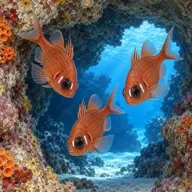
Cardinalfish
Almost always · Re tat-trilji
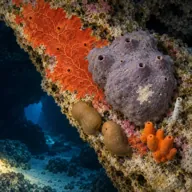
Encrusting sponges
Almost always · Sponża
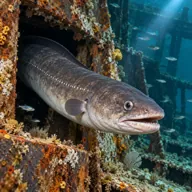
Conger eel
Often · Gringu
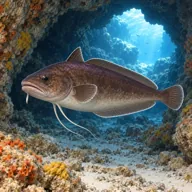
Forkbeard
Often · Lipp tal-qawwi
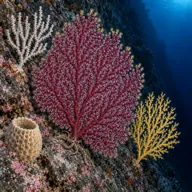
Deep water gorgonians
Often
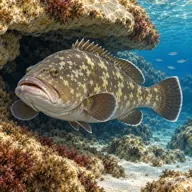
Dusky grouper
Sometimes · Ċerna
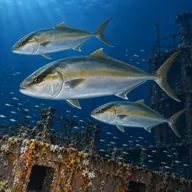
Amberjack
Sometimes · Aċċola · Summer
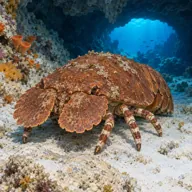
Slipper lobster
Sometimes · Ċikala
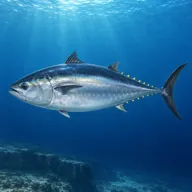
Atlantic bluefin tuna
Lucky day · Tonn · Summer
Getting in and staying safe
Boat only, from Grand Harbour or the southeastern marinas, and only through an operator approved by Heritage Malta. A permit and registration with the Underwater Cultural Heritage Unit is required before anyone gets wet, so plan the paperwork weeks ahead rather than days. Expect a surface support vessel, staged deco gas, a shot and a decompression station, and a long day. Nothing about this dive is spontaneous. Those who cannot dive it can see it through Heritage Malta's virtual museum coverage instead.
- 97 metres of depth, hypoxic trimix territory with hours of obligatory decompression
- War grave status, no penetration and no removal of anything
- Long open-water decompression exposed to weather and boat traffic
- Currents at depth and at the deco station
- Cold at the bottom and narcosis or oxygen toxicity risk if gas planning slips
- Collapsed and sharp wreckage around the buckled stern
- Remote position, six kilometres offshore, with a long evacuation time
A bit of history
She was launched by Vickers-Armstrongs on 30 October 1940 as HMS Oakley, a Type II Hunt class destroyer escort of about 85 metres with a 9.5 metre beam and a crew of around 168. In 1941 she was transferred to the Polish Navy and renamed ORP Kujawiak, taking the name of a Polish folk dance region. In June 1942 she joined Force X at Gibraltar for Operation Harpoon, escorting a desperately needed supply convoy to a starving Malta, and during the running battle she is credited with helping bring down several Axis aircraft. In the small hours of 16 June 1942, close to the entrance of Grand Harbour, another convoy ship blundered into a freshly laid minefield. Kujawiak went in to help and struck a mine on her port side. She listed and went down at 01:20, less than half an hour later, taking thirteen Polish servicemen with her. The wreck was located on 22 September 2014 by a Polish expedition working with the University of Malta, and her bell came up inscribed HMS OAKLEY 1941. She was opened to permitted diving on 1 May 2019 alongside seven other protected wrecks, and the site was declared an Archaeological Zone at Sea with a 500 metre buffer zone. Her sister ship HMS Southwold lies elsewhere off Malta at 68 to 73 metres.
Divers say
Sign in to rate this site and leave a note for the next diver.
- No reviews yet. First one gets bragging rights.
Further reading: Wikipedia: ORP Kujawiak (L72) · Heritage Malta: ORP Kujawiak L72 · Underwater Malta virtual museum: ORP Kujawiak · DIVE Magazine: Malta's deep wrecks · Malta Dive Sites: ORP Kujawiak · Wrecksite.eu entry