Malta
Junkers Ju 88 (South)
The deeper of Malta's two Ju 88 bombers, sitting upright and almost complete on sand at 106 metres off Marsaskala. Trimix only, permit only, and one of the finest preserved aircraft wrecks in the Mediterranean.
Sea conditions
Good right now
Some chop (0.5 m E)
Forecast for the site, updated 01:48 AM
- Waves
- 0.5 m
- from E
- Wind
- n/a
- Swell
- 0.5 m
- 5 s period
- Sea temp
- 28 °C
Next 7 days
Exposed to wind and swell from: NE (45°), E (90°), SE (135°), S (180°). Fully offshore on the southeast approaches, sheltered only from the west by the island. Given the decompression obligation, teams wait for genuinely flat water rather than merely diveable water, so the window is small even in high summer. Visibility at depth is usually excellent, and it is completely dark down there. Best season: July to September, on a flat calm forecast.
The dive
If the northern Ju 88 is the accessible one, this is the prize. At one hundred and six metres off Marsaskala, the aircraft sits upright on flat sand looking very much as though someone parked it there, which is more or less what happened: the intact posture points to a controlled ditching rather than a crash.
The airframe is close to complete. The nose shows some damage and the tail carries marks that may have come from gunfire, which together sketch a plausible last few minutes: hit in the air, still flyable, brought down onto the water by a pilot who knew what he was doing. Whether the crew got out is not recorded.
This is a serious dive and should be treated as one. One hundred and six metres means hypoxic trimix, closed circuit for most teams, several hours of decompression for a very short look, and a level of support that few holidays accommodate. It was found in a 2019 survey, identified by divers, and opened on 1 August 2020 under Heritage Malta with a permit requirement. For everyone who will never make that depth, the virtual model is genuinely worth an evening.
- Upright and close to complete, one of the best preserved Ju 88s anywhere
- Evidence of a controlled ditching rather than a crash
- Protected under Heritage Malta since 2020, essentially untouched
- A benchmark objective for Maltese trimix divers
Typical plan
Closed circuit hypoxic trimix, a shot descent to one hundred and six metres, twelve to eighteen minutes on the aircraft, then two to three hours of decompression under a live boat. One circuit of the airframe is all the gas budget allows, so plan the route before you get in: nose, port wing, tail, starboard wing, back to the line. This is expedition diving, not a day trip.
What the bottom looks like
- 1Fuselage sitting upright on the sand106 m deep · 22 m out
- 2Cockpit and damaged nose section105 m deep · 28 m out
- 3Wings with engine nacelles106 m deep · 40 m out
- 4Tail with possible gunfire damage106 m deep · 55 m out
- 5Featureless sand plain around the aircraft107 m deep · 90 m out
Flat, fine sand with a thin silt layer, undisturbed apart from the aircraft itself.
Who you might meet
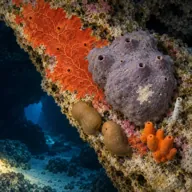

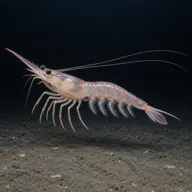
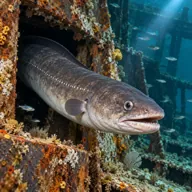

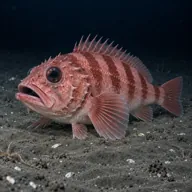


Getting in and staying safe
Boat only, a few kilometres out of Marsaskala, and only through a registered dive centre or club holding a Heritage Malta permit. Support is the serious part: a shot placed accurately, deep and shallow stage gas hung on the line, live boat cover for a drifting decompression, oxygen and a proper evacuation plan on the beach.
- 106 metres, hypoxic trimix and hours of decompression
- Very short bottom time for the effort and risk involved
- Isobaric counterdiffusion and gas switching complexity
- Cold and darkness at depth, redundant lighting mandatory
- Fragile corroded aluminium, nothing takes a handhold
- Offshore surface with shipping and fishing traffic
- Protected site with strict no touch, no recovery rules
- No realistic in water rescue option from that depth
A bit of history
A German twin engine Ju 88 bomber, roughly fifteen metres long with a twenty metre wingspan, lost during the Axis air campaign against Malta. The wreck was discovered during a remote sensing survey in 2019 and confirmed as a Ju 88 by a visual diver survey. It rests upright and largely intact on sand, damage being limited mainly to the nose section with possible weapon strikes visible at the tail, a pattern that supports a controlled ditching. Heritage Malta opened it to permitted diving on 1 August 2020, making it the deeper counterpart to the Ju 88 lying off Bahar ic-Caghaq at around 55 metres.
Divers say
Sign in to rate this site and leave a note for the next diver.
- No reviews yet. First one gets bragging rights.
Further reading: Underwater Malta: Ju88 South · Malta Dive Sites: Junkers Ju 88 (South) · Heritage Malta: JU88 and the permitted wreck scheme · Wrecked in my rEvo: JU 88 Malta at 185 fsw