Malta
HMS ML 130
A Fairmile B motor launch shot to pieces by German S-boats a mile off the St Elmo breakwater in May 1942, now lying at around a hundred and ten metres. Wooden hull, so there is less left every year, and hardly anyone goes.
Sea conditions
Good right now
Some chop (0.5 m E)
Forecast for the site, updated 01:45 AM
- Waves
- 0.5 m
- from E
- Wind
- n/a
- Swell
- 0.5 m
- 5 s period
- Sea temp
- 28 °C
Next 7 days
Exposed to wind and swell from: N (0°), NE (45°), E (90°), SE (135°), S (180°). Fully exposed offshore ground. You need a genuinely flat day with a forecast that will hold for six hours, because you are committed once you leave the shot. Northeast wind rules it out. Visibility at depth is usually excellent, thirty metres or more, but the light is thin and everything looks blue and grey without a strong torch. Best season: June to September, when the calm spells are long enough to make a deep day safe..
The dive
This is a small, sad, fascinating target. ML 130 was a seventy foot Fairmile B, a plywood and timber coastal craft with a couple of petrol engines and light guns, the sort of boat that spent the siege shepherding submarines through the swept channel and generally being useful. What is on the bottom now is what survives when a wooden hull has spent eighty years at a hundred and ten metres: the engines, the metal fittings, the gun mounting, some structure and a spread of debris in the sand.
Because the hull was timber, do not turn up expecting the clean silhouette of a steel wreck. The reward here is detail rather than scale, and you will spend most of your short bottom time hovering over a few square metres, working out what each lump used to be. It is a photographer's dive and a historian's dive, not a swim-through.
Depth makes it serious. A hundred and ten metres on the Malta shelf means hypoxic trimix, staged bail-out or a rebreather, and a decompression run measured in hours rather than minutes. Very few people have any reason to go, which is exactly why the ones who do come back grinning.
- One of the rarest dives in Malta, effectively an unvisited site
- A Fairmile B, the workhorse small craft of the siege, and a type you will not find elsewhere in Maltese waters
- Engines and gun mounting still legible in the sand
- Total silence at a hundred and ten metres
Typical plan
Hypoxic trimix or closed circuit. Ten to fifteen minutes on the bottom at a hundred and ten metres, one slow pass over the machinery and the debris trail, then shoot a bag and start a staged ascent of two hours or more using intermediate trimix, fifty percent nitrox and oxygen. Full redundancy, two lights, two computers, and a boat that will hold station on your marker until everybody is back aboard.
What the bottom looks like
- 1Gun mounting and forward fittings107 m deep · 24 m out
- 2Engines and machinery, the most recognisable remains109 m deep · 32 m out
- 3Debris trail in the sand110 m deep · 55 m out
- 4Open sand beyond the wreck110 m deep · 75 m out
Fine offshore sand going to silt, flat in every direction, with the wreck debris sitting proud of it.
Who you might meet
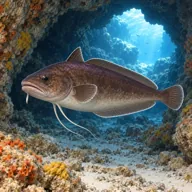
Greater forkbeard
Almost always · Lipp tal-qawwi

Swallowtail sea perch
Almost always · Pixxiroża
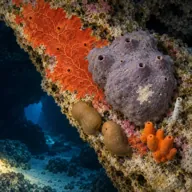
Encrusting and boring sponges
Almost always · Sponża
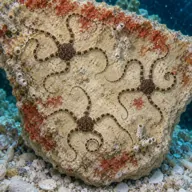
Brittle stars
Almost always
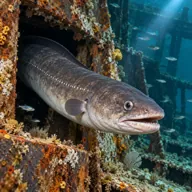
Conger eel
Often · Gringu
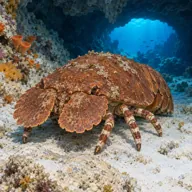
Slipper lobster
Sometimes · Ċikala
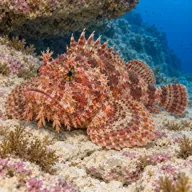
Red scorpionfish
Sometimes · Ċipullazza
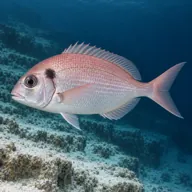
Blackspot seabream
Sometimes · Bażuga
Getting in and staying safe
Boat only, from a technical operator running out of Sliema, Valletta or Marsaskala depending on the sea. There is no mooring, so expect a shot to be dropped on a sounder mark and a live boat above for the whole decompression. Book it as a dedicated day with proper surface support and oxygen on board, not as an add-on to a regular schedule. Ask your centre whether Heritage Malta permitting applies before you commit, since the status of the smaller wartime casualties changes.
- A hundred and ten metres: hypoxic trimix, hours of decompression, no margin for error
- Broken up wooden hull with loose plating and wire, easy to snag on
- Fishing gear and long lines regularly found on this ground
- Open sea east of Malta with shipping movements and no shelter
- Very long open water ascent that demands a reliable boat and a marker
- Sand and silt lift instantly and can kill the visibility for the whole team
A bit of history
ML 130 was a Fairmile B motor launch built by Frank Curtis of Looe and commissioned in October 1940. At Malta she worked the swept channel, escorting submarines in and out of harbour. On the night of 7 May 1942 she was around a mile off the St Elmo breakwater, returning from one of those escort runs, when searchlights sweeping for reported enemy craft lit her up. German S-boats, S 31, S 34 and S 61, closed and destroyed her by gunfire, finishing the job with scuttling charges. Four of her crew were killed and eight badly wounded. The survivors were pulled from the water by the Germans and taken prisoner. She went down in the same stretch of sea that swallowed several of Malta's minesweeping drifters in the same weeks.
Divers say
Sign in to rate this site and leave a note for the next diver.
- No reviews yet. First one gets bragging rights.
Further reading: uboat.net: HMS ML 130, Fairmile B motor launch · Wrecksite entry for ML 130 · Coastal Forces Veterans account of the loss of ML 130 · Malta Dive Sites: HMS ML 130