Gozo
Fungus Rock
A sixty metre pillar of limestone standing guard at the mouth of Dwejra Bay, with a sheltered lagoon on one side and a wall that drops past sixty metres on the other. One rock, two completely different dives.
Sea conditions
Excellent right now
Flat, sheltered and calm
Forecast for the site, updated 01:33 AM
- Waves
- 0.3 m
- from SE
- Wind
- 8 km/h
- SSW, gusts 14
- Swell
- 0.2 m
- 5 s period
- Sea temp
- 28 °C
- air 27 °C
Next 7 days
Sunrise 06:47, sunset 19:06
Exposed to wind and swell from: W (270°), NW (315°), SW (225°). The bay side stays workable in most summer weather. The seaward wall, which is the reason to come, needs a settled sea; any westerly swell wrapping around the rock turns the good half of the dive into a washing machine. Best season: May to early November. September and October bring the warmest water and the best chance of amberjack and barracuda on the wall..
The dive
The boat anchors inside Dwejra Bay, which is the calmest water on this whole coast, and you drop into eight or ten metres over seagrass and sand. That shallow half of the dive is gentle and bright, with shoals of bream working the edges of the meadow and the odd octopus tucked into the reef that closes the bay on either side. There is a cave at around fourteen metres that runs a surprising distance back into the rock, worth a torch and a slow entry.
Round onto the seaward face and the mood changes entirely. The bottom simply stops being there. The wall falls in steps and overhangs into blue that keeps going past sixty metres, hung with sponges, cup corals and the occasional bright splash of a sea star. Boulders the size of vans have peeled off over the centuries and now sit stacked against the base, making swim-throughs and short tunnels at every depth you care to choose. Moray and conger live in the cracks; grouper patrol the ledges; amberjack, barracuda and tuna turn up in the blue when the season is right.
The trap here is the visibility. On a good day you can see so far down the wall that thirty metres looks like fifteen and your computer will disagree with your eyes. Pick a depth before you go in and stick to it, because the wall gives no natural floor to stop you. Wind the dive back over the shallow reef and finish in the bay where you started, which is the best kind of safety stop: sunlit, sheltered and full of fish.
- A wall that keeps going past 60 metres, right under a landmark you can see from the road
- Cave at 14 metres that runs well back into the islet
- Swim-throughs and tunnels among house-sized fallen boulders
- Sheltered, sunlit finish over seagrass inside Dwejra Bay
- Five centuries of Knights-era intrigue about a very ugly plant
Typical plan
Giant stride into the bay, cross the shallow reef and round onto the seaward side, dropping along the wall to a planned 35 or 40 metres. Ten to twelve minutes deep is plenty; work back up in steps through the boulders and swim-throughs, take the 14 metre cave on the way past with a torch, and finish over the seagrass inside the bay with a long stop at 5 metres under the boat. Forty-five minutes total, nitrox 32 strongly preferred, and set a hard depth alarm before you go in.
What the bottom looks like
- 1Posidonia meadow inside Dwejra Bay9 m deep · 45 m out
- 2Cave at 14 m running deep into the rock14 m deep · 110 m out
- 3Stacked boulders with swim-throughs24 m deep · 175 m out
- 4Short tunnel between fallen blocks27 m deep · 195 m out
- 5Sheer seaward face45 m deep · 265 m out
- 6Deepest boulder foot, wall continues below60 m deep · 360 m out
- 7Shallow reef closing the mouth of the bay13 m deep · 480 m out
Sand and Posidonia inside the bay, giving way to bare limestone slabs and huge fallen boulders along the outer wall.
Who you might meet
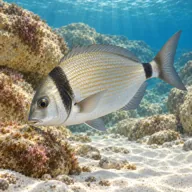
Two-banded bream
Almost always · Sargu
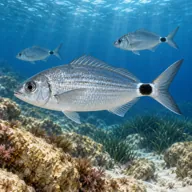
Saddled bream
Almost always · Kaħlija
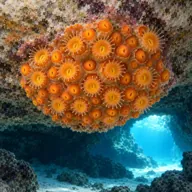
Encrusting sponges and cup corals
Almost always · Qroll tad-dell
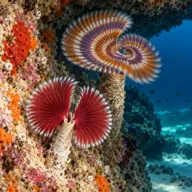
Tube worms
Almost always
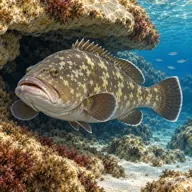
Dusky grouper
Often · Ċerna
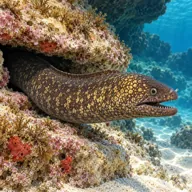
Mediterranean moray
Often · Morina
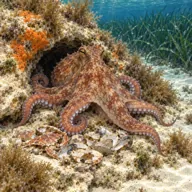
Common octopus
Often · Qarnit

Red starfish
Often · Stilla tal-baħar
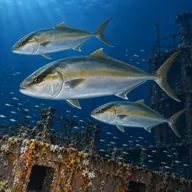
Greater amberjack
Sometimes · Aċċola · Late summer and autumn
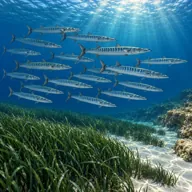
Mediterranean barracuda
Sometimes · Lizz · Late summer
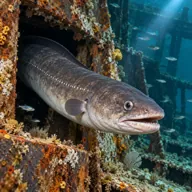
Conger eel
Sometimes · Gringu
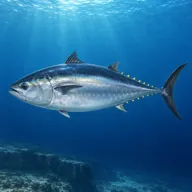
Atlantic bluefin tuna
Lucky day · Tonn · Summer
Getting in and staying safe
Boat dive. Charters run from Mġarr, Xlendi and Marsalforn, and dive centres will often pair it with the Inland Sea or the Blue Hole on the same trip. The boat moors inside Dwejra Bay where the water is shallow and protected, so kitting up and getting back aboard is easy even when the outside is lumpy. Shore access from the Dwejra car park exists in theory but the surface swim to the rock is long, exposed and not worth it. Dwejra itself has a car park, a kiosk in season and the diving permit signage; anything you actually need should come with you on the boat.
- Depth: the wall drops past 60 m with no seabed to stop your descent
- Exceptional visibility makes depth badly deceptive, so watch the computer not the view
- Chop and surge on the seaward face even when the bay is flat
- Current accelerating around the ends of the islet
- Boat traffic, including tourist cruises circling the rock
- Overhead in the 14 m cave and in the boulder swim-throughs
- Narcosis territory for anyone who drifts below 30 m on air
A bit of history
The Knights of St John found a squat red parasitic plant growing on the flat top of this rock, Cynomorium coccineum, which they called the Maltese fungus and treated as a small miracle: a dressing for wounds, a cure for dysentery and a diplomatic gift for important visitors. In 1746 Grand Master Pinto closed the rock to everyone, posted a guard, shaved the sides smooth so nobody could climb it, and strung a cable and basket across from the mainland so his own men could harvest it. Getting caught up there could cost you three years chained to an oar. The Maltese name Il-Ġebla tal-Ġeneral is tied to a story about an officer who came to grief on the rock. It is a nature reserve today, part of the wider Dwejra protected area that also held the Azure Window until its collapse in March 2017.
Divers say
Sign in to rate this site and leave a note for the next diver.
- No reviews yet. First one gets bragging rights.
Further reading: Wikipedia: Fungus Rock · Calypso Sub Aqua Club: Fungus Rock · Atlantis Gozo: Fungus Rock · Malta Dives: Fungus Rock · Visit Malta: Dwejra and Fungus Rock