L'Ahrax Point · Malta
Cave
A pocket cavern tucked into the very tip of Malta, sitting in five or six metres of water. Keep the rock on your shoulder, swim, and you will find it without a compass.
Sea conditions
Excellent right now
Flat, sheltered and calm
Forecast for the site, updated 02:29 AM
- Waves
- n/a
- Wind
- 4 km/h
- S, gusts 8
- Swell
- n/a
- Sea temp
- n/a
- air 25 °C
Next 7 days
Sunrise 06:47, sunset 19:05
Exposed to wind and swell from: NW (315°), N (0°), NE (45°), E (90°). The point is the most northerly rock in Malta and it catches everything from the west through to the east. Anything with north in it and the cavern turns into a washing machine. A southerly or south easterly puts the land at your back and the water goes glassy, which is the day to come. Best season: May to October, with September and October giving the warmest water and the best visibility. Winter is diveable on a settled southerly but the walk over wet rock is miserable..
The dive
This is the least fussy dive on the Aħrax headland. The reef here is a shallow apron of coralline limestone, broken into blocks and gullies, and somewhere along it the rock has been hollowed out into a short cavern with its mouth at about five metres. It is not a cave dive in the serious sense: daylight follows you in, the ceiling is close, and you can see the exit for the whole time you are inside.
What makes it worth the walk is the light. The chamber faces the open north, so on a calm morning the sun throws moving bands across the back wall and lights up the golden cup corals and tube worms that crust the overhangs. Poke a torch into the cracks and you will usually find a moray watching you back, or a cluster of cardinalfish hanging in the dark corners like orange confetti.
Depth tops out around ten metres on the sand outside, which makes this a proper long dive. Beginners love it because there is nothing to go wrong, and instructors love it because the shallow profile buys an hour in the water. Bring a torch even at midday, and bring good buoyancy: the roof is low and one careless fin kick will fill the chamber with silt for everyone behind you.
- Shallow daylight cavern that never feels claustrophobic
- Golden cup corals and tube worms carpeting the overhangs
- Hour-long bottom times at ten metres or less
- Genuinely the northernmost rock on the island
Typical plan
A single tank of air is plenty. Enter off the shelf, drop to four or five metres and follow the rock to your right until the cavern mouth appears, spend ten minutes inside with a torch, then work back along the reef edge at eight to ten metres poking into the gullies. Total run time of fifty to seventy minutes is normal and you will surface with gas to spare. Nitrox buys you nothing useful here.
What the bottom looks like
- 1Fallen blocks and gullies along the shoreline4 m deep · 30 m out
- 2Low reef shelf with cup coral overhangs8 m deep · 80 m out
- 3Sand and seagrass at the foot of the reef10 m deep · 105 m out
- 4Mouth of the cavern5 m deep · 150 m out
- 5Back chamber, daylight still visible5 m deep · 168 m out
Broken coralline limestone blocks and ledges giving way to coarse pale sand with patches of Posidonia at ten metres.
Who you might meet

Cardinalfish
Almost always · Sultan iċ-ċawl
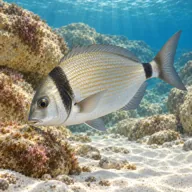
Two-banded sea bream
Almost always · Sargu
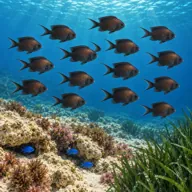
Damselfish
Almost always · Ċawl
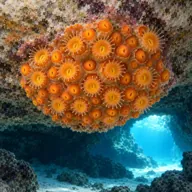
Golden cup coral
Almost always · Qroll tad-dell
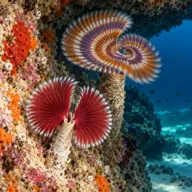
Spiral tube worm
Almost always
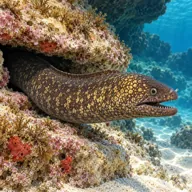
Mediterranean moray
Often · Morina
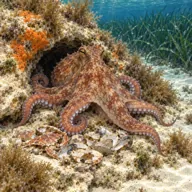
Common octopus
Often · Qarnit
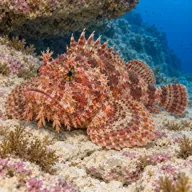
Scorpionfish
Sometimes · Ċippullazza
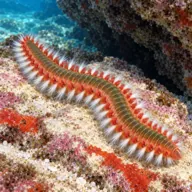
Bearded fireworm
Sometimes · Busuf · warmer months
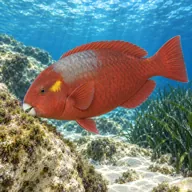
Mediterranean parrotfish
Sometimes · Marzpan
Getting in and staying safe
Drive through Armier and follow the rough track towards the White Tower, where there is informal parking on the open ground. From there it is a walk of roughly a hundred and fifty metres over uneven limestone to the shelf on the northern side of the point, so kit up slowly and take water. Entry is a stride or a seated slide off the rock into two metres, exit at the same spot. There are no ladders and no shade. Armier has kiosks, toilets and a campsite that opens up in summer, but out of season assume nothing is available.
- Surge inside the cavern when there is any northerly swell running
- Sharp, ankle-turning limestone on the walk in and out
- Awkward exit from the rock shelf if the sea builds while you are down
- Silt-out risk from fin wash under the low roof
- Speedboat and jet ski traffic out of Armier in summer, so fly a marker buoy
- Mauve stinger jellyfish in late summer and autumn
- No shade and a long walk with kit in July and August heat
A bit of history
The headland is capped by Upper Coralline limestone, a hard, fossil-rich rock that erodes into ledges, potholes and short sea caves exactly like this one. Above the site stands Aħrax Tower, better known as the White Tower, one of the coastal watchtowers put up under Grand Master Lascaris in the mid seventeenth century to keep an eye on the channel between Malta and Comino. The whole point was open military ground for much of the twentieth century, which is partly why it stayed undeveloped.
Divers say
Sign in to rate this site and leave a note for the next diver.
- No reviews yet. First one gets bragging rights.
Further reading: Divers Guide, Ahrax Point site information · Calypso Sub-Aqua Club, Ahrax Point and Dragonara Cave · Dive Systems Malta, Ahrax Point · Wikipedia, Aħrax Tower