Xlendi Bay · Gozo
Xlendi Reef
A two-storey reef running off the headland in the middle of Xlendi Bay: an easy inner shelf at 12 metres for courses, and an outer spur with a pinnacle that almost breaks the surface before the ground falls away past 60 metres.
Sea conditions
Excellent right now
Flat, sheltered and calm
Forecast for the site, updated 01:33 AM
- Waves
- 0.3 m
- from SE
- Wind
- 8 km/h
- SSW, gusts 14
- Swell
- 0.2 m
- 5 s period
- Sea temp
- 28 °C
- air 27 °C
Next 7 days
Sunrise 06:47, sunset 19:06
Exposed to wind and swell from: SW (225°), W (270°), S (180°). Well sheltered by the cliffs on both sides and normally free of current, but a southwesterly wind sends swell straight into the bay and the outer reef becomes untenable well before the inner one does. Best season: April to November; best visibility September to November..
The dive
Xlendi Reef is the site that quietly does everything. The inner section wraps around the headland and never goes past about 12 metres, which is why half the try dives and open water skills on this side of Gozo happen here. It is sheltered, currentless and busy with fish, and you can spend a whole cylinder poking at the boulders without ever leaving the shallows.
Swim a little further out and the reef sends a spur seaward. Part of it rears up into a pinnacle that stops just short of the surface, a proper lump of rock with fish stacked around it and light raking down its sides. Around the base you are in about 25 metres, with big boulders and thick Posidonia binding the ground together.
Keep going and the bottom stops pretending. The slope steepens and drops well past 60 metres, which is exactly why local technical crews use the outer edge for training and staged decompression practice. For recreational divers the sensible thing is to treat that edge as a view rather than a destination.
The short version: bring a light for the crevices, plan a shallow return over the inner reef, and if the day is calm add the tunnel on the way back for one of the better value dives in Gozo.
- Pinnacle that climbs from 25 metres to just under the surface
- Shallow inner reef that works for courses and long safety stops
- Deep outer edge used for technical training
- Dense Posidonia and boulder habitat with reliable fish life
- Pairs naturally with Xlendi Tunnel on the same cylinder
Typical plan
Enter from the platform, follow the south shore out to the headland, then work the outer spur down to 25 metres around the pinnacle base. Circle the pinnacle while ascending its flank, then return over the inner reef between 8 and 12 metres, which gives you a long, relaxed shallow phase. Air is fine for a 45 to 55 minute recreational run; nitrox 32 helps if you plan to loiter at 25 metres. Anything beyond the drop-off is a planned technical dive, not a nudge deeper.
What the bottom looks like
- 1Inner reef shelf around the headland12 m deep · 80 m out
- 2Boulder field on the reef top10 m deep · 140 m out
- 3Pinnacle rising almost to the surface3 m deep · 180 m out
- 4Posidonia at the reef base20 m deep · 230 m out
- 5Outer reef spur25 m deep · 280 m out
- 6Slope steepening into technical depth40 m deep · 340 m out
Large limestone boulders and rubble stitched together with Posidonia meadow, with sand pockets between the reef fingers.
Who you might meet
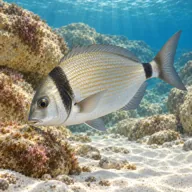
Two-banded bream
Almost always · Sargu

Mediterranean damselfish
Almost always · Ċawl
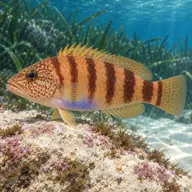
Painted comber
Almost always · Serran

Salema
Almost always · Xilep

Common octopus
Often · Qarnita
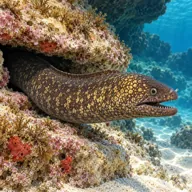
Mediterranean moray
Often · Morina
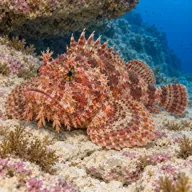
Scorpionfish
Often · Skorfna
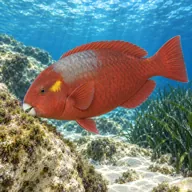
Mediterranean parrotfish
Often · Marzpan

Barracuda
Sometimes · Lizz · Late summer and autumn
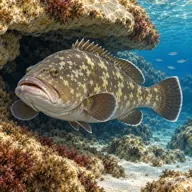
Dusky grouper
Sometimes · Ċerna
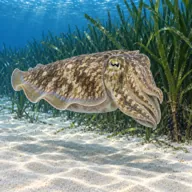
Cuttlefish
Sometimes · Siċċa · Spring
Getting in and staying safe
Park in Xlendi village along the promenade or the small lots near the head of the bay, then walk the waterfront path to the concrete dive platform on the south side. Metal steps make entry and exit straightforward, though they are usually removed in winter. It is a short surface swim or shallow underwater transit to the headland. Cafes, toilets and a dive centre or two are all within a couple of minutes of the water.
- Boat traffic in and out of the bay, especially at the headland
- Swimmers and snorkellers in the inner bay in summer
- Depth temptation: the outer slope keeps going past 60 metres
- Discarded fishing line and hooks on the pinnacle
- Reduced visibility in the inner bay after rain
- Slippery platform and steps
A bit of history
The reef is the drowned continuation of the Upper Coralline limestone headland that splits Xlendi Bay, the same hard cap that forms the cliffs and the tunnel alongside it. Xlendi has been a working fishing inlet for centuries, and the deep water beyond the reef is part of the same shelf edge where the seventh century BC Phoenician wreck was found in 2007.
Divers say
Sign in to rate this site and leave a note for the next diver.
- No reviews yet. First one gets bragging rights.
Further reading: Malta Dives, Xlendi Reef · Atlantis Gozo, Xlendi Cave and Reef · PADI dive site, Xlendi Bay · Blue Waters Dive Cove, Xlendi