A boat dive tucked under the Sanap cliffs southwest of Gozo, where a big weathered archway, a roomy cavern and a near vertical wall break up into house sized boulders.
 Cave
 Reef
 Wall
Sea conditions
Stay dry right now
Sea is up (4.3 m WNW) · Fresh WNW wind (41 km/h) · Gusts to 63 km/h
Done for today. Tomorrow: not looking good. Best it gets is 19 at 17:00: Sea is up (1.6 m WNW)
Forecast for the site, updated 19:45 · Models disagree
Measured at Mġarr, Gozo (9.2 km away, 20:29): 36 km/h from WNW, gusts 41. The next hours lean on it.
- Waves
- 4.3 m
- from WNW, biggest 7.0
- Wind
- 41 km/h
- WNW, gusts 63
- Swell
- 0.4 m
- 11 s period
- Sea temp
- 22 °C
- air 19 °C
Hour by hour
Next 7 days
 0 4.3 m
56 WNW
 0 4.1 m
52 WNW
40 1.1 m18 W
 89 0.3 m
15 ESE
 88 0.4 m
14 E
85 0.4 m19 NNW
89 0.4 m15 SSW
Sunrise 06:26, sunset 17:06
Waves: Copernicus Med-Waves 4 km + MFWAM 8 km + EWAM 5 km + ECMWF WAM 9 km. Wind: ICON-2I 2 km + ECMWF IFS 9 km + ICON-EU 7 km + UKMO 10 km + ARPEGE 11 km. Read a few km out on the side the site is open to, then blended.
Exposed to wind and swell from: SW (225°), S (180°), SE (135°), W (270°). A settled weather dive. Anything with south or southwest in it puts swell straight onto the cliff and the skippers will send you somewhere else. Visibility is typically excellent, often thirty metres or more, because there is no river, no harbour and no sand flat nearby to stir up. Best season: May to October, with June to September the most reliable for flat mornings and warm water.
The dive
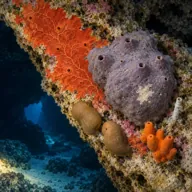
The skipper drops you on a shallow shelf in the corner of a small inlet, and within a minute of dropping down you are looking at the reason everyone comes here: an arch chewed out of the cliff foot, its floor sitting at around ten metres and its flanks plastered in orange and yellow sponges. Light pours through it from the open sea side, which is why photographers keep asking for this one.
Past the arch the ground gives way. The wall drops almost vertically, then loosens into a jumble of boulders the size of small houses, with corridors and pass throughs between them and the cliff face. Guides usually turn the dive somewhere in the thirties, but the terrain keeps going, sliding out to sand that sits anywhere from the mid forties to sixty five metres depending which way you swim.
What makes the site unusually forgiving is the shallow ground on top. Newer divers get a proper cliff dive without ever leaving the teens, and anyone coming back up from the deep boulders has a genuinely interesting place to burn off their decompression instead of hanging in the blue staring at a computer.
- A cliff foot archway with a sponge covered floor at ten metres
- Cavern directly beneath the arch, open and well lit
- Wall that falls away vertically then breaks into giant boulders
- One of Gozo's best sites for wide angle photography
- Shallow reef on top that keeps the decompression time interesting
Typical plan
Drop from the boat onto the shelf, follow the cliff to the arch and shoot it while everyone is still shiny, then slip through and down the wall to somewhere between thirty and forty metres depending on your gas and training. Work back along the boulders, gaining depth slowly, and spend the last twenty minutes in and around the arch and the shallow reef at eight to twelve metres. Nitrox 32 suits it well for recreational profiles, and a fifty to sixty minute dive fits comfortably within a single twelve litre if you stay off the deeper end.
What the bottom looks like
- 1Shallow anchoring shelf8 m deep · under the boat
- 2The main archway, floor around 10 m10 m deep · 25 m from the boat
- 3Cavern under the arch20 m deep · 38 m from the boat
- 4Lip of the near vertical wall18 m deep · 50 m from the boat
- 5Field of house sized boulders35 m deep · 85 m from the boat
- 6Sand at the foot of the wall65 m deep · 210 m from the boat


Bare coralline limestone and boulder debris on the slope, giving way to clean pale sand where the wall finally runs out.
Who you might meet
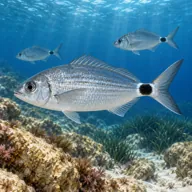
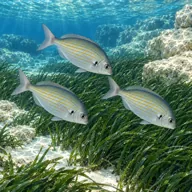
Often
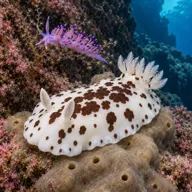
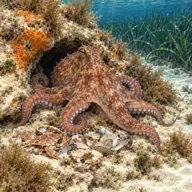

Sometimes
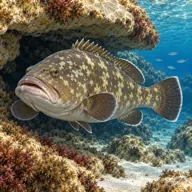
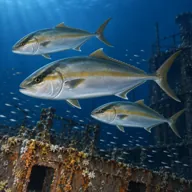
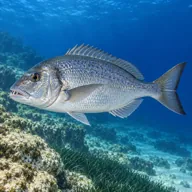
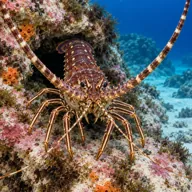
Marked ones can hurt you. What they do and what to do about it is under Getting in and staying safe.
Getting in and staying safe
Boat only, and in practice that means a short run south from Xlendi Bay with one of the Xlendi based centres, around five minutes in a fast boat. The boat anchors on the shallow reef in the sheltered corner of the inlet, usually in seven or eight metres, and you giant stride off the side and come back up the ladder. There is no shore option worth attempting and nothing at all on the cliff top for divers, so toilets, coffee and the rest happen before you leave Xlendi.
- No shore exit anywhere along this stretch, so a missed boat pickup is a serious problem
- Easy to overshoot depth among the boulders because the water is so clear
- Surge pushes through the arch and the cavern when there is any southerly swell
- Sharp rock and sponge crusted edges inside the archway
- Boat traffic from other dive boats and pleasure craft in summer
- Jellyfish drifting through in late summer
- Decompression obligation builds quickly if you follow the wall down
Marine life to respect
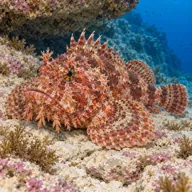
Red scorpionfish · Ċippullazza Can hurt you
Venomous spines, and it sits still on the rock. Look before you kneel or hold on; hot water if stung.
A bit of history
The cliffs here are Lower Coralline Limestone, the same hard grey rock that holds up most of Gozo's southern coastline, capped by softer beds that erode faster and undercut the cliff. The archway and the cavern beneath it are ordinary sea erosion doing patient work on the joints in that rock, the same process that built and eventually killed the Azure Window on the other side of the island. The Sanap cliffs above are a well known walking spot and gave the dive its name.
Divers say
Sign in to rate this site and leave a note for the next diver.
- No reviews yet. First one gets bragging rights.
Further reading: Visit Gozo, Dawra tas-Sanap dive site · Atlantis Gozo, Dawra tas-Sanap · Gozo Dive, Dawra tas-Sanap