Xlendi Bay · Gozo
Xlendi Underwater Archaeological Park
Gozo's deep-water museum floor: a 67,000 square metre protected zone off Xlendi where a Phoenician trading ship went down around the seventh century BC, its amphorae and grinding stones still lying where they scattered at roughly 105 metres. Closed-circuit territory, visited only through licensed operators.
Sea conditions
Excellent right now
Flat, sheltered and calm
Forecast for the site, updated 01:33 AM
- Waves
- 0.3 m
- from SE
- Wind
- 8 km/h
- SSW, gusts 14
- Swell
- 0.2 m
- 5 s period
- Sea temp
- 28 °C
- air 27 °C
Next 7 days
Sunrise 06:47, sunset 19:06
Exposed to wind and swell from: SE (135°), S (180°), SW (225°), W (270°), NW (315°). Fully offshore and open to the southern and western sectors. Operators need a flat, settled forecast for the whole window, since a dive here commits you to a long ascent with no shelter. Best season: June to October, when the sea is most reliably flat and surface support is comfortable..
The dive
This is not a dive you turn up for. The zone sits well offshore of Xlendi in water deeper than most people will ever see, and what lies on the silty sand is one of the oldest largely intact cargo scatters in the central Mediterranean. Amphorae of Tyrrhenian type, locally made urns and bowls, and lava quern stones traced to Pantelleria lie spread across the bottom in a broad rectangle, with more almost certainly buried beneath.
The University of Malta found it during a sonar survey in 2007 and spent years working it with mixed-gas divers and remote vehicles. Malta declared the area an Archaeological Zone at Sea in 2020 and then, in 2022, a deep-water archaeological park, and it opened to visiting divers in summer 2023 through registered centres and clubs only.
What you get, if you are qualified and booked, is a hypoxic trimix descent onto a flat, low-visibility-prone plain with rocky outcrops and pottery, plus a long staged ascent. Bottom time is short, the deco is not, and the rule is simple: look, photograph, touch nothing and take nothing.
For everyone else, the park is best understood as context rather than a destination. Knowing it is down there while you potter around the reef and the tunnel in 10 metres of water is its own kind of pleasure.
- One of the oldest shipwreck cargoes accessible to divers anywhere
- Declared the world's first deep-water archaeological park in 2022
- Amphorae, urns and Pantelleria quern stones lying as they fell
- Strictly permit-based access through registered centres only
- A genuine trimix expedition dive, not an add-on
Typical plan
An operator-run hypoxic trimix dive with fixed shot and surface cover. Descend the line to around 105 metres, budget roughly 15 to 20 minutes on the bottom moving slowly and well off the sediment, then ascend on the line with staged decompression on travel and deco gases totalling two to three hours. Closed circuit is the sensible tool; open circuit means a serious gas matrix. Bring redundant lights, a camera with no urge to collect, and patience for the hang.
What the bottom looks like
- 1Phoenician cargo scatter, amphorae and urns105 m deep · 30 m out
- 2Lava quern stones from Pantelleria105 m deep · 55 m out
- 3Silty sand plain with buried material106 m deep · 90 m out
- 4Rocky outcrops within the protected zone107 m deep · 130 m out
Fine silty sand broken by low rocky outcrops, with archaeological material resting on and buried within the sediment.
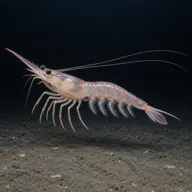
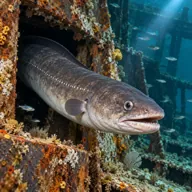
Who you might meet

Getting in and staying safe
Boat only, and only with a registered dive centre or club holding permission to take divers into the park. Boats leave from Xlendi or Mgarr depending on the operator; the run from Xlendi is short. Expect to book well ahead, to show hypoxic trimix and closed-circuit or heavy open-circuit credentials, and to dive to a briefed plan with fixed shotlines and surface support. There is no shore option and no casual access.
- Extreme depth: 100 metres plus, with mandatory staged decompression
- Narcosis and gas density if attempted on anything but hypoxic trimix
- Silty bottom that clouds instantly if finned
- Long deco with open-water surface conditions and boat traffic overhead
- Offshore position: any change in wind or swell during the ascent
- Legal protection; disturbing or removing artefacts is an offence
A bit of history
The main wreck is a Phoenician merchant vessel lost in the late seventh century BC, located in 2007 by a University of Malta team using side-scan sonar about 900 metres off Xlendi at roughly 110 metres. Excavation under Timmy Gambin of the Department of Classics and Archaeology ran from 2014 onwards and is credited as the first archaeological survey to work shipwrecks below 100 metres. The cargo included Tyrrhenian amphorae from Italy and western Sicily, Gozitan urns, and quern stones quarried on Pantelleria. A second scatter datable to the third century BC has also been identified in the zone. Malta confirmed the area as an Archaeological Zone at Sea in 2020, declared it a deep-water archaeological park in 2022, and opened it to divers in summer 2023, with the MIA Foundation supporting it.
Divers say
Sign in to rate this site and leave a note for the next diver.
- No reviews yet. First one gets bragging rights.
Further reading: Heritage Malta, Xlendi Underwater Archaeological Park · Wikipedia, Gozo Phoenician shipwreck · Malta Dives, Xlendi Underwater Archaeological Park