Malta
Wied Bassasa
A boat-only cave and wall on the quiet stretch of cliff east of the Blue Grotto, with a cavern whose mouth breaks the surface so you can start the dive already inside it.
Sea conditions
Good right now
Some chop (0.5 m ESE)
Forecast for the site, updated 01:45 AM
- Waves
- 0.5 m
- from ESE
- Wind
- n/a
- Swell
- 0.5 m
- 5 s period
- Sea temp
- 29 °C
Next 7 days
Exposed to wind and swell from: SE (135°), S (180°), SW (225°), W (270°), NW (315°). Local clubs flag this stretch as exposed to northwesterlies and to anything southerly. The northwest matters because a strong majjistral wraps swell round the west of the island and sets it rolling along the south coast, which shuts the cave down even when the wind feels offshore. Pick a settled, flat day. Best season: June to early October, when the south coast settles and the boat ride is pleasant. Visibility is consistently excellent through the whole season..
The dive
Bassasa is one of those sites that stays off the schedule simply because you need a boat to reach it, and the boats are all busy elsewhere. That is good news for anyone who does get out here. The headline is a generously sized cave with two corridors that loop round and rejoin, so you can swim through rather than reverse out, and the entrance rises clear of the water. Tie off, drop in inside the cavern, and the dive starts with your torch beam sweeping orange and yellow sponge on the ceiling.
Outside, the cliff carries on underwater as a plateau around 10 metres that quickly loses its nerve and tips into a steep face. Follow it down and the bottom keeps going to around 40 metres. The wall is riddled with crevices, cracks and small overhangs, which is where the grouper and the lobsters live, and the shafts of light coming through the cave mouths are the reason people bring cameras.
Water clarity out here is the other reward. There is nothing upstream to cloud it: no harbour, no beach, no river, just deep blue water running along an empty cliff. Twenty metres is a bad day, forty is normal.
- Cave mouth above the waterline, so the dive begins inside the cavern
- Two corridors that let you swim a loop instead of turning round
- Sponge colour and light shafts that photograph beautifully
- Outstanding visibility, routinely 30 to 40 metres
- A wall to 40 m with crevices full of grouper and lobster
Typical plan
Drop inside the cave mouth, work the corridors down to about 25 metres with torches on, then exit and turn onto the wall. Run the face out to 35 or 40 metres for a short deep leg, then ascend along the crevices to the plateau at 10 to 12 metres and burn your remaining gas poking into cracks. Around 40 to 45 minutes total. Nitrox 28 to 32 is sensible given the depth, and a torch each is non-negotiable even if you stay in daylight.
What the bottom looks like
- 1Cave mouth that breaks the surface2 m deep · 10 m out
- 2Twin corridors that rejoin inside15 m deep · 50 m out
- 3Deepest chamber in the cave25 m deep · 75 m out
- 4Plateau outside the cave12 m deep · 110 m out
- 5Crevice-riddled wall face22 m deep · 150 m out
- 6Steep final section33 m deep · 190 m out
- 7Sand and rubble at the foot of the wall40 m deep · 220 m out
Bare rock and weed-covered boulders on the plateau and wall, with sand and rubble collecting at the base around 40 metres.
Who you might meet

Cardinalfish
Almost always · Re tat-trilji
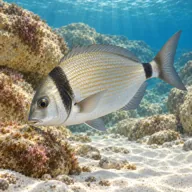
Two-banded bream
Almost always · Sargu

Mediterranean damselfish
Almost always · Kaħlija
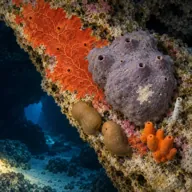
Encrusting sponges
Almost always · Sponża
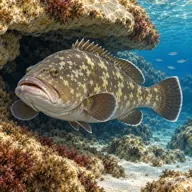
Dusky grouper
Often · Ċerna
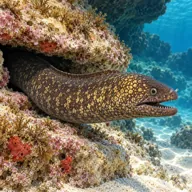
Mediterranean moray
Often · Morina
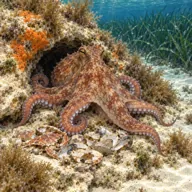
Common octopus
Often · Qarnit
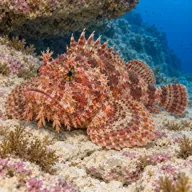
Scorpionfish
Often · Skorfna
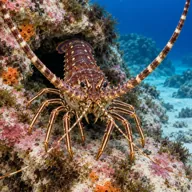
Mediterranean spiny lobster
Sometimes · Awwista
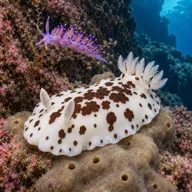
Nudibranchs
Sometimes · spring

Barracuda
Sometimes · Lizz · late summer
Getting in and staying safe
Boat only. Most groups run out from Wied iż-Żurrieq, and it is a short hop east along the cliffs. There is no shore entry worth attempting here and no facilities of any kind; sort out water, shade and a toilet stop before you leave the quay. Skippers usually hold position off the cave mouth rather than anchor, so agree your surfacing point and carry a DSMB.
- Overhead environment: proper cave training, torches and a line for anything beyond daylight
- Surge inside the cave mouths when there is any swell running
- Boat-only access, so no easy bail-out if conditions turn
- Wall bottoms out past 40 m, easy to drift deeper than planned
- Few boats pass, so self-sufficiency and a surface marker matter
- Mauve stinger jellyfish in spring and autumn
A bit of history
No wrecks and no legends attached to this one. The interest is geological. This whole coast is Upper Coralline limestone sitting on softer clays, and the sea has been quarrying out the joints for thousands of years, which is exactly how you end up with a cavern whose roof still holds while its floor has dropped to 25 metres. The same process produced the Blue Grotto a kilometre or so west and, in its final act, the Azure Window collapse at Dwejra in 2017.
Divers say
Sign in to rate this site and leave a note for the next diver.
- No reviews yet. First one gets bragging rights.
Further reading: Calypso Sub-Aqua Club: Wied Bassasa · Divers Guide: Wied Bassasa site information · Malta Dive Sites: Wied Bassasa