Malta
Slugs Bay
A tiny cove on the north shoulder of Mellieha Bay with a rock arch, a lot of small life, fossil shark teeth in the shingle, and nothing deeper than about 12 metres.
Sea conditions
Excellent right now
Flat, sheltered and calm
Forecast for the site, updated 02:29 AM
- Waves
- n/a
- Wind
- 4 km/h
- S, gusts 8
- Swell
- n/a
- Sea temp
- n/a
- air 25 °C
Next 7 days
Sunrise 06:47, sunset 19:05
Exposed to wind and swell from: NE (45°), E (90°), SE (135°). Sheltered from north and northwest winds, which is the whole reason it exists on dive centre lists. It becomes unusable when the wind swings into the east or northeast and pushes swell up Mellieha Bay. Best season: Year round. Best from June to November for water temperature; in winter it is often the only comfortable entry in the north during a northwesterly..
The dive
Slugs Bay is the sort of place you would drive past without noticing, which is exactly its charm. A narrow slot in the rock on the north side of Mellieha Bay, a concrete jetty, a scrap of shingle, and a dive that never gets deeper than roughly twelve metres. It is the standard answer to the question every Maltese dive planner eventually asks: where can we still get in when the northwesterly is howling?
Underwater the bay is a neat sampler of Maltese shallows. Rock and boulders near the sides, ribbons of seagrass, clean sand in the middle, and a natural arch in the rock that is the site's one genuine landmark and everyone's photo. Because it is small you can cover the whole thing at a crawl, and crawling is the right speed: the density of small life here is well above what a twelve metre cove has any right to hold.
On the eastern side the bottom turns to fine shingle and sand, and this is where divers sift up fossilised shark teeth, leftovers of the Miocene seabed that makes up this coast. Look, photograph, put it back, since taking things out of the water is not on in Malta.
The name is a small joke that stuck. The sea cucumbers lolling on the bottom got called slugs by British servicemen, and the bay has worn the label ever since. Add an easy sandy bottom for skills and you have a site that works equally well for a first open-water dive, a night dive, or a macro session with a bad weather forecast.
- A photogenic natural rock arch in six metres of water
- Fossilised shark teeth in the shingle on the east side, look but leave them
- Sheltered when the northwest coast is unworkable
- Sandy bottom that makes skills practice easy on the reef
- Small, shallow and slow: an hour disappears without effort
Typical plan
Step off the jetty, drop to 3 or 4 metres and follow the left-hand rock out of the cove, taking in the arch on the way. Cross the middle to the sand at 10 to 12 metres, work east over the shingle with your eyes down, then come back along the opposite wall in the shallows. Sixty to seventy five minutes on a single cylinder is realistic given the depth; air is fine and a torch pays for itself in the boulder cracks.
What the bottom looks like
- 1Concrete jetty entry and exit0 m deep · 0 m out
- 2Boulder ground along the cove sides5 m deep · 30 m out
- 3Natural rock arch6 m deep · 60 m out
- 4Posidonia patches9 m deep · 95 m out
- 5Shingle and sand with fossil shark teeth, east side11 m deep · 125 m out
Rock and boulders around the edges giving way to seagrass, then fine shingle and sand in the middle and along the east side.
Who you might meet
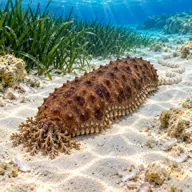
Sea cucumbers
Almost always · Bużżu tal-baħar
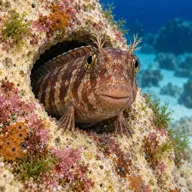
Blennies and gobies
Almost always · Budakkra
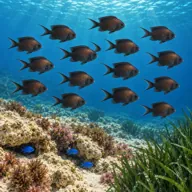
Mediterranean damselfish
Almost always · Ċawl
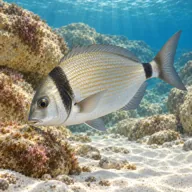
Two-banded seabream
Almost always · Sargu
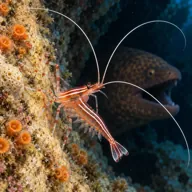
Hermit crabs and shrimps
Almost always · Gamblu
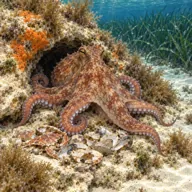
Common octopus
Often · Qarnit
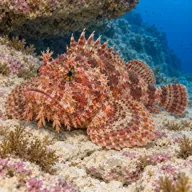
Scorpionfish
Often · Cippullazza
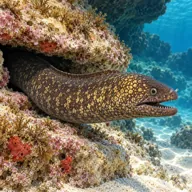
Moray eel
Sometimes · Morina
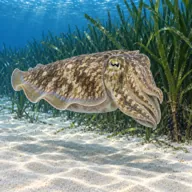
Cuttlefish
Sometimes · Siccia · spring
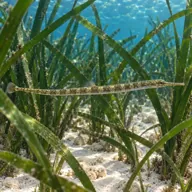
Pipefish in the seagrass
Sometimes · Gremxula tal-baħar
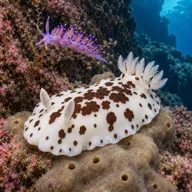
Nudibranchs
Sometimes · spring
Getting in and staying safe
Shore or boat. From the road along the north side of Mellieha Bay, a rough track drops towards the cove; the last stretch is genuinely only sensible in a 4x4, and the walk in kit from the nearest sane parking is roughly 40 to 100 metres over uneven ground. Two ways in: off the small concrete jetty, or off the rocks beside it. The jetty gets treacherously slippery when wet. No toilets, no cafe and no shade at the site, so bring water; Mellieha Bay with all its facilities is a few minutes away.
- The concrete jetty is very slippery when wet
- Rough access track and uneven walk in full kit, 4x4 territory
- No facilities, no shade and limited phone signal at the cove
- Swell wrapping into the bay makes the jetty entry hazardous
- Small boats entering the cove in summer
- Sea urchins on the shallow rock
- Jellyfish drifting in during late summer
A bit of history
The bay's name comes from the sea cucumbers that litter the bottom, which British military personnel are said to have nicknamed slugs. Geologically it is a slot eroded into the limestone of the southern flank of Marfa Ridge, and the fossil shark teeth found in the shingle on the east side come out of the same Miocene rock that forms the ridge above. Malta's tourism authority produced a dive site report for the bay, numbered sixteen in the series, which is still the standard reference for local briefings.
Divers say
Sign in to rate this site and leave a note for the next diver.
- No reviews yet. First one gets bragging rights.
Further reading: Divers Guide: Slugs Bay dive site · Malta Dive Sites: Slugs Bay · Malta Tourism Authority, Dive Site Report 16: Slugs Bay