Malta
Sirens
The shallow training reef of St Paul's Bay: a rock-cut pool, a channel out to open water, and a mixed bottom of boulders, sand and seagrass that never passes 12 to 15 metres.
Sea conditions
Excellent right now
Flat, sheltered and calm
Forecast for the site, updated 01:47 AM
- Waves
- 0.3 m
- from SE
- Wind
- n/a
- Swell
- 0.3 m
- 5 s period
- Sea temp
- 29 °C
Next 7 days
Exposed to wind and swell from: N (0°), NE (45°), E (90°). Calm in almost anything with west or south in it, and one of the standard fallbacks when the west coast is unworkable. A fresh northeasterly pushes swell straight into the bay and makes the entry channel unpleasant. Best season: Year round. June to November gives the warmest water and best visibility; winter is perfectly diveable and much quieter..
The dive
Sirens is where half the north of Malta learns to dive, and there is no shame in that. You kit up on flat rock a few steps from the car, walk down a ramp with a handrail or climb down a ladder into a swimming pool cut out of the limestone, then follow a natural channel through the rock and out into the bay. By the time you are properly in open water you are already breathing comfortably, which is the whole point.
Under the surface it is a patchwork rather than a single feature: low boulders, sand patches, ribbons of seagrass and an old quay wall that has quietly turned into an apartment block for fish. Depth builds slowly and tops out around 12 metres, with the odd deeper sandy patch nudging 15. Nothing here will frighten you, and nothing here will bore a photographer either, because the small stuff is excellent.
That is really the trick with Sirens. Swim it fast and it is a grey slope. Swim it at a crawl with a torch and you will find octopus rearranging their front door, cuttlefish that decide to stand and argue, scorpionfish doing their impression of a rock, moray heads in every crack, wrasse of four or five kinds and flying gurnard walking across the sand on their finger-fins.
It is also one of the north's better night dives, sheltered enough for a shore entry after dark and shallow enough to take an hour over. Just remember that the small harbour is right there, so keep your excursions seaward short and your DSMB handy.
- Swimming-pool entry and exit, kind to first-timers and to bad knees
- Shallow enough for an hour plus of bottom time
- Quality macro subjects on the old quay wall
- One of the best sheltered night dives in the north
- Parking, toilets and coffee all within a minute of the kit-up spot
Typical plan
Drop into the pool, swim out through the channel and turn left or right along the rock at 4 to 6 metres, then work seaward over the boulders to the sand at 10 to 12 metres. Keep the deepest part in the first half, circle back over the quay wall for the macro, and finish in the shallows with whatever skills or photos you came for. Sixty to seventy minutes on a single cylinder is normal, air is plenty, and navigation is easy: deeper is out, shallower is home.
What the bottom looks like
- 1Rock-cut pool and exit channel0 m deep · 0 m out
- 2Old quay wall, full of small life5 m deep · 20 m out
- 3Scattered boulder field8 m deep · 55 m out
- 4Posidonia patches10 m deep · 100 m out
- 5Open sand, good for skills12 m deep · 150 m out
A mix of low rock and boulders, open sand patches and seagrass, all within a dozen metres of the surface.
Who you might meet

Common octopus
Almost always · Qarnit
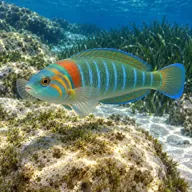
Ornate and painted wrasse
Almost always · Tirda tal-passa

Mediterranean damselfish
Almost always · Ċawl
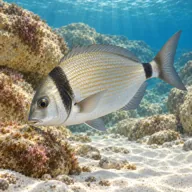
Two-banded seabream
Almost always · Sargu
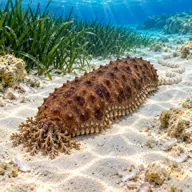
Sea cucumbers
Almost always · Bużżu tal-baħar
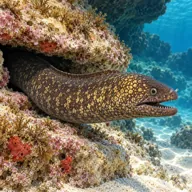
Moray eel
Often · Morina
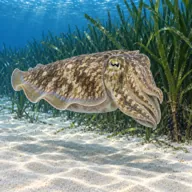
Cuttlefish
Often · Siccia · spring
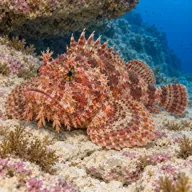
Scorpionfish
Often · Cippullazza
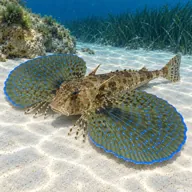
Flying gurnard
Sometimes · Bies · summer
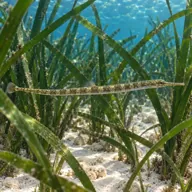
Pipefish in the seagrass
Sometimes · Gremxula tal-baħar
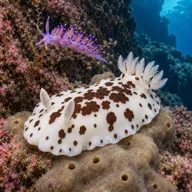
Nudibranchs
Sometimes · spring
Getting in and staying safe
Easy shore dive with parking almost on top of the site off Triq San Geraldu in St Paul's Bay. Several entry and exit options: a sloping rock ramp with a handrail, ladders, or steps into one of the rock-cut bathing pools, from which a channel leads out to the open bay. Toilets, cafes, restaurants and a dive centre are all within a short walk, so it works well for courses and for a family who want to swim while you dive. Parking gets tight in high summer.
- Small boats entering and leaving the nearby harbour; stay shallow and near the rocks or carry a DSMB
- Slippery rock and algae around the pool entry, especially in winter
- Surge pushes through the entry channel when there is any swell in the bay
- Sea urchins on the shallow rock
- Busy with trainees, so buddy separation in poor visibility is a real risk
- Jellyfish drifting in during late summer
Divers say
Sign in to rate this site and leave a note for the next diver.
- No reviews yet. First one gets bragging rights.
Further reading: Divers Guide: Sirens dive site, St Paul's Bay · Malta Dive Sites: Sirens