Ċirkewwa · Malta
Rozi
A 33 m Grand Harbour tug scuttled in 1992, sitting upright and remarkably whole on sand at 34 m with her mast reaching up to 20 m. Malta's most dived wreck, and deservedly so.
Sea conditions
Excellent right now
Flat, sheltered and calm
Forecast for the site, updated 02:29 AM
- Waves
- n/a
- Wind
- 4 km/h
- S, gusts 8
- Swell
- n/a
- Sea temp
- n/a
- air 25 °C
Next 7 days
Sunrise 06:47, sunset 19:05
Exposed to wind and swell from: NW (315°), W (270°), N (0°). High waves and strong northwesterlies are what shut this one down, and they do it at the entry point rather than on the wreck. Winds from the north round to the southeast leave it flat. If the stride entry is washing, do not talk yourself into it. Best season: May to October for water in the mid twenties and the best visibility, with autumn giving the best chance of pelagics over the mast..
The dive
Rozi is the wreck everybody remembers from their first Malta trip. She is small enough to swim around properly in one dive, intact enough to still read as a working tug, and close enough to shore that you do not need a boat. Drop off the stride entry, follow the reef out, and her mast comes up out of the blue at 20 m like a signpost. Follow it down and the deck spreads out at around 30 m with the sand at 34.
The engine and propeller were taken out before she was sunk, which leaves the hull hollow and easy to move through. The wheelhouse, the accommodation and the engine space are all open, the doorways are generous, and the whole thing is now thickly grown with hydroids and sponges. Groupers use the shaded corners, morays live in the fairleads, and shoals of bream stack up over the deck. On a good autumn day barracuda hang above the mast and the occasional amberjack or tuna cruises through.
The smart move is to combine her with something shallow on the way home. The reef and the Ċirkewwa Arch are right there, so you can do your deep time on the tug and then spend the back half of the dive at 15 to 18 m among the caves and swim throughs, arriving at the exit with a proper safety stop already behind you.
- An intact tugboat you can circle completely in one dive
- Mast rising to 20 m, making descent and navigation easy
- Open, forgiving penetration through wheelhouse and engine space
- Thirty years of growth covering every surface
- Pairs perfectly with the Ċirkewwa Arch on the way back
Typical plan
Stride in, follow the reef out until the mast shows at 20 m, then descend along it to the deck and drop to the sand at the stern. Circle the hull, look in through the wheelhouse, and if you are trained for it take a short line through the open interior. Around eighteen to twenty minutes on the wreck is typical. Ascend the mast, cross back to the reef, and finish shallow along the wall or via the Arch so your safety stop happens while you are still looking at something interesting. Nitrox 32 recommended.
What the bottom looks like
- 1Reef edge and drop off on the route out16 m deep · 60 m out
- 2Sand flat approaching the wreck27 m deep · 100 m out
- 3Stern of Rozi, nearest the reef34 m deep · 130 m out
- 4Open engine space where the machinery was removed29 m deep · 142 m out
- 5Wheelhouse and accommodation24 m deep · 148 m out
- 6Mast top, the landmark you look for on the way out20 m deep · 150 m out
- 7Bow pointing to open sea34 m deep · 172 m out
Sand under the hull with low reef and boulders between the wreck and the shore, and Posidonia patches on the approach.
Who you might meet
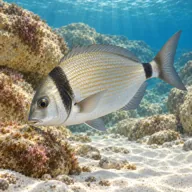
Common two banded seabream
Almost always · Sargu

Damselfish
Almost always · Kaħlija
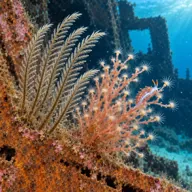
Hydroids and sea firs
Almost always
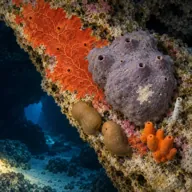
Encrusting sponges
Almost always · Sponża
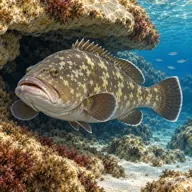
Dusky grouper
Often · Ċerna
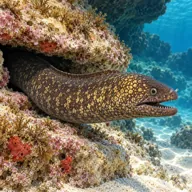
Mediterranean moray
Often · Morina

Barracuda
Often · Lqiq · late summer and autumn
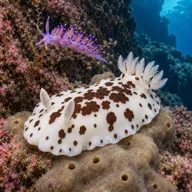
Nudibranchs
Often · spring and autumn

Cardinalfish
Often · Sultan iċ-ċawl

Amberjack
Sometimes · Aċċola · autumn
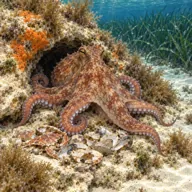
Common octopus
Sometimes · Qarnit
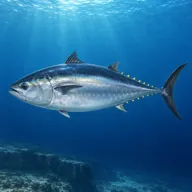
Atlantic bluefin tuna
Lucky day · Tonn · autumn
Getting in and staying safe
Shore dive from the Ċirkewwa diver car park with your certification card on the dashboard. Use the large stride entry to the north, the same one used for the Arch dive. Follow the reef out on a heading given in your briefing until the mast appears. Exit is back up the ladder and steps at the same point. Toilets, kiosks and shade are near the ferry terminal a short walk away.
- 34 m at the sand, so short no stop times and noticeable narcosis
- Penetration of the wheelhouse and engine space needs a torch and good trim, and silts easily
- Overhead environment with limited exits inside the hull
- Long return swim after a deep dive, so turn the dive on gas not on time
- Crowded on summer mornings with several groups on the wreck at once
- Boat and ferry traffic above the site
- Stride entry and ladder exit get dangerous in swell
- Jellyfish drifting through in late summer
A bit of history
She was launched in Bristol in 1958 by Charles Hill and Sons, a steel tug of roughly 33 m with an 8.5 m beam, and started life on the Mersey as Rossmore for the Johnston Warren Line. Rea Towing took her on in 1969 and renamed her Rossgarth. In 1972 Mifsud Brothers bought her and she sailed from Liverpool to Malta to work for Malta Ship Towage, and in 1981 Tug Malta acquired her and gave her the name Rozi. She spent two decades shifting ships around the Grand Harbour at Valletta before being retired in 1992 and sold to Captain Morgan Cruises, who scuttled her off Ċirkewwa on 10 September 1992 as something for their tourist submarine to look at. The submarine trips are long gone. Few wrecks anywhere in the Mediterranean see as many divers a year as this tug does, and there is even an underwater geocache clipped to her.
Divers say
Sign in to rate this site and leave a note for the next diver.
- No reviews yet. First one gets bragging rights.
Further reading: Wikipedia: MV Rozi · Wrecksite.eu entry · Ċirkewwa Marine Park wrecks and attractions · Dive Navigator: Rozi site guide · Malta Dive Sites: Rozi