Ċirkewwa · Malta
Ċirkewwa Arch
A natural stone span at 12 m with eight metres of clear water beneath it, reached along a reef wall stitched with short caves and tunnels. One of the best beginner dives anywhere in the Mediterranean.
Sea conditions
Excellent right now
Flat, sheltered and calm
Forecast for the site, updated 01:33 AM
- Waves
- 0.3 m
- from ESE
- Wind
- 4 km/h
- SSW, gusts 10
- Swell
- 0.3 m
- 5 s period
- Sea temp
- 29 °C
- air 25 °C
Next 7 days
Sunrise 06:47, sunset 19:05
Exposed to wind and swell from: NW (315°), W (270°), N (0°). Shelter comes from the headland to the east, so anything from north through southeast leaves the site glassy. A northwesterly or westerly puts surge on the entry and into the tunnels, and once you can feel yourself being pushed around inside a swim through it is time to leave. Best season: April to November. Late morning gives the best light through the Arch, and spring and autumn bring nudibranchs onto the cave walls..
The dive
The Arch was once the roof of a cavern. At some point that roof came down and left a clean span of Coralline limestone standing over the reef, with its top around 12 m below the surface and open water for eight metres underneath. Swimming through it is one of those moments that sells people on diving, especially in the late morning when the sun is high and the far side glows blue.
Getting there is half the fun. From the stride entry you follow the reef wall at 15 to 20 m, and along the way the rock opens into a series of short caves and tunnels. None of them is long, most have daylight coming in from above, and they string together into a proper exploring dive without ever putting you somewhere you cannot see the way out. Wrasse, bream and damselfish are everywhere, groupers hold station in the shadows, octopus tuck into the cracks, and morays watch from the darker slots.
Past the Arch the reef carries on at 15 to 20 m, with the sand beside it falling away past 40. This stretch is known as the Reef Beyond Rozi and the wall is full of small caves and ledges to poke into. Most people turn before then, but if you have the gas it is a lovely extension. Either way the return is shallow and easy, which makes this a perfect second dive of the day.
- Swimming through a natural stone arch at 12 m
- A string of short, bright tunnels and caverns on the way out
- Shallow enough for open water divers but interesting enough for everyone
- Groupers, morays and octopus at close range on the wall
- Easy to combine with the Rozi from the same entry
Typical plan
Stride in, drop to the reef and follow the wall north with the rock on your right, taking the tunnels as they come. Reach the Arch at around 12 to 20 m, swim through it, then either turn or continue along the Reef Beyond Rozi if gas allows. Turn on a third of your gas and retrace the wall back shallow, finishing above 10 m near the entry. Comfortable sixty minute dive on air, longer on nitrox, and a torch makes the caves far more rewarding.
What the bottom looks like
- 1Start of the reef wall9 m deep · 35 m out
- 2First swim through tunnel, short and well lit14 m deep · 60 m out
- 3Cavern and ledge system in the wall16 m deep · 80 m out
- 4Top of Ċirkewwa Arch12 m deep · 105 m out
- 5Seabed beneath the Arch20 m deep · 110 m out
- 6Reef Beyond Rozi, wall continuing north22 m deep · 140 m out
- 7Sand beside the reef falling away past 40 m30 m deep · 200 m out
Coralline limestone reef and boulders along the wall, with sand and Posidonia in the gaps and open sand dropping steeply beyond.
Who you might meet
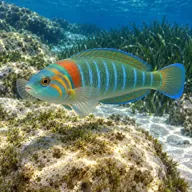
Ornate wrasse
Almost always · Tirda tal-passa
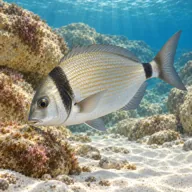
Common two banded seabream
Almost always · Sargu

Damselfish
Almost always · Kaħlija

Cardinalfish
Almost always · Sultan iċ-ċawl
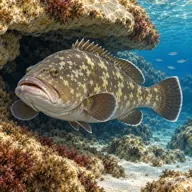
Dusky grouper
Often · Ċerna
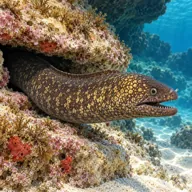
Mediterranean moray
Often · Morina

Common octopus
Often · Qarnit
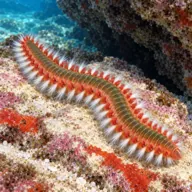
Fireworm
Often · Busuf · summer
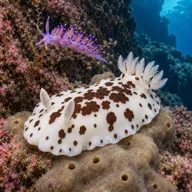
Nudibranchs
Sometimes · spring and autumn

Barracuda
Sometimes · Lqiq · late summer

Amberjack
Sometimes · Aċċola · autumn
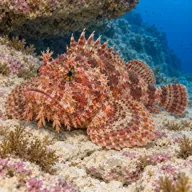
Scorpionfish
Sometimes · Ċippullazza
Getting in and staying safe
Shore dive from the Ċirkewwa diver car park with your certification card displayed. Use the large stride entry to the north, the same one used for the Rozi, then follow the reef wall north and keep the rock on your right. Exit by ladder and steps at the same point. Toilets, cafes and shade at the ferry terminal a short walk away.
- Slippery rock and a stride entry that gets nasty in any swell
- Caves and tunnels are short but still overhead, so a torch and a buddy line of sight matter
- Surge inside the tunnels when there is northwesterly swell running
- The sand beside the reef drops past 40 m, so it is easy to go deeper than planned
- Busy site with groups queueing at the Arch on summer mornings
- Boat traffic above, particularly ferries and small craft
- Fireworms on the reef in summer, so do not grab the rock
- Jellyfish in late summer
A bit of history
This corner of Malta is hard grey Upper Coralline limestone, the same rock that produces the island's sea caves and collapsed caverns. The Arch is a textbook example of the process that also produced the Azure Window at Dwejra on Gozo before it fell in March 2017, which is worth remembering when you are hovering under several tonnes of overhanging stone. The site is now part of the managed Ċirkewwa Marine Park.
Divers say
Sign in to rate this site and leave a note for the next diver.
- No reviews yet. First one gets bragging rights.
Further reading: Malta Dive Sites: Cirkewwa Arch · Calypso Sub Aqua Club: Marfa Point, Cirkewwa Arch · PADI dive site: Cirkewwa Arch · Dive Shack Malta: Cirkewwa Arch