Malta
Ghar it-Trozz
A big, serious wall on Malta's wild west coast, run through with fissures and a sponge lined cave, dropping from the cliff foot past 50 m and on beyond 70. Boat access only, and only when the weather behaves.
Sea conditions
Excellent right now
Some chop (0.4 m ESE)
Forecast for the site, updated 01:47 AM
- Waves
- 0.4 m
- from ESE
- Wind
- n/a
- Swell
- 0.4 m
- 5 s period
- Sea temp
- 29 °C
Next 7 days
Exposed to wind and swell from: W (270°), NW (315°), SW (225°), N (0°). This is a west coast wall, so it only works in an easterly regime. Guides describe it as diveable in north easterly and easterly winds and out of the question when the wind comes from the west or north west. Even in light conditions expect some surge against the rock and be honest about current before you commit to the deep end of the wall. Best season: Late May to September, on settled easterly days.
The dive
Under the Ras ir-Raheb headland the cliffs do not stop at the waterline, they simply keep going. Ghar it-Trozz is the underwater continuation of that rock face: a near vertical wall standing something like sixty metres tall, pocked with cavities, split by fissures and punctured by a cave whose walls are upholstered in orange and yellow sponge and encrusting coral. It is one of the more dramatic pieces of topography in Maltese waters and almost nobody dives it.
The seabed picks up around thirty metres on the northern side of the bay and steps away quickly, reaching about fifty a hundred metres out and running deeper still beyond that. That makes it a site with no natural ceiling on your ambition and no natural floor to stop you, so the depth plan is entirely yours to set and yours to stick to. Recreational divers can have an excellent hour in the thirty to forty metre band along the wall face without ever looking down.
What you get in exchange for the logistics is the west coast feeling: clear blue water, very little silt, big sponge growth in the shadows, and the sense of diving a piece of coastline that sees a handful of boats a season rather than a handful an hour. Bring a torch for the cave, bring a decent light for the fissures, and expect the walls to be busier with cardinalfish and slipper lobsters than the open blue ever is.
- A sixty metre vertical wall that carries straight on down past 70 m
- Cave and fissure system upholstered in sponge and encrusting coral
- Big, clear, empty west coast water with almost no other divers
- Ras ir-Raheb headland and its clifftop ruins overhead
- Depth available for anyone with the training to use it
Typical plan
Boat dive, negative entry onto the wall. Recreational teams work the face between 25 and 40 m, running one direction along the rock with the wall on one shoulder, poking into the cave and fissures with a torch, then turning on gas or time and coming back shallower for a long ascent with a marker deployed. Thirty five to forty five minutes with nitrox for the shallower plan, or trimix and a full deco schedule if you want to see what the 50 to 70 m band looks like. Boat cover stays with you throughout.
What the bottom looks like
- 1Top of the vertical face10 m deep · 8 m out
- 2Sponge lined cave in the wall22 m deep · 20 m out
- 3Fissures and vertical cracks30 m deep · 35 m out
- 4Fallen blocks at the wall foot38 m deep · 60 m out
- 5Second step into the deep50 m deep · 120 m out
Vertical limestone wall meeting a rubble and boulder apron that grades into sand as it falls away past 50 m.
Who you might meet
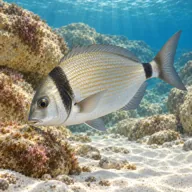
Two banded bream
Almost always · Sargu
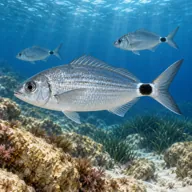
Saddled bream
Almost always · Kahlija

Cardinalfish
Almost always · Re tat-trilja
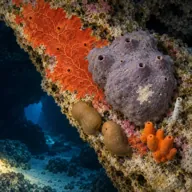
Encrusting sponges
Almost always · Sponża
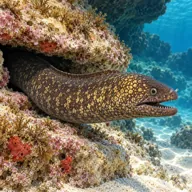
Mediterranean moray
Often · Morina
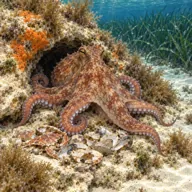
Common octopus
Often · Qarnit
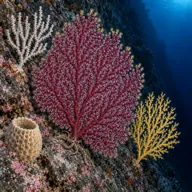
Gorgonian sea fans
Often
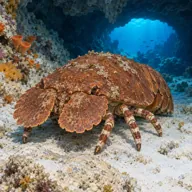
Slipper lobster
Sometimes · Cikala
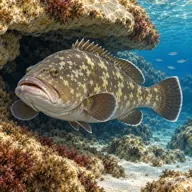
Dusky grouper
Sometimes · Cerna
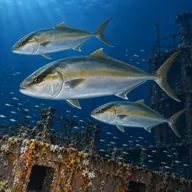
Amberjack
Sometimes · Accola · Autumn
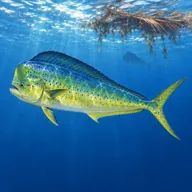
Common dolphinfish
Lucky day · Lampuka · Autumn
Getting in and staying safe
Boat only, with no shore option at all. Most trips launch from the Gnejna or Golden Bay area, or run down the west coast from the north, and a RIB is the usual platform. There is no sheltered anchorage, so the skipper will normally live boat or hold station off the wall, which means a negative entry, a tight team and a good surface marker on the way up. Nothing on the surface for miles, so carry your own water, shade and first aid.
- Depth with no natural bottom to stop a runaway descent
- Exposed to current, surge and swell with no shelter nearby
- Overhead environment in the cave and fissures
- Boat only site with a live pick up in open water
- Remote location, long response time for any assistance
- Cold water and reduced light below 40 m
- Sea state can build quickly on the west coast
A bit of history
Ras ir-Raheb, the headland above the site, carries the remains of a Punic and Roman period sanctuary on the clifftop, one of the more atmospheric archaeological spots on the island precisely because so few people walk out to it. The rock itself is Upper Coralline limestone, the hard cap that gives Malta's western coast its cliffs and, underwater, its overhangs, caves and near vertical faces.
Divers say
Sign in to rate this site and leave a note for the next diver.
- No reviews yet. First one gets bragging rights.
Further reading: Calypso Sub-Aqua Club, Ghar it-Trozz · DiveBoat Malta, Ghar it-Trozz · Divers Guide, Ghar it-Trozz