🐟 Fish · Coryphaena hippurus
Common dolphinfish
Lampukain Maltese, also Lampuki (plural)
Gold and blue, the fish that means autumn
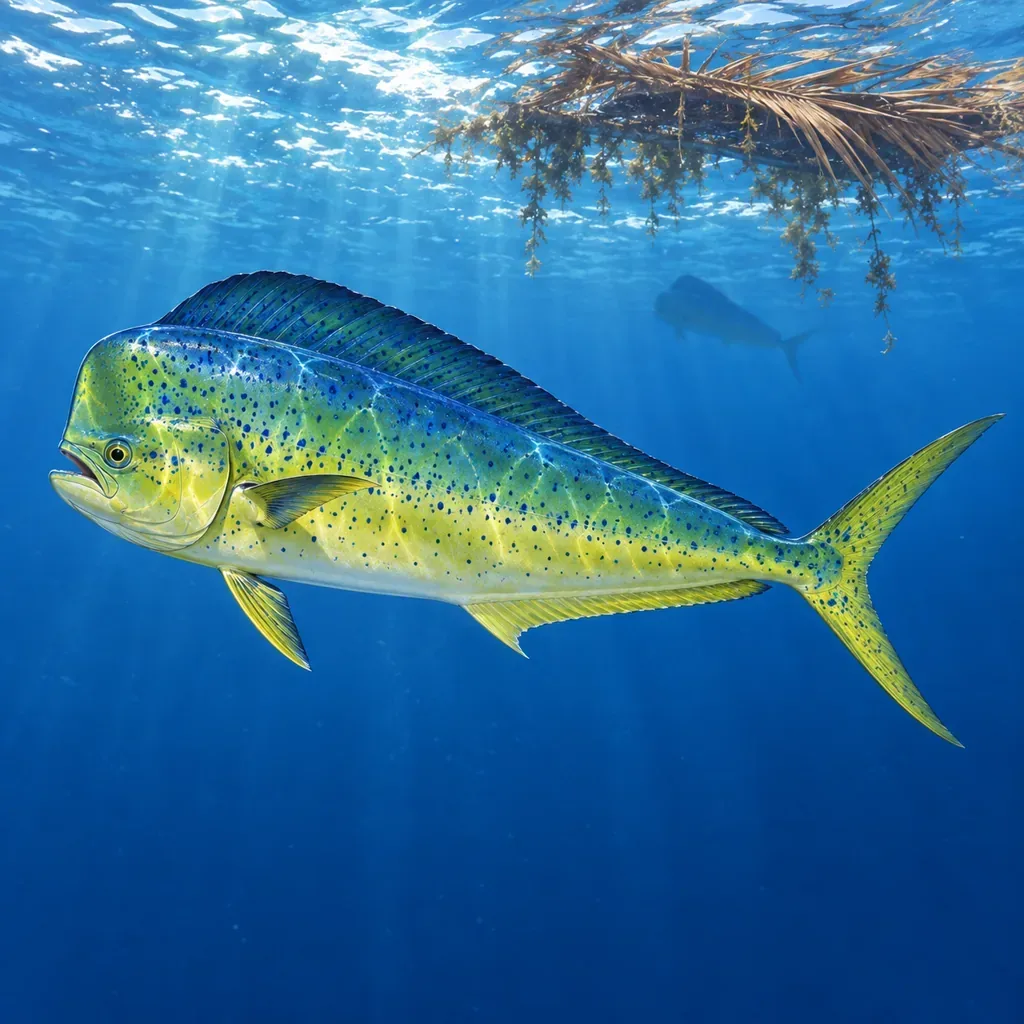
Meet the Common dolphinfish
A long, muscular, laterally flattened fish with a single dorsal fin running from just behind the head all the way to a deeply forked tail. Alive in the water it is electric: brilliant green-gold along the flanks, deep blue over the back, a scatter of small dark blue spots, and yellow in the fins. The colours pulse and shift while the fish is excited and fade to dull grey within minutes of death, which is why a lampuka on a market slab looks nothing like one in the sea. Adult males grow a blunt, almost vertical forehead; females keep a rounded profile. Maltese fish are usually 40 to 80 cm; the species can exceed two metres elsewhere.
It is an open-water fish, fast and always on the move, and divers see it rarely and briefly, usually as a gold flash near the surface off a headland or around floating debris in late summer. It hunts flying fish, small shoaling fish and squid, and it has a strong habit of gathering under anything floating that casts shade.
That habit is the foundation of Malta's most famous fishery. From 15 August to the end of December, boats work kannizzati, rafts of palm fronds anchored offshore, and net the lampuki that collect beneath them. The season is licensed and the technique is old enough to have Roman claims attached to it. Torta tal-lampuki, the pie of lampuki with spinach, olives, capers and tomato, is the dish of the Maltese autumn, and the arrival of the first catch is genuine local news.
When to look: Late August to December, near the surface in warm water, especially around floating objects and kannizzati offshore.
Diving with them
- This is a blue-water encounter, not a reef one, so scan the open sea and the surface rather than the bottom
- Any floating debris, weed line or plank in late summer is worth a careful look from a safe distance
- They move fast and pass once, so keep the camera preset for available light and shoot immediately rather than adjusting
- Approaching a working kannizzata is not a good idea, there are anchor lines, nets and boats operating
- If you swim with one, keep your hands in and do not chase, they will circle a still swimmer for far longer
- Expect the colour you see to be nothing like the photo, the gold and blue fade the instant the fish is stressed
Can it hurt you?Harmless
Harmless to divers and swimmers. It has no venom and no interest in people; it is a fast surface predator that eats small fish and squid.
Easily confused with
- Pompano dolphinfish (Coryphaena equiselis), much rarer and deeper-bodied, with a shorter head profile
- Leerfish and greater amberjack, which are silvery rather than gold and have a normal two-part dorsal fin
- Atlantic bonito, which is torpedo-shaped with slanted dark stripes over the back
- The marine mammal, which the English name confusingly evokes and which this fish has nothing to do with
Where to meet them: 1 sites
Further reading: FishBase: Coryphaena hippurus, Malta country page with Maltese names · Wikipedia: Lampuki netting and the kannizzati method · Malta Daily: Department of Fisheries and Aquaculture lampuki authorisations · Michelin Guide: lampuki in Malta, season and torta tal-lampuki · IUCN Red List: Coryphaena hippurus