Delimara · Malta
Delimara Cave
A chimney rather than a cave in the usual sense: a shaft in the south reef that you enter down among the boulders and climb until daylight opens over the top of the rock.
Sea conditions
Good right now
Some chop (0.5 m E)
Forecast for the site, updated 01:46 AM
- Waves
- 0.5 m
- from E
- Wind
- n/a
- Swell
- 0.5 m
- 5 s period
- Sea temp
- 29 °C
Next 7 days
Exposed to wind and swell from: E (90°), SE (135°), S (180°), SW (225°). Needs the same flat westerly day as the rest of the point, and a little more. Even a modest southerly swell pushes water up and down the shaft, which is unpleasant and makes an orderly single file transit difficult. Best season: June to early October. Midsummer gives the strongest light through the top opening, which is half the reason to do it..
The dive
Maltese dive sites are full of caves that are really caverns. This one is a genuine chimney. The lower opening sits among the rock near the base of the south reef and the shaft runs almost straight up through the limestone, opening again on the shallow reef top where the light floods back in.
The climb is short, wide enough not to feel committing, and the payoff is the view back down the reef as you rise out of the rock. Cardinalfish hover in the dark corners, cup corals and sponges coat the walls, and there is usually a shrimp or two on the ceiling if you bring a torch and bother to look up.
Treat it with the respect any overhead deserves. A careless fin near the floor turns a bright shaft into a brown one in a couple of seconds, so go through single file, hold your trim and give the diver ahead time to clear. Take a light even though you can see the exit from the entrance, and think twice on any day with swell running, because the shaft will surge.
- A true vertical chimney, not just another cavern
- The light shaft as you climb back toward the reef top
- Cup corals and cardinalfish on the shaft walls
- A natural way to turn a deep reef dive into a shallow one
Typical plan
Fold it into a south reef dive. Enter off the rocks, follow the reef top out to the drop, descend to the boulders at 18 to 22 metres and work along until you find the lower opening. Go through one at a time with a torch, ascending the shaft slowly and holding a hand clear of the wall rather than pushing off it. You come out on top at 8 metres with plenty of no-stop time left, so spend the rest of the dive pottering along the shallow reef. Forty five to fifty five minutes total, nitrox 32 if you have it, and a surface marker up before you ascend.
What the bottom looks like
- 1Lower entrance among the boulders18 m deep · 140 m out
- 2Boulder line that leads you to the opening20 m deep · 150 m out
- 3The shaft itself, rising through the reef14 m deep · 170 m out
- 4Top exit onto the shallow reef8 m deep · 178 m out
Bare limestone walls inside the shaft with a fine silt floor at the lower entrance, opening onto weed covered rock at the top.
Who you might meet

Cardinalfish
Almost always · Sultan iċ-ċawl

Golden cup coral
Almost always · Qroll tad-dell
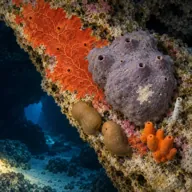
Encrusting sponges
Almost always · Sponża

Cleaner shrimp
Often · Gamblu
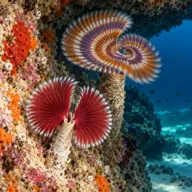
Tube worms
Often
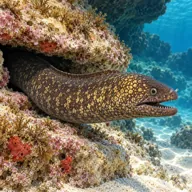
Moray eel
Sometimes · Morina
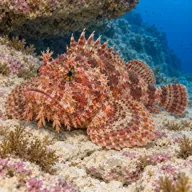
Scorpionfish
Sometimes · Ċippullazza
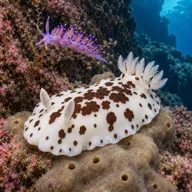
Nudibranchs
Sometimes · Spring

Octopus
Sometimes · Qarnit
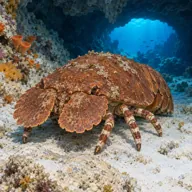
Slipper lobster
Lucky day · Ċikala
Getting in and staying safe
Reached as part of a south reef dive rather than on its own. Park on the rough roadside near the lighthouse, walk out over broken ground to the southern side of the point, and enter off the low rock. Underwater, follow the reef edge south and drop over the first wall, then work along the boulder line and look for the opening low in the rock. A short boat dive from Marsaxlokk is the easier way to do it and most guided groups run it that way.
- Silt, one careless fin stroke ruins the visibility for everyone behind you
- Surge inside the shaft whenever there is any swell running
- Overhead environment, no direct ascent from inside
- Fast depth change between the lower entrance and the top exit
- Exposed site with boat traffic overhead
- Easy to lose your buddy in the shaft if you go through too close together
A bit of history
The chimney is a solution feature, a shaft dissolved and enlarged in the limestone when this rock sat above sea level and rainwater was working its way down through the joints. The sea flooded it later. The same process made the caves and the collapsed arches all along Malta's southern coast.
Divers say
Sign in to rate this site and leave a note for the next diver.
- No reviews yet. First one gets bragging rights.
Further reading: Malta Dive Sites, Delimara Cave · Dive Systems Malta, the vertical tunnel in the south reef · Calypso Sub-Aqua Club, Delimara Point