Malta
Casper
An unidentified steam vessel found in 2014 off Baħar iċ-Ċagħaq, broken and twisted across the sand at around 38 to 40 m. A genuine mystery wreck with a boiler as its centrepiece.
Sea conditions
Excellent right now
Flat, sheltered and calm
Forecast for the site, updated 01:47 AM
- Waves
- 0.4 m
- from ESE
- Wind
- n/a
- Swell
- 0.4 m
- 5 s period
- Sea temp
- 29 °C
Next 7 days
Exposed to wind and swell from: NW (315°), N (0°), NE (45°), E (90°). Sits on the exposed north coast, so anything with north in it kills the trip. Southerly and southwesterly winds blow off the land and give the flat, clear conditions you want for a dive this deep with no line down. Best season: May to October. Late summer and early autumn give the best combination of warm water, visibility and settled northerly free spells..
The dive
Nobody knows what this ship is called. A local dive school found her in 2014, nicknamed her Casper after the friendly ghost because of how she loomed pale out of the blue, and the name stuck while the real one stayed lost. What you get is not a postcard wreck. She is flattened and contorted, the midships torn apart, the bow either gone or swallowed by sand, and the stern lying over on its starboard side with a single propeller still attached.
The piece that makes the dive is the boiler, a fat cylinder well over three metres long sitting amidships, its maker's plate long missing. Around it lie steam pumps, lengths of steel pipe, scattered ladders and sections of decking, all of it colonised and all of it home to morays that seem quite happy in the confusion. Divers have recovered heavy calibre rounds from the site for dating, and the pattern of destruction looks more like shellfire than a mine, which has pushed the theories towards a German or Italian vessel lost in the First World War. That is still a theory, not a conclusion.
Treat it as a detective dive rather than a sightseeing one. At close to 40 m on a site with no mooring and little documentation, you are relying entirely on your skipper and your own gas discipline. Go with someone who has been, listen to the briefing, and enjoy the odd pleasure of swimming over a ship that has no name.
- A ship nobody has managed to name yet
- Big intact boiler surrounded by steam age machinery
- Stern and propeller still recognisable
- Very low diver traffic, so the growth and the fish are undisturbed
- A real chance to contribute to identifying a wreck
Typical plan
Down the shot to the boiler at around 39 m, work outwards along the debris towards the stern and the propeller, then back to the line. Nitrox 28 to 30 makes the numbers far more comfortable. Fifteen minutes on the bottom is a realistic target on a single set, with a slow ascent and a generous stop at 5 m. Carry a torch even in good light because the interesting details sit in shadow under the plate.
What the bottom looks like
- 1Boiler, the largest intact object on the site39 m deep · 30 m out
- 2Steam pumps and pipework scattered around midships39 m deep · 42 m out
- 3Stern lying over to starboard40 m deep · 55 m out
- 4Single propeller still on the shaft40 m deep · 60 m out
- 5Collapsed decking, ladders and plate40 m deep · 72 m out
- 6Open sand where the bow should be39 m deep · 95 m out
Sand with the wreckage part sunk into it, so the outline of the ship is more suggestion than structure in places.
Who you might meet

Mediterranean moray
Almost always · Morina
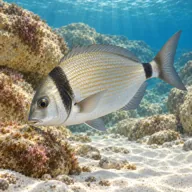
Common two banded seabream
Almost always · Sargu
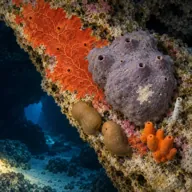
Encrusting sponges
Almost always · Sponża
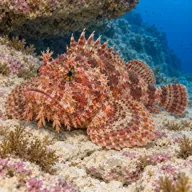
Scorpionfish
Often · Ċippullazza

Common octopus
Often · Qarnit

Cardinalfish
Often · Sultan iċ-ċawl
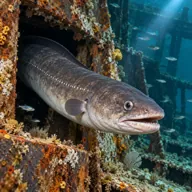
Conger eel
Sometimes · Gringu
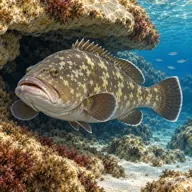
Dusky grouper
Sometimes · Ċerna
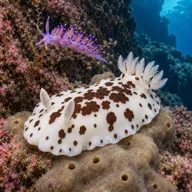
Nudibranchs
Sometimes · spring and autumn
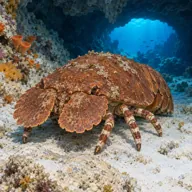
Slipper lobster
Lucky day · Ċikala
Getting in and staying safe
Boat only, out of Baħar iċ-Ċagħaq, Qawra or Sliema depending on the operator. There is no buoy and no permanent shot, so the skipper drops a line on the sounder. Only a few centres run it, and it is usually sold as an advanced or light technical charter rather than a standard boat dive.
- Close to 40 m on a site with no mooring or permanent line
- Twisted plate and sharp torn steel everywhere
- Broken structure makes navigation confusing, so a reel or a good briefing matters
- Silt traps between the wreckage
- Snagged fishing line and nets on a rarely dived wreck
- Currents on this stretch of the north coast
- Open water ascent with boat traffic above
- Morays living in the pipework, so keep hands to yourself
A bit of history
Unidentified. The structural evidence points to a steam driven vessel built somewhere between roughly 1880 and 1920, and the way she is broken up suggests she was shot to pieces rather than mined. Two heavy calibre rounds recovered from the site were sent for analysis in the hope of narrowing the date. Local technical divers found her in 2014 and the coordinates were shared quietly with researchers rather than published. Until someone finds a builder's plate, a bell or a datable piece of fitting, Casper keeps her nickname.
Divers say
Sign in to rate this site and leave a note for the next diver.
- No reviews yet. First one gets bragging rights.
Further reading: Tech Diving Malta: the Casper wreck · Malta Dive Sites: Casper · Techwise Malta technical dive sites