Malta
Wied Żnuber
A boat dive on the empty southern cliffs with a rocky maze full of fish, a Second World War aircraft in 35 metres and British army scrap the navy dumped over the side after the war.
Sea conditions
Good right now
Some chop (0.5 m ESE)
Forecast for the site, updated 01:48 AM
- Waves
- 0.5 m
- from ESE
- Wind
- n/a
- Swell
- 0.5 m
- 5 s period
- Sea temp
- 29 °C
Next 7 days
Exposed to wind and swell from: E (90°), SE (135°), S (180°), SW (225°), NW (315°). Club notes flag exposure to northwesterly and southerly winds. A northwest blow sends swell wrapping round the island and down this coast, and anything from the southern half of the compass hits it head on. Needs a flat, settled day. Best season: June to early October. Visibility typically 20 to 40 metres, best in calm settled spells..
The dive
Żnuber rewards divers who like a bit of detective work. The bottom starts as big rocks in about 5 metres, then loses patience and falls away to around 32 metres in one go. South of that fall is a rocky labyrinth, a tangle of blocks and corridors with enough deep shade to hold serious grouper and fat shoals of bream.
Push south-west across the sandy gravel and you reach the reason most people come: the broken remains of a wartime aircraft lying at about 35 metres. It is wreckage rather than an intact airframe, but the shapes are unmistakable once your eyes adjust, and it is a genuinely uncommon thing to find on a normal recreational profile in Malta.
The seabed here also carries the leftovers of a very different clean-up. When the British wound down their presence they solved the problem of surplus equipment by tipping it into the sea, and truck chassis and other metalwork still sit out on the gravel. Beyond all that the ground carries on down through weed-covered boulders to a little over 40 metres, which is octopus country.
It is a big site and you will not see all of it in one dive, so pick a target before you splash.
- Wartime aircraft wreckage at 35 metres, a rare find on a recreational profile
- Rocky labyrinth with big grouper holding in the shade
- Dumped British army vehicle remains scattered on the gravel
- Fast, dramatic drop from 5 m to over 30 m
- Genuinely quiet, you will not share it with anyone
Typical plan
Drop on the shallow boulders, swim the edge and let the ground take you down to around 32 metres, then track south-west across the gravel to the aircraft. Keep the deep section short, ten to twelve minutes is plenty, then work your way back up through the labyrinth and finish among the shallow rocks at 10 metres or less. Nitrox 28 to 32 makes the 35 metre leg comfortable; on air, plan it as a proper deep dive and expect a decompression obligation if you linger. Bring a torch for the overhangs.
What the bottom looks like
- 1Shallow boulder shelf5 m deep · 20 m out
- 2Rapid drop from the shallows22 m deep · 70 m out
- 3Rocky labyrinth with grouper and bream32 m deep · 105 m out
- 4Second World War aircraft wreckage35 m deep · 170 m out
- 5Dumped British army vehicle remains37 m deep · 205 m out
- 6Sandy gravel and weeded boulders at depth42 m deep · 250 m out
Large boulders and rock in the shallows, then sandy gravel between weed-covered rocks from about 32 metres down.
Who you might meet

Two-banded bream
Almost always · Sargu
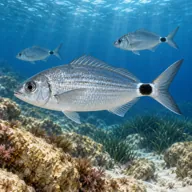
Saddled bream
Almost always · Kaħli

Mediterranean damselfish
Almost always · Kaħlija

Tube worms
Almost always
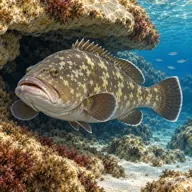
Dusky grouper
Often · Ċerna

Mediterranean moray
Often · Morina

Common octopus
Often · Qarnit
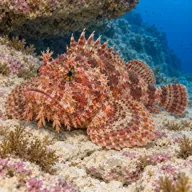
Scorpionfish
Sometimes · Skorfna

Amberjack
Sometimes · Aċċola · late summer

Common cuttlefish
Sometimes · Siċċa · autumn and winter
Getting in and staying safe
Boat only. Typically run from Wied iż-Żurrieq to the west or from Marsaxlokk to the east. No shore access, no facilities, no shade. The site is large and the features are spread out, so ask the skipper to drop you on the specific feature you want rather than somewhere generic and hope for the best.
- Aircraft wreckage sits at 35 m, so a short no-stop window on air
- The rocky labyrinth is easy to get disoriented in, keep a reference
- Sharp corroded metal from the dumped wartime equipment
- Boat-only access with no shore bail-out
- Little boat traffic, so carry a DSMB and be self-sufficient
- Rapid drop from 5 m to 32 m, easy to overshoot your planned depth
- Mauve stinger jellyfish in spring and autumn
A bit of history
The aircraft wreckage at 35 metres dates from the Second World War, when Malta was the most heavily bombed place on earth and losses on both sides went into the sea in large numbers around the islands. After the war the British disposed of surplus military equipment, including vehicles, by dumping it offshore, and pieces of that still lie on the gravel here. Nothing has been positively identified in the published accounts, so treat the aircraft type as an open question rather than settled fact.
Divers say
Sign in to rate this site and leave a note for the next diver.
- No reviews yet. First one gets bragging rights.
Further reading: Calypso Sub-Aqua Club: Wied Żnuber · Divers Guide: Wied Znuber site information · Malta Dive Sites: Wied Znuber