Comino
Sultan Rock
The uncharted rock that tore the bottom out of a Victorian ironclad, now a shallow boulder garden off Comino's southeast corner. Rarely dived, mostly because the current through the channel has opinions.
Sea conditions
Excellent right now
Flat, sheltered and calm
Forecast for the site, updated 02:29 AM
- Waves
- n/a
- Wind
- 4 km/h
- S, gusts 8
- Swell
- n/a
- Sea temp
- n/a
- air 25 °C
Next 7 days
Sunrise 06:47, sunset 19:05
Exposed to wind and swell from: NE (45°), E (90°), SE (135°), S (180°). Sheltered from the northwest, which is its saving grace, but choppy and current-swept from the eastern half of the compass. Best attempted on a settled day with a light northwesterly and, if you can time it, around slack water. Visibility is usually good, commonly 20 to 30 m. Best season: June to September, on calm settled days only..
The dive
This is a dive you do for the story. The rock sits off Comino's southeastern corner, an unremarkable lump of limestone that in March 1889 ruined the day of one of the Royal Navy's more imposing warships. Underwater it is a field of big boulders draped in algae, with sea cactus and peacock's tail weed carpeting the tops, thin Posidonia in the gaps, and the occasional unmistakably manufactured fragment of iron lying among the rubble where a very expensive salvage operation once took place.
Depths are modest, eight metres on the shallow shoulders and eighteen at the deepest, so gas is not the limiting factor. Current is. The southeast corner of Comino sits where the channel squeezes between Comino and Malta, and the flow can run strongly enough to turn a gentle boulder pootle into a workout. That, plus the ferry route passing nearby, is why this site shows up on almost nobody's standard schedule despite being shallow and pretty.
Go in expecting small and abundant rather than big and dramatic. Wrasse working the seagrass, painted comber perched on rock, a grouper watching from a gap, a moray with its head out. Bring a torch for the undercuts and enough attention for the current.
- The rock that sank a Royal Navy ironclad in 1889
- Occasional iron fragments left over from the salvage
- Shallow boulder terrain thick with algae and small life
- A corner of Comino almost nobody dives
Typical plan
Drop onto the boulder tops at 6 to 8 m, work down the seaward side to around 16 to 18 m keeping an eye on the flow, and quarter the rubble for wreckage fragments. Turn well before you are tired, come back up the boulders and spend the last twenty minutes at 6 to 10 m in the seagrass gaps. Forty-five to fifty-five minutes on a 12 litre cylinder, air is plenty. SMB deployed from depth, and a firm agreement that the dive ends if the current builds.
What the bottom looks like
- 1Algae-covered boulder tops7 m deep · 20 m out
- 2Scattered iron fragments from HMS Sultan14 m deep · 60 m out
- 3Rubble and sand at the deepest point18 m deep · 95 m out
- 4Thin Posidonia between the blocks12 m deep · 140 m out
- 5Shallow shoulder for the ascent6 m deep · 185 m out
Large algae-covered boulders over rock and rubble, with sparse Posidonia meadow and sand filling the gaps between blocks.
Who you might meet
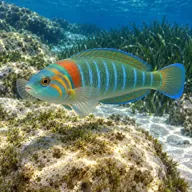
Ornate wrasse
Almost always · Tirda tal-passa
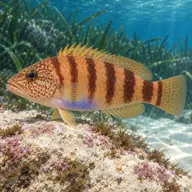
Painted comber
Almost always · Burqax
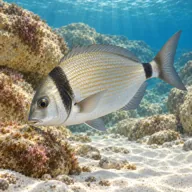
Two-banded bream
Almost always · Sargu
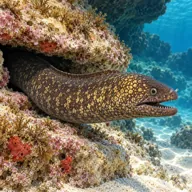
Mediterranean moray
Often · Morina
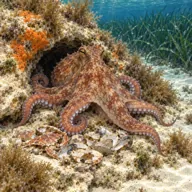
Common octopus
Often · Qarnit

Snakelocks anemone
Often
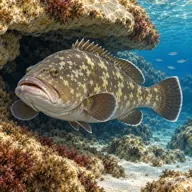
Dusky grouper
Sometimes · Ċerna
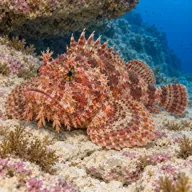
Scorpionfish
Sometimes · Ċippullazza
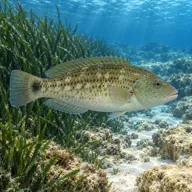
Peacock wrasse
Sometimes · Lappun
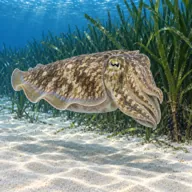
Cuttlefish
Lucky day · Siċċa · Spring
Getting in and staying safe
Boat only, and not a routine stop, so expect to charter or to join a club trip rather than find it on a centre's daily list. Crossings from Ċirkewwa or Mġarr are short. There is no mooring, no shelter and nothing on shore. Ask the skipper to work the slack rather than the flow, and agree the pick-up plan before you get wet, because if the current takes you it will take you out into the channel.
- Strong and variable current through the channel, the main reason to be careful here
- Ferry and commercial traffic on the Malta to Gozo route nearby
- Surface chop even when the rest of Comino looks calm
- Sharp corroded metal fragments from the 1889 salvage
- Rarely dived, so briefings are thin and nobody is nearby if it goes wrong
- Drift risk away from the boat, deploy an SMB early
A bit of history
HMS Sultan was a British central-battery ironclad of 1870, and on 6 March 1889 she struck an uncharted rock in the Comino channel during torpedo practice, opening her bottom. She flooded slowly and then, in a gale on 14 March, slid off the rock and sank. That was not the end of her: the Italian salvage firm Baghino and Co raised her in August 1889 for a fee of around fifty thousand pounds, she was patched up at Malta Dockyard, and in December she steamed home to Spithead under her own power. The rock has carried her name ever since, and small pieces of wreckage still turn up among the boulders.
Divers say
Sign in to rate this site and leave a note for the next diver.
- No reviews yet. First one gets bragging rights.
Further reading: Calypso Sub-Aqua Club: Sultan Rock · Divers Guide: Sultan Rock · Wikipedia: HMS Sultan (1870) · Spunt: The day HMS Sultan struck an uncharted rock off Comino