Comino
Santa Marija Caves
A shallow inlet on Comino's northern coast riddled with interconnecting grottoes, tunnels and swim-throughs, most of it in under twelve metres, guarded by a welcoming committee of saddled bream who assume you have brought lunch.
Sea conditions
Excellent right now
Flat, sheltered and calm
Forecast for the site, updated 02:29 AM
- Waves
- n/a
- Wind
- 4 km/h
- S, gusts 8
- Swell
- n/a
- Sea temp
- n/a
- air 25 °C
Next 7 days
Sunrise 06:47, sunset 19:05
Exposed to wind and swell from: N (0°), NE (45°), E (90°). Sheltered from the northwest and from anything southerly, which is what makes it such a reliable fallback when Comino's west coast is blown out. A northeasterly puts swell straight into the inlet and stirs the caves into surge, at which point it is not worth it. Visibility is normally excellent in the shallows, and the shafts of light through the tunnel exits are the whole reason to bring a camera. Best season: May to October. Midday sun gives the strongest light beams through the passages; May, June and October give the same light with a fraction of the boat traffic..
The dive
Ten metres of water, a headland full of holes, and light coming through every one of them. That is the whole pitch, and it works. The caves sit side by side along a small inlet, some short and bright, some running clean through the headland with a glowing blue exit at the far end. There are at least a couple of ways through the northern one, and half the fun is that nobody does quite the same route twice.
The fish are the other half. The inlet holds a permanent crowd of saddled bream, locally kaħli, who have worked out that divers occasionally arrive with something edible and now greet every descent like an airport pickup. If you do bring food, whatever you carry it in leaves the water with you: there is no excuse for a plastic bag drifting out of a cave system. Beyond the bream, the shaded roofs are worth a torch: cardinalfish, small shrimps, nudibranchs and the usual encrusting oddities that only reveal their colour under artificial light.
Because it is so shallow, this is a very long dive, an excellent second dive of the day, and an outstanding site for newly qualified divers who want their first overhead experience without any actual commitment. It is also one of the busiest corners of the Maltese islands in July and August, so an early slot pays for itself.
- A cave system you can explore on a single shallow tank
- Light beams through the tunnel exits, made for wide-angle photography
- A resident crowd of saddled bream that will not leave you alone
- First taste of overhead diving with daylight almost always in view
- Works when the west coast is shut down by swell
Typical plan
Drop into the inlet at 8 to 10 m, torch on, and work the caves from one end to the other, taking the through-route in the northern cave and coming out into the blue on the open side. Ease out to 14 to 16 m over the outer shoulder for a look at the wall, then come back inside and spend the last twenty minutes poking torch beams into the shallow grottoes at 5 to 8 m. There is no depth pressure here, so the limit is gas and cold: sixty minutes or more on a 12 litre cylinder is entirely normal, and nitrox adds nothing you need. Torch each, spare torch in the group, and no gloves-off hand-holding on the cave walls.
What the bottom looks like
- 1First grotto on the left of the inlet7 m deep · 12 m out
- 2Connecting passage to the neighbouring grotto10 m deep · 35 m out
- 3Semi-submerged chamber with air above4 m deep · 70 m out
- 4Blue exit onto the open coast12 m deep · 105 m out
- 5Outer reef shoulder dropping towards 16 m15 m deep · 160 m out
- 6Boulder rubble back inside the inlet8 m deep · 190 m out
Rock and boulder rubble inside the inlet with fine sediment on the cave floors, opening onto a sandy shelf just outside.
Who you might meet
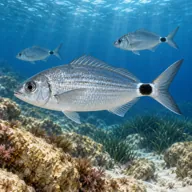
Saddled bream
Almost always · Kaħli
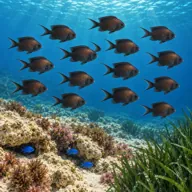
Damselfish
Almost always · Kaħlija
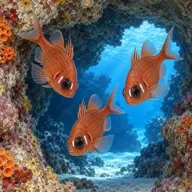
Cardinalfish
Almost always · Sultan iċ-ċawl
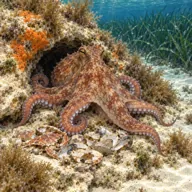
Common octopus
Often · Qarnit
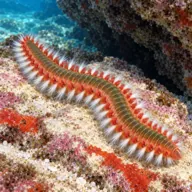
Fireworms
Often · Busuf
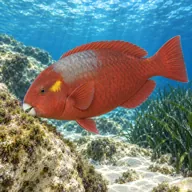
Mediterranean parrotfish
Often · Marlozz
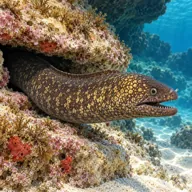
Mediterranean moray
Sometimes · Morina
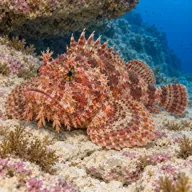
Scorpionfish
Sometimes · Ċippullazza
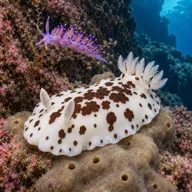
Nudibranchs
Sometimes · Spring
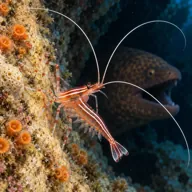
Cleaner shrimp
Sometimes · Gamblu
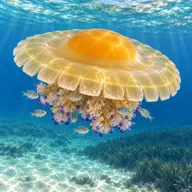
Fried egg jellyfish
Sometimes · Brama · Late summer
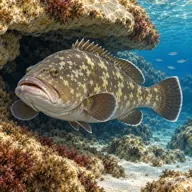
Dusky grouper
Lucky day · Ċerna
Getting in and staying safe
Boat only in practice, with dive boats running from Ċirkewwa, Mġarr and Buġibba and usually pairing this with P31 or Santa Marija Reef. The inlet is small and gets extremely congested with tourist boats between late June and early September, so operators tend to go early or late. No facilities at the site itself. Santa Marija Bay nearby has a small beach and seasonal kiosk but is not a practical kit-up point for this dive.
- Overhead environment: several passages have no direct route to the surface
- Silt on cave floors clouds the exit for whoever is behind you
- Surge inside narrow tunnels, especially with any northerly swell running
- Very heavy summer boat and jet ski traffic directly overhead
- Torch failure in the darker through-routes
- Jellyfish gather in the inlet in late summer
- Scrapes and urchin spines in the tighter swim-throughs
A bit of history
The caves are dissolution and collapse features in the Coralline limestone of Comino's northern cliffs, opened up and widened by centuries of wave action along the joint lines in the rock. Several of the passages carry on above the waterline and can be reached on foot from the rocks above, which is why the same caves turn up on boat tours, freediving trips and snorkelling itineraries as well as scuba schedules.
Divers say
Sign in to rate this site and leave a note for the next diver.
- No reviews yet. First one gets bragging rights.
Further reading: Calypso Sub-Aqua Club: Santa Marija Caves · MaltaDives: Santa Marija Caves · PADI dive site: Santa Marija Cave, Comino · DiveWise Malta: Santa Marija Caves