Comino
Crystal Lagoon
A cliff-walled inlet with a long, well-lit tunnel leading out to the open sea, plus boulders and overhangs. Beautiful water, modest reef, and a lot of boats above you.
Sea conditions
Excellent right now
Flat, sheltered and calm
Forecast for the site, updated 02:29 AM
- Waves
- n/a
- Wind
- 4 km/h
- S, gusts 8
- Swell
- n/a
- Sea temp
- n/a
- air 25 °C
Next 7 days
Sunrise 06:47, sunset 19:05
Exposed to wind and swell from: W (270°), NW (315°), SW (225°). The inlet faces the open western approaches, so a westerly or north-westerly sends swell in and the tunnel starts to surge. In easterly and southerly weather it is calm and easy. Best late morning to mid-afternoon in summer, when the sun is high enough to light the tunnel properly. Best season: May to October, avoiding midday boat traffic in July and August where you can.
The dive
Crystal Lagoon is the Blue Lagoon's moodier neighbour. Instead of a sand-floored channel it is a narrow inlet shut in by high cliffs, so the water sits in shadow for part of the day and then turns an impossible blue when the sun swings round. It is on every boat tour itinerary, which matters more for your dive planning than anything about the site itself.
The feature that makes it worth tanks rather than a snorkel is the tunnel. It starts at about five metres inside the lagoon, drops to eight or so, and runs roughly thirty metres through the rock to open into the sea beyond. It is wide, boulder-floored and genuinely well lit for most of its length, which makes it one of the more approachable overhead swims in Malta. There is a second, smaller passage and a good overhang nearby for anyone wanting more.
Outside the tunnel the ground is boulders, sand and seagrass sloping away toward the twenty-metre mark. Fish density is high: bream in hundreds, wrasse everywhere, cuttlefish and octopus on the margins, and rays occasionally lying in the sand. Honest reviewers point out that if you strip away the tunnel and the light, the reef itself is ordinary, and a few people rate it better for snorkelling than for diving. Both opinions are defensible.
The serious practical point is surfacing. In season the lagoon is stacked with boats and jet skis. Come up against the rock at the side of the bay, not in the middle, and carry an SMB even on a shallow dive.
- A thirty-metre tunnel that stays lit from end to end
- Water colour that ruins you for other inlets
- Bream in genuinely large numbers around the entrance
- An easy introduction to overhead swimming for cautious divers
Typical plan
Drop inside the lagoon, find the tunnel mouth at five metres, swim it at seven or eight and come out into the open, then work the boulders and the overhang to a maximum of about twenty metres before returning through the passage or around the headland. Fifty to sixty minutes on a single cylinder, air is fine, torch each. Deploy a DSMB before ascending and surface hard against the side of the bay.
What the bottom looks like
- 1Tunnel entrance inside the lagoon5 m deep · 30 m out
- 2Boulder-floored tunnel, roughly 30 m long8 m deep · 55 m out
- 3Boulder field outside the seaward exit9 m deep · 80 m out
- 4Overhang and second smaller passage11 m deep · 105 m out
- 5Sand between the boulders15 m deep · 140 m out
- 6Posidonia on the outer slope19 m deep · 180 m out
Boulders, clean sand and patchy Posidonia, with bare limestone walls rising on both sides of the inlet.
Who you might meet
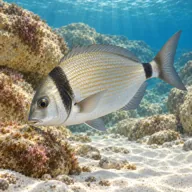
Two-banded seabream
Almost always · Ħaddiema
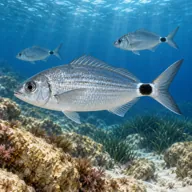
Saddled bream
Almost always · Kaħlija
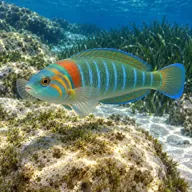
Ornate wrasse
Almost always · Tirda tal-passa
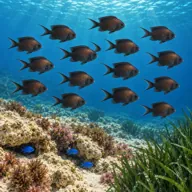
Damselfish
Almost always · Kaħlija
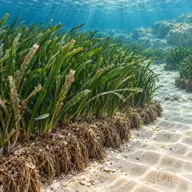
Posidonia meadow
Almost always · Ħaxix il-baħar
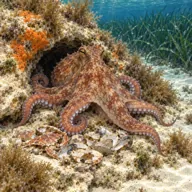
Common octopus
Often · Qarnita
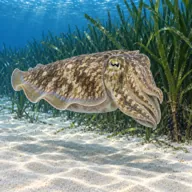
Cuttlefish
Often · Siċċa · Spring

Cardinalfish
Often · Sultan iċ-ċawl

Common stingray
Sometimes · Rajja
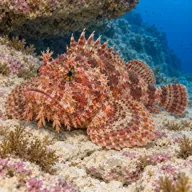
Scorpionfish
Sometimes · Skorfna
Getting in and staying safe
Boat only in practice. It is roughly twenty minutes from Ċirkewwa, half an hour or so on a charter, and about forty-five minutes from Sliema. There are footpaths above on Comino but the cliffs make shore entry impractical with kit. Nothing ashore at all: no ladders, no shade, no facilities. Boats either moor inside the inlet or lie off, and exits are by ladder.
- Very heavy boat and jet-ski traffic on the surface in summer
- Overhead environment in the tunnel, no exit once committed
- Boulder floor in the tunnel, awkward if visibility drops
- Surge through the tunnel in any westerly swell
- Sharp rock and urchins along the walls
- Shadowed water early and late, colder than the open sea
- Deploy a DSMB and surface at the edge of the bay
A bit of history
The inlet and its tunnel are erosional features in upper coralline limestone, cut along the same joint systems that produced Alex's Cave and the Lantern Point chimney a short distance south. Comino's western coast is essentially a cliff line of that hard cap rock, which is why this coast has caves and tunnels where the softer globigerina coasts of southern Malta have bays and slopes.
Divers say
Sign in to rate this site and leave a note for the next diver.
- No reviews yet. First one gets bragging rights.
Further reading: Divers Guide, Crystal Lagoon · Paradise Diving, Crystal Lagoon and Comino sites · PADI, Crystal Lagoon dive site · Calypso SAC, tunnel link from Alex's Cave to Crystal Lagoon