Malta
SS Margit
A hundred metres of broken 1912 steamer lying on the silt in Kalkara Creek, sunk by German bombers in 1941. A shore-entry wreck inside the Grand Harbour, with murk, history and very big grouper.
Sea conditions
Excellent right now
Flat, sheltered and calm
Forecast for the site, updated 02:18 AM
- Waves
- n/a
- Wind
- 3 km/h
- SSW, gusts 6
- Swell
- n/a
- Sea temp
- n/a
- air 25 °C
Next 7 days
Sunrise 06:46, sunset 19:04
Exposed to wind and swell from: NE (45°). Deep inside the Grand Harbour, so wind and swell almost never stop this dive. The limiting factor is visibility, which drops after rain, after strong winds stir the harbour, and when there has been a lot of shipping movement. Calm settled weather for a couple of days beforehand makes a real difference. Best season: Divable all year. Best after a dry, still spell, and the water stays workable through winter with a drysuit.
The dive
The Margit is one of those dives where the setting does half the work. You walk in off a slipway in Kalkara, swim out on a bearing, and drop into green harbour water until a hundred metre steamship resolves out of the gloom beneath you. She sits listed to port on a silty bottom in the middle of the creek at around 22 m, which by Maltese standards is a shallow wreck, but the visibility makes it feel considerably more serious than the number suggests.
She is broken, and comfortably so. There is no intact superstructure to swim through: the masts and funnel were blown off deliberately after the war so the berth could be used again. What is left is hull structure, frames, holds and scattered debris spread along the creek bed, and the pleasure of the dive is in following it and finding a new piece of ship every time.
Because it is in the harbour, the water is silty and the visibility swings between disappointing and surprising depending on rain, wind and boat movements. Trim matters here: one careless fin kick and you have turned your buddy's dive into a brown-out. Big grouper have moved in and make a habit of appearing at the edge of your light, which is a lot of fun when you are not expecting it.
- A hundred metre wartime steamer reachable from a shore slipway
- Sunk by air raid in April 1941 and never salvaged
- Big grouper that have made the broken hull their own
- Diveable in almost any weather, all year round
- Proper low-visibility wreck practice close to home
Typical plan
Walk in at the slipway, surface swim out on about 060 degrees with your DSMB stowed and ready, then descend into the middle of the creek. Find the hull, pick a direction and swim the length of it at 20 to 22 m for fifteen to twenty minutes, turn, and come back along the other side so you see different structure. Ascend up your line or on the DSMB well before you reach the shipping lane, and finish the shallow part of the dive close in. Forty to fifty minutes total, nitrox 32 keeps you comfortably clear of deco, and take two torches because the ambient light is not going to help you.
What the bottom looks like
- 1First contact with the hull22 m deep · 130 m out
- 2Deep silt around the hull22 m deep · 150 m out
- 3Broken midships section, listed to port21 m deep · 170 m out
- 4Holds and scattered frames22 m deep · 230 m out
- 5Far end of the debris field21 m deep · 280 m out
Fine grey harbour silt, deep and easily disturbed, with the wreck's structure lying part-buried in it.
Who you might meet





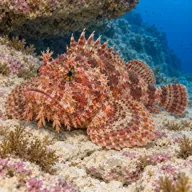




Getting in and staying safe
Easy by Maltese standards. Park at or near the St Angelo Mansions car park in Kalkara and use the slipway opposite, which gives a straightforward walk-in entry. From there swim out on a bearing of roughly 060 degrees and descend once you are over the middle of the creek. Kalkara has cafes, toilets and a waterfront to sit on afterwards. The exit is back up the same slipway, which is kind on tired legs but slippery, so take your time. A boat drop is also common and saves the surface swim across a working creek.
- Constant boat traffic in a live harbour creek, so a DSMB is mandatory
- Silty bottom that goes to zero visibility with one bad fin kick
- Poor ambient visibility compared with Malta's open coast sites
- Broken metal, snagged rope and fishing line on the wreck
- Easy to lose your buddy in low visibility on a hundred metre wreck
- Occasional harbour pollution and run-off after heavy rain
A bit of history
She was launched in 1912 as the Theodore Mante and finished her career under the Panamanian flag as the Margit, a steam passenger ship of about a hundred metres. Malta in the spring of 1941 was under sustained Luftwaffe attack, and on 19 April 1941 she was hit during an air raid while lying in Kalkara Creek on the eastern side of the Grand Harbour and sank where she lay. In 1943 her masts and funnel were demolished with explosives so the berth could be cleared for the build-up to the invasion of Sicily, which is why she looks so flattened today. She is also widely logged under the name MV Odile.
Divers say
Sign in to rate this site and leave a note for the next diver.
- No reviews yet. First one gets bragging rights.
Further reading: Wrecksite.eu: SS Margit · Malta Dive Sites: SS Margit wreck · PADI dive site: SS Margit / MV Odile · Divers Guide: SS Margit