Malta
Ricasoli Cannons
Three enormous Victorian muzzle-loading guns lying in a collapsed sea cavern under Fort Ricasoli, in two or three metres of water lit by a hole in the roof. Odd, shallow and unforgettable.
Sea conditions
Good right now
Some chop (0.5 m E)
Forecast for the site, updated 01:45 AM
- Waves
- 0.5 m
- from E
- Wind
- n/a
- Swell
- 0.5 m
- 5 s period
- Sea temp
- 29 °C
Next 7 days
Exposed to wind and swell from: N (0°), NE (45°), E (90°). The seaward face of the fort looks out at the harbour mouth, so anything from the north through east pushes swell straight into the cavern and the site is off. In the prevailing north-westerly it is usually workable, and in a southerly it is calm. Always carry and deploy a DSMB here and stay shallow and close to the rocks: this is one of the busiest pieces of water in Malta. Best season: April to November, with the flattest conditions typically in summer and early autumn.
The dive
This is barely a dive and absolutely worth doing. On the seaward side of Fort Ricasoli, at the mouth of Grand Harbour, part of the fort has given way and slumped into the sea, and it took its artillery with it. What is left is a cavern with a collapsed roof, daylight pouring through the hole, and three colossal iron guns lying on the floor in two to three metres of water.
Two of the guns run to around three metres with a barrel roughly a metre thick. The third is bigger again, close to four and a half metres and noticeably fatter. Underwater Malta records them as rifled muzzle loaders, one thirty eight ton twelve and a half inch piece and two twenty five ton twelve inch pieces, which is a lot of Victorian ironmongery to find sitting in swimming pool depth.
Outside the cavern the reef runs down to about twelve metres and that is your lot. Some divers finish it in twenty minutes and shrug, others spend an hour photographing the light beams across the barrels. If you have a camera and a bit of patience, this is a photographer's site rather than an explorer's one, and snorkelling it is a perfectly respectable choice.
- Three vast Victorian muzzle loaders lying in three metres of water
- A collapsed cavern roof that floods the guns with daylight
- Shallow enough for a beginner or even a snorkeller
- Three centuries of Grand Harbour defence directly above your head
Typical plan
In from the rocks, along the shore at 4 to 8 m to the cavern, then a slow circuit of the three guns in 2 to 3 m with the light beam doing most of the work for your camera. Come out and drift the reef at 10 to 12 m for the second half, then back the way you came. Forty five to sixty minutes on a single cylinder with plenty of gas spare, air is completely fine and there is no decompression consideration at all. Torch for the shaded corners, DSMB on the surface swim, and stay tight to the rocks the whole time.
What the bottom looks like
- 1Outer reef shelf at 12 m12 m deep · 95 m out
- 2Collapsed masonry and fallen blocks6 m deep · 120 m out
- 3Collapsed cavern with a hole in the roof3 m deep · 140 m out
- 4Two smaller RML guns, about 3 m long3 m deep · 150 m out
- 5The large gun, about 4.5 m long3 m deep · 155 m out
Rock and rubble throughout, with collapsed fort masonry inside the cavern and a low limestone reef outside it.
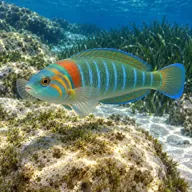
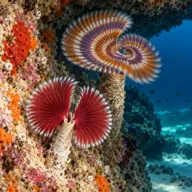
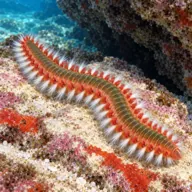
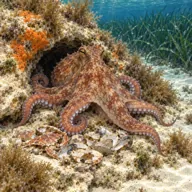
Who you might meet



Getting in and staying safe
Shore access rated medium. You reach the site from the Kalkara side by the Fort Ricasoli approach road, then a rock entry on the seaward flank of the fort with no ladder and no steps. Parking is on the road with a walk carrying kit, and there are no facilities at all at the entry, though Kalkara and Rinella have cafes and toilets a short drive back. Plenty of divers prefer to arrive by boat from the Kalkara or Sliema side, which removes the awkward entry and the shore-side surface swim through boat water. Check for filming activity: the Rinella and Ricasoli water tanks area is a working film location and access is sometimes restricted.
- Heavy boat and ship traffic at the Grand Harbour entrance, including cruise ships and the harbour pilot boats
- Surge inside the cavern whenever there is any sea running
- Overhead environment, even though it is shallow and lit
- Sharp collapsed masonry and loose blocks
- Rock entry and exit with no ladder
- Reduced harbour visibility after rain or heavy traffic
A bit of history
Fort Ricasoli was built by the Order of St John between 1670 and 1698 to guard the eastern side of the Grand Harbour entrance, and it is the largest fort on the island. It was heavily armed throughout its life: eighty cannon were on the books in 1785, and by 1864 the British had it up to well over a hundred guns. The three underwater pieces are rifled muzzle loaders from the later Victorian period, built as a mild steel inner tube shrunk inside coils of wrought iron. They probably went into the water when part of the fort's seaward structure collapsed, taking the emplacement with it, though disposal of obsolete guns over the wall around the Second World War is also part of the story. Either way, nobody has moved them since.
Divers say
Sign in to rate this site and leave a note for the next diver.
- No reviews yet. First one gets bragging rights.
Further reading: Underwater Malta Virtual Museum: Victorian Guns · Calypso Sub-Aqua Club: Ricasoli Cannons · Malta Dive Sites: Ricasoli Cannons · Background on British rifled muzzle loading guns