Gozo
Marsalforn Bay
A big, friendly, shallow bay on Gozo's north coast where most of the island's dive schools cut their teeth. Boulders, sand and seagrass in ten metres or less, and an octopus behind half of them.
Sea conditions
Excellent right now
Flat, sheltered and calm
Forecast for the site, updated 01:49 AM
- Waves
- 0.3 m
- from SE
- Wind
- n/a
- Swell
- 0.2 m
- 5 s period
- Sea temp
- 28 °C
Next 7 days
Exposed to wind and swell from: N (0°), NE (45°), NW (315°). The bay opens to the north, so anything with north in it pushes swell straight in and turns the water milky. Southerly and westerly winds leave it flat and glassy. After a big northerly, give it a day or two for the silt and shingle to settle. Best season: May to October for warm, clear water; diveable year round whenever the wind is off the land. September and October usually give the best visibility..
The dive
Marsalforn is the bay you dive when you are learning, when you are teaching, or when the rest of the island is being hammered by wind and you still want wet hair. The seabed here is unfussy: flat rock and shingle near the shore, then a scatter of car-sized boulders that never quite stop, with ribbons of Neptune grass filling the gaps. Ten metres is about as deep as it gets unless you swim a long way out, which is exactly why it works so well for skills, for refreshers and for that first nervous descent.
What the site lacks in drama it makes up for in small encounters. Every crack in every boulder is somebody's front door. Octopus are almost a given, moray eels lean out of holes with that unimpressed expression they all share, and cuttlefish hover over the grass changing colour like a broken television. Because the bottom is shallow and light, the colours stay bright the whole dive, and your gas lasts forever.
It is also one of Gozo's best night dives. After dark the boulders come alive with feeding octopus, sleeping parrotfish wedged into cracks, and the occasional small ray sliding off the sand. You can be back on the promenade with a pastizz within ten minutes of surfacing, which is not something you can say about most Gozitan dive sites.
Do not expect big blue water or vertical walls. Expect a relaxed potter, plenty of time, and a surprising amount to look at if you swim slowly and actually look.
- Textbook shallow training site with a genuinely easy walk-in
- One of Gozo's best and most convenient night dives
- Octopus and moray in almost every boulder crack
- Cafes, showers and air fills a minute from the water
- Stays diveable when southerly winds shut the south coast
Typical plan
Walk in from the eastern shelf, drop to four or five metres and follow the boulders out along the right-hand side of the bay for twenty to twenty-five minutes, working no deeper than ten metres. Turn on thirds or on time, then cut across the seagrass and come back along the shallower rock, finishing in three metres with plenty of gas for a slow poke around the entry rocks. Air is more than enough; a single twelve litre gives most divers sixty minutes or more. Ideal night dive profile too, with torches and a surface marker if any boats are moving.
What the bottom looks like
- 1First boulder cluster off the entry3 m deep · 25 m out
- 2Main boulder field with octopus holes6 m deep · 90 m out
- 3Posidonia patches between the rocks8 m deep · 150 m out
- 4Open sand towards the mouth of the bay10 m deep · 240 m out
Shingle and flat rock close in, giving way to scattered boulders over sand with patches of Posidonia meadow.
Who you might meet
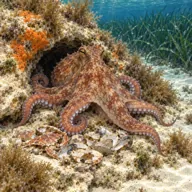
Common octopus
Almost always · Qarnit
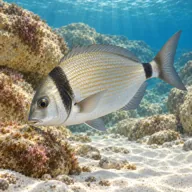
Two-banded seabream
Almost always · Sargu
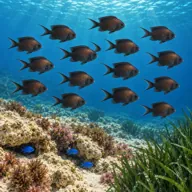
Damselfish
Almost always · Kaħlija
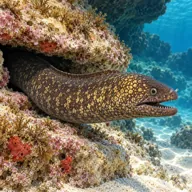
Mediterranean moray
Often · Morina
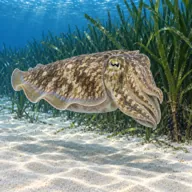
Common cuttlefish
Often · Siċċ · Spring
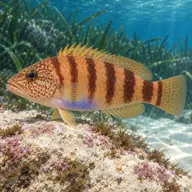
Painted comber
Often · Serrana
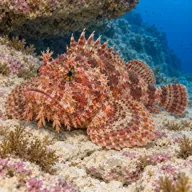
Scorpionfish
Often · Ċippullazza
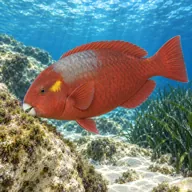
Mediterranean parrotfish
Often · Marzpan
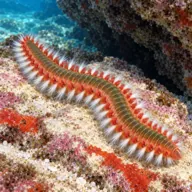
Fireworm
Often · Dudu tan-nar
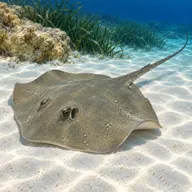
Common stingray
Sometimes · Bumarin
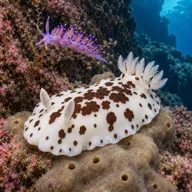
Nudibranchs
Sometimes · Spring
Getting in and staying safe
As easy as Maltese diving gets. Drive or bus into Marsalforn, park along the promenade or in the side streets (in high summer arrive early, the village fills up fast), and kit up on the flat rock shelves either side of the bay. Entry is a walk-in over rock, sometimes a small step down, with an easy swim back to the same spot. Several dive centres are based a few metres from the water, so air fills, toilets, showers, cafes and a beer afterwards are all within a short walk. Nothing about this site requires a long carry.
- Boat and jet-ski traffic in summer, especially across the middle of the bay: stay shallow or tow an SMB
- Swimmers everywhere in July and August
- Slippery algae on the entry rocks
- Fishing line and lost tackle around the boulders
- Visibility drops quickly after a northerly blow stirs up the shingle
- Jellyfish drift in during late summer
A bit of history
Marsalforn grew from a small fishing settlement into Gozo's main seaside resort, and the salt pans cut into the coralline limestone shelves just west of the bay have been worked since at least the 1700s. The headland of Il-Qolla l-Bajda above the bay carries an 18th century coastal battery. Nothing dramatic has ever sunk in the bay itself, which is part of why it stayed a training ground rather than a wreck site.
Divers say
Sign in to rate this site and leave a note for the next diver.
- No reviews yet. First one gets bragging rights.
Further reading: PADI dive site entry for Marsalforn Bay · theDiveGlobe site guide, Marsalforn Bay · Atlantis Gozo guide to diving in Gozo · Nautic Team Gozo dive site page